

Disclaimer: this is a personal opinion and story.
Our every-year Christmas movie roster always has “Jingle All the Way” (1996) in the top spot. It’s that classic comedy with Arnold Schwarzenegger racing to find a sold-out toy. We all love it, but I have a soft spot for it as a daddy-daughter film. My little girl absolutely loves the dad becoming the super-hero by the end!
Then there’s the timeless “It’s a Wonderful Life” (1946) with Jimmy Stewart. He plays George Bailey, a man shown by his guardian angel how much good he’s brought to the world. It’s a powerful reminder of our impact on others. This one is my wife’s particular favorite—she gets teary-eyed every time.
Of course, you can’t forget “A Christmas Story” (1983) and that classic line, “You’ll shoot your eye out!” Watching young Ralphie scheme for his Red Ryder BB gun is a tradition in itself. In our house, it’s the perfect background atmosphere movie, playing while we wrap presents or bake cookies.
Those are our top three. No matter what your personal tastes are, I hope you find something this season that touches your heart and brings your family together.
Merry Christmas in the middle of August! But, you guys know, it’s never too late to download a torrent for later use.
OK. Today…
Drunk Teen Realizes He Killed a Girl
I’ve read for years about D-DAY and got to say, the notion that the Germans lost their lot of Omaha because they ran out of bullets is a rather tall fur. It’s true that guys like Heinrich Severloh did fire till their barrels were red hot but that’s not the reason why the line broke.
What was the largest factor was the U.S. Navy. There the soldiers in the sand were sitting ducks until those American destroyers did something incredibly brave. They sailed right up in the shallow water almost hitting the bottom and started hitting the concrete bunkers at point blank range. You can have all the ammo in the world but it won’t save you when a massive naval shell hits your front door.
Then, you have to look at small unit actions. The Germans erected their defenses to shoot down the beach, but had blind spots. Small groups of Rangers and infantrymen tried to take the initiative. They gave up waiting for orders and began to climb up the cliffs where they could not be reached by the German guns. Once the Americans got behind those bunkers, the Germans were trapped.
Finally, the German reinforcements failed to appear. Allied planes the sky was their own and what they destroyed on the roads. The German leadership was also sleeping in the driving seat that morning thinking the real fight was elsewhere. The Americans had the high ground by the time they woke up. It was not merely a shortage of bullets, but it was an outright failure of the German defense.
Related
Why did German soldiers wear tight leggings around their lower legs and ankles?
To protect & support the calves & ankles & prevent rocks, debris, etc., from entering the boot. They also provided a measure of … (Read Full)
Out of Place Cuneiform Fragment Discovered in Czech Cave Complex
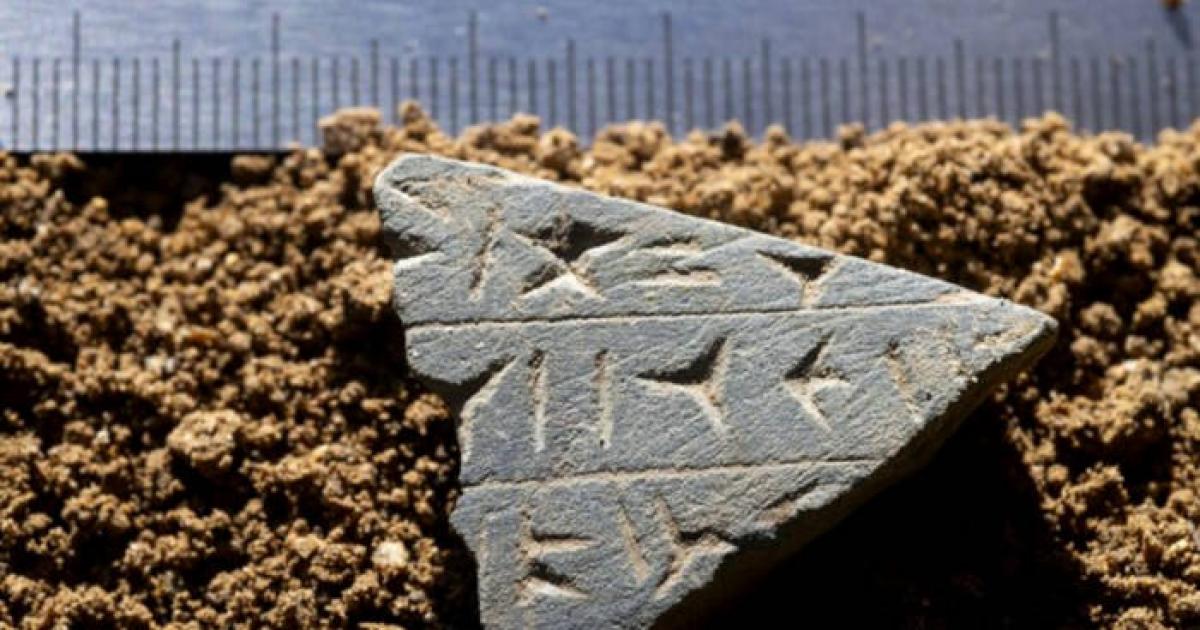
Enigmatic Cuneiform Fragment Discovered in Czech Cave Complex
Archaeologists working in the depths of Kateřinská Cave have made a series of remarkable discoveries that challenge our understanding of ancient human activity in Central Europe. Recent excavations have unearthed shell ornaments dating back over 8,000 years alongside mysterious stone fragments bearing cuneiform script—an unexpected finding in a region thousands of miles from where such writing systems originated. These discoveries are transforming what researchers know about the Moravian Karst’s rich archaeological heritage.
The latest findings emerged during the summer of 2025, when researchers from Palacký University identified two remarkably preserved shell ornaments among previously excavated material. These decorative items, crafted from Danube river snail shells, represent some of the oldest known personal adornments in the Czech Republic. Radiocarbon dating confirmed the ornaments are over 8,000 years old, placing them firmly in the Neolithic period. Petr Zajíček, a specialist from the Czech Caves Administration, revealed that the collection now includes four fully preserved and two incomplete ornaments, plus one sample used for dating purposes.
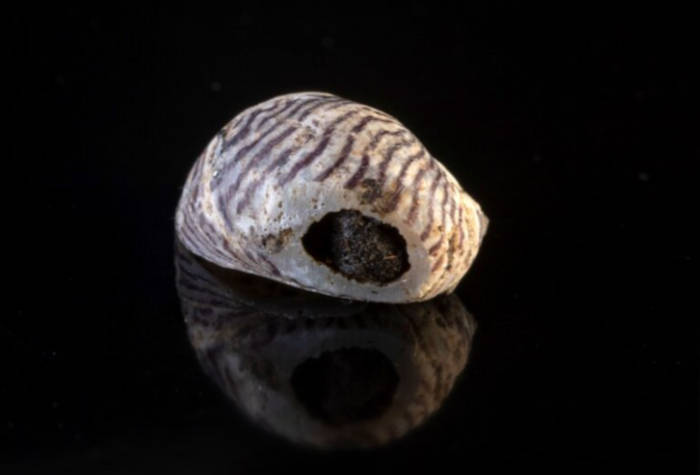
Decorated river snail shell found in the Kateřinská Cave system. (caves.cz)
Ancient Writing in an Unexpected Place
What truly sets these excavations apart is the discovery of stone tablet fragments bearing cuneiform inscriptions. During an October review, researchers uncovered another piece of a mysterious bas-relief carving that depicts what appears to be a procession of human figures, reminiscent of Hittite artistic traditions from ancient Anatolia. The newly identified fragment contains letters in cuneiform script, a writing system that originated in ancient Mesopotamia around 3400 BC and was later adopted by various civilizations including the Hittites.
The presence of cuneiform script in Central Europe raises intriguing questions about ancient trade networks, cultural exchange, or the possibility of artifacts being transported across vast distances. Milan Jan Půček, director of the Czech Archaeological Museum, emphasized that these findings “have significantly pushed the boundaries of knowledge not only about the cave itself, but also about the entire Moravian Karst region.”
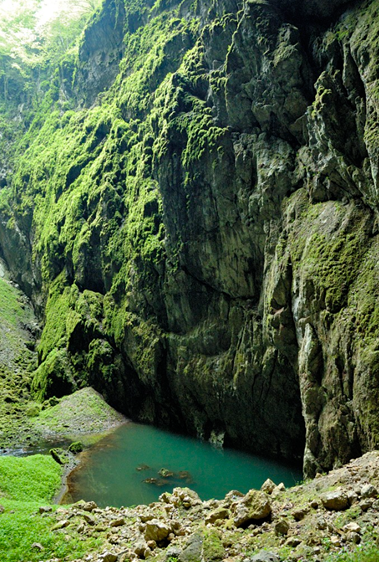
Entrance to the Moravian Karst cave system showing the geological formation. (Doronenko/ CC BY-SA 3.0)
A Cave of Treasures and Mysteries
Kateřinská Cave has been under systematic archaeological investigation since 2016, yielding a remarkable array of artifacts that span millennia. Among the most significant discoveries are 15 prehistoric charcoal drawings, making it one of the most important cave art sites in the Czech Republic. Some of these ancient artworks are now visible to visitors during guided tours, while exhibition panels at the cave entrance provide context for these incredible finds.
The cave’s archaeological record extends beyond the prehistoric era. Excavations have revealed evidence of a medieval counterfeiter’s workshop—the first known example in the Moravian Karst region. This discovery suggests the cave served various purposes throughout history, from sacred or ceremonial spaces in the Neolithic period to clandestine medieval activities. The long-term research project represents a collaborative effort between Palacký University in Olomouc, the Moravian Museum in Brno, and the Nuclear Physics Institute of the Czech Academy of Sciences, which provides crucial radiocarbon dating services.
UNESCO Recognition on the Horizon
The significance of these discoveries has bolstered efforts to secure UNESCO World Heritage status for the region. Kateřinská Cave, along with the Punkva Caves and the Macocha Abyss, has been formally proposed for inclusion on the prestigious list. If successful, this designation would recognize the Moravian Karst as a site of outstanding universal value, protecting it for future generations while acknowledging its importance to understanding human prehistory and cultural development in Central Europe.
The cave remains accessible to visitors daily except Mondays, with tours conducted at 10am, 12pm, and 2pm. However, it closes during winter months from December to February to protect hibernating bat populations. Located near Skalní Mlýn in the Suchý Žleb canyon, the site continues to offer both scientific insights and public engagement opportunities. As researchers work to decipher the cuneiform inscriptions and analyze the shell ornaments, each discovery adds another layer to our understanding of how ancient peoples used these subterranean spaces.
The mystery of how cuneiform script found its way into a Central European cave remains unsolved. Whether the tablets were brought by ancient travelers, represent trade goods, or have another explanation entirely, their presence challenges conventional narratives about cultural boundaries and exchange networks in the ancient world. As excavations continue, Kateřinská Cave promises to yield further surprises that may reshape our understanding of prehistoric Europe.
Top image: Enigmatic Cuneiform Fragment Discovered in Kateřinská Cave. Source: caves.cz
By Gary Manners
Pictures

























































Slow Cooker Spicy Cabbage Beef Soup
on Feb 11, 2021, Updated Feb 25, 2022
Slow Cooker Spicy Cabbage Beef Soup is full of browned ground beef, onion, cabbage and tomatoes. It’s a simple soup, but with so much flavor, plus it’s low carb.

There’s tons of meaty flavor in this crock pot soup. Hearty enough to eat as a one dish meal.
Two beef bouillon cubes and some herbs give this Cabbage Beef Soup most of its flavor.
How To Make Slow Cooker Spicy Cabbage Beef Soup
- Brown the ground beef.
- Place the ground beef and the other ingredients in a 6-quart or larger slow cooker.
- Cover and cook on LOW for 6 to 8 hours or on HIGH for 4 to 5 hours.
- Serve.
So easy!

Recipe Tips
If you don’t eat low carb, you can add a can of kidney beans and it tastes great with cornbread.
Ground turkey can be substituted for ground beef.
Leftovers will keep in the refrigerator for 4 to 5 days and can be frozen.
How Spicy Is This Soup?
If you use “Hot” Rotel tomatoes and 1/4 teaspoon of cayenne pepper, it has a moderate amount of heat. For more heat, double the amount of cayenne pepper or add 1/4 teaspoon of crushed red pepper flakes.

Slow Cooker Spicy Cabbage Beef Soup
Equipment
Ingredients
- 1 pound ground beef
- 6 cups chopped cabbage,, cut into 1-inch pieces
- 1 medium onion,
- 1 (15-ounce) can crushed tomatoes
- 1 (10-ounce) can Rotel tomatoes and green chiles
- 1 1/3 cups water
- 2 beef bouillon cubes,, crumbled
- 1/2 teaspoon salt
- 1/2 teaspoon pepper
- 1/2 teaspoon garlic powder
- 1/2 teaspoon dried oregano
- 1/4 teaspoon cayenne pepper
Instructions
-
Brown ground beef in a large nonstick skillet, breaking it apart with a wooden spoon.
-
Place cabbage and onion in a 6-quart slow cooker. Add the cooked ground beef.
-
Add remaining ingredients.
-
Cover and cook on LOW for 6 to 8 hours or on HIGH for 4 to 5 hours.
The human skull that challenges the Out of Africa theory
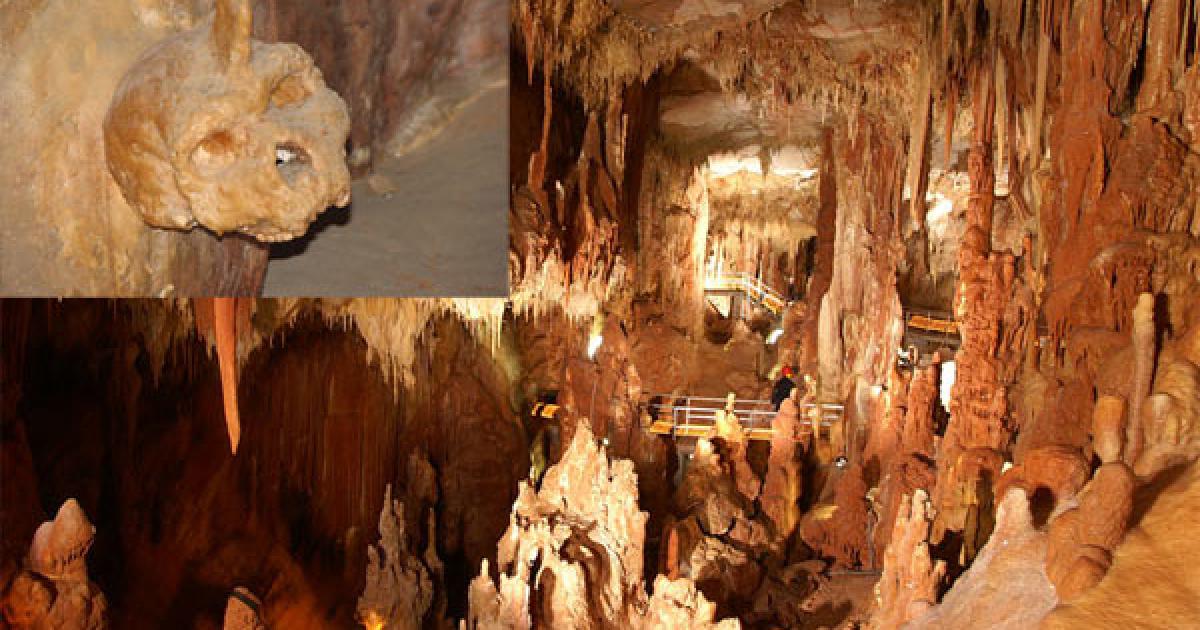
This is the account of the discovery of a skull that has the potential to change what we know about human evolution, and a suppression and cover-up which followed.
In 1959, in an area called Chalkidiki in Petralona, Northern Greece, a shepherd came across a small opening to a cave, which became visible when a thick covering of snow finally melted. He gathered a group of villagers to help him clear the entrance so they could go inside and explore. They found a cave rich in stalactites and stalagmites. But they also found something surprising – a human skull embedded in the wall (later research also uncovered a huge number of fossils including pre-human species, animal hair, fossilized wood, and stone and bone tools).
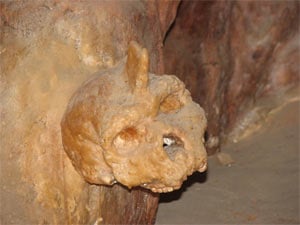
The skull was given to the University of Thessaloniki in Greece by the President of the Petralona Community. The agreement was that once the research was done, a museum would be opened featuring the findings from the Petralona cave, and the skull would be returned to be displayed in the museum – something that never happened.
Dr Aris Poulianos, member of the UNESCO’s IUAES (International Union of Anthropological and Ethnological Sciences), later founder of the Anthropological Association of Greece, and an expert anthropologist who was working at the University of Moscow at the time, was invited by the Prime Minister of Greece to return to Greece to take a position of a University Chair in Athens. This was due to the publication of his book, ‘The Origins of the Greeks’, which provides excellent research showing that Greek people didn’t originate from the Slavic nations but were indigenous to Greece. Upon his return to Greece, Dr Poulianos was made aware of the discovery of the skull at Petralona, and immediately started studying the Petralona cave and skull.
The ‘Petralona man’, or Archanthropus of Petralona, as it has since been called, was found to be 700,000 years old, making it the oldest human europeoid (presenting European traits) of that age ever discovered in Europe. Dr Poulianos’ research showed that the Petralona man evolved separately in Europe and was not an ancestor of a species that came out of Africa.
In 1964, independent German researchers, Breitinger and Sickenberg, tried to dismiss Dr Poulianos’ findings, arguing that the skull was only 50,000 years old and was indeed an ancestor that came from Africa. However, research published in the US in 1971 in the prestigious Archaeology magazine, backed up the findings that the skull was indeed 700,000 years old. This was based on an analysis of the cave’s stratigraphy and the sediment in which the skull was embedded. Further research in the cave discovered isolated teeth and two pre-human skeletons dating back 800,000 years, as well as other fossils of various species.
Today, most academics who have analyzed the Petralona remains say that the cranium of the Archanthropus of Petralona belongs to an archaic hominid distinguished from Homo erectus, and from both the classic Neanderthals and anatomically modern humans, but showing characterists of all those species and presenting strong European traits. A skull dating back 700,000 which is either Homo sapien or part Homo sapien is in direct conflict with the Out of Africa theory of human evolution.
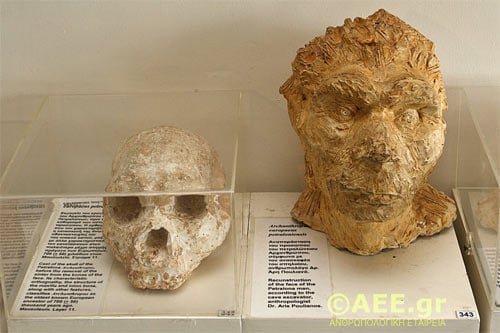
Further excavations continued in the cave of Petralona with the participation of international researchers (46 specialists from 12 separate countries), which provided further proof of Dr Poulianos’ claims, including remarkable findings like fossilized pieces of wood, an oak leaf, animal hair and coprolites, which enabled accurate dating, as well as the almost continuous presence of stone and bone tools of the Archanthropus evolutionary stage, from the lower (750,000 years) to the upper (550,000 years) layers of sediment within the cave.
The research, after an interruption due to the dictatorship in Greece, continued up to 1983. It was then ordered by the government that all excavations at the site were forbidden to anyone, including the original archaeological team, and for 15 years nobody had access to the site or to the findings – no reason was provided by the government. Was this denial of access to prevent the extraction of whatever new scientific conclusions remained hidden within the incredible fossils embedded within the layers of the caves’ walls?
After the Anthropological Society of Greece took the case to the courts, 15 years later they were again allowed access to the cave. Since then the Ministry of Culture is trying in any way to overcome the Courts decision and further trials proceed.
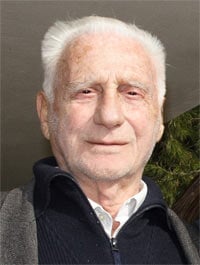
Dr Poulianos’ findings contradicted conventional views regarding human evolution and his research was suppressed. Dr Poulianos and his wife were physically attacked and injured in their home in 2012 and the culprits were never found. He and his team have been denied further access to the cave to complete their research and study, and the whereabouts of the skull is now unknown.
Today a sign sits outside the cave of Petralona stating that the skull found in the cave was 300,000 years old, and on Wikipedia today you will see references dismissing the evidence and trying to date the Petralona skull within acceptable parameters – between 160,000 and 240,000 years old.
Recently, Professor C.G. Nicholas Mascie-Taylor of the University of Cambridge sent a letter to the Ministry of Culture in Greece saying that the correct date of the skull is 700,000 years old and not 300,000. He has also challenged the government’s suppression of information regarding this incredible discovery.
The Greek Ministry of Education, Religions, Culture and Sports,
Bouboulinas 20-22,
Athens 106 82,
Greece
5 September 2012
Dear Sir,
I am writing on behalf of the European Anthropological Association, which is the umbrella professional and academic association linking all of the national European biological anthropology and human biology societies, to express our concerns about the conservation of the Petralona Cave and Skull, the misinformation of the dating of the skull, as well as the treatment of personnel associated with the conservation of the Cave.
The bases of our concerns are that the skull has been damaged through many scratches and the crown of a tooth (1st molar) cut off. As requested by Anthropological Association of Greece what is required is a detailed description of the present status of the skull, so that no one in future can arbitrarily damage it further. There is also the problem of dating which has been scientifically dated at about 700,000 years ago not 300,000 as is given at the information desk. There is a very detailed record of the excavations and findings which need to receive further public presentation but which have never been catalogued so as to prevent specimens going missing.
It is very unfortunate that the Greek Archaeological Department stopped Dr Aris Poulianos from further work in the Cave without any explanation. It is also very worrying that Dr Poulianos and his wife were physically attacked and injured in their home earlier this year and the culprits have not been found. He was also verbally abused when attempting to give an invited presentation to teachers and school children.
Senior anthropologists and geologists have also been denied access to the Cave and the specimens for further study on a number of occasions without substantive reasons. Earlier this year there has also been misinformation given to the Greek Parliament concerning financial aspects of the Cave.
I look forward to receiving answers to these questions.
Yours faithfully
Professor C G N Mascie-Taylor MA, PhD, ScD (all Cambridge), FSB, FNAS (Hungary)
Professor of Human Population Biology and Health and President of the European Anthropological Association
The most important conclusion of Dr Poulianos’ research regards the co-existence of all main anthropological types (African – Kobi, Asian – Beijing and European – Petralona) at the same almost period (700,000, 500,000 and 750,000 respectively). That means: the appearance of the today human main populations (races or even better phyllae – from the Greek language and that’s why polyphyletic etc) is tending to almost 1,000,000 m.y.a. and not to only 10,000 or 30,000 years as currently considered world wide.
However, independently if there is a scientific dispute on the above, it is only sad to become aware that research is not allowed to those who are not coordinated to the “standard” knowledge, risking even their lives in front of gun shooters.
Is this a cover up of an incredible discovery that the powers-that-be do not want us to have access to? You be the judge.
Update from editor 31 December, 2018: Dr Poulianos wrote to Ancient Origins to state that unfortunately the suppression of information regarding the Petralona skull has continued:
“Experiencing the above I am asserting that the prohibition of research regarding human history is due to the following (most obvious, i.e. not exposing political) reasons:
Various (Worldwide) Universities and their state allied forums have the power to influence all of the small range national institutions in order to achieve the aforementioned prohibition. In turn, this is most probably due to the fact that such research is allowed only to some “confidential” persons. Thus, re-righting chapters of human history is only their “right”. Whoever does not belong to such clubs and / or forums has to be stopped by all existing means, even by falsifying the truth against well documented evidence (i.e. without providing any scientific contradicting argument). Obviously I am asserting that knowledge is under control, especially what concerns human history. Therefore I agree with Lenie Reedijk’s description regarding the “Cover Up”, as well as the following comments to her article.”
By John Black
Lunacy
Written in response to: “Set your story in a world where astrology and the movements of celestial bodies deeply impact the lives of inhabitants.“
Jeremy Burgess
This story contains themes or mentions of physical violence, gore, or abuse.
The only people there on this day were King Grintrag, sitting in his ancient and uncomfortable looking iron throne, and the King’s fool, a person of indeterminate gender dressed in bright yellow and red with bells on their heels and wrists. Grintrag wore grey velvet and silk, perfectly tailored, a long dagger hanging from his belt as a reminder of his bloody legacy. His face was as implacable as stone, his eyes as grey as his doublet, a neatly cut short beard matching in tone his thick silver mane of hair. The only colour on his person was his crown of polished gold, chosen to match the gold edging used throughout the Church, and symbolising Coros, one of the two great Gods of the land. He looked even more grim than the last time Cordus had seen him.
“Ah, High Priestess, I am gladdened by your heeding my summons,” he intoned, “I have questions.”
“Yes, my King,” she replied, bowing deeply, “I am certain you do. But first, I would like to present your nephew, Prince Cordus, first in line and heir apparent, whom I have called back to court.”
Cordus knew the appropriate etiquette and stepped forwards, bowing low as well, The King looked him up and down, his face impassive. “An odd choice to bring him on this day,” he said in gravelly tones, before turning his gaze back to the High Priestess. “What,” he continued, “is going on out there?”
The High Priestess cleared her throat. “As you know my King, the Gods bring Potence to the land, and we in the church channel the Potence to the great benefit of the Kingdom, and yourself.” The King looked irritable at this explanation, but he indulged the most senior member of the Church of the Sky and gestured for her to continue. “The Gods move above us, Coros from east to west — she brings us light and warmth each day. Salak wanders north to south casting his cool ambience as he chooses on the land, be it in the night or during the day. As each traverses from horizon to horizon, the Potence waxes and wanes, so that at their zenith the energies are at their most mighty, absent altogether when they fall from sight. What we see today is something rare indeed, both Coros and Salak are high in the sky, during the day, at the same time, and so their power multiplies. We believe an eclipse is nigh.”
“Perhaps an eclipse of even your own glorious brightness my Lord,” the fool’s sing-song lilted. Cordus had heard tell of the King’s fool, who alone was permitted to make mockery of his pride.
The King sat back in his throne, brooding. Cordus was not surprised; Grintrag had a reputation for being shrewd, and on his way to the castle today Cordus had seen a great many odd things as the moon and sun progressed towards the centre of the sky. Where typically priests assisted in redirecting water to irrigate fields during the day, today such attempts had resulted in flooding. A young adept who had been practising cooking had set a whole carcass alight, barely even trying. On a road being repaired, another churchman had levelled both the road in question and a neighbouring house. The Potence was out of control, and it had been getting worse as the day had gone on. There was also no record of eclipses in the history books, and while King Grintrag was self-serving and proud, he was famously well read, having sat on the seat of supreme authority for over 50 years now.
“Multiplies you say,” the King mulled, “how long ago, exactly, was the last eclipse?”
“She doesn’t want to say,” cackled the fool, “but look to her neck! They know!”
The High Priestess ignored the fool. “It is hard to say my King, our records are unclear on this.”
The King stood abruptly, walking with steadiness that belied his age to one of the room’s windows. He opened it and looked outside onto the castle’s inner courtyard. Usually an active place where horses were mustered and soldiers practised, it was eerily quiet, the denizens of the castle having decided to stay inside rather than risk the strangeness that pervaded as the eclipse approached. He looked up to where the sun and moon were beginning to converge, before returning to his throne.
“It is odd, I think, that your records are so unclear on the last eclipse when they are so specific on the harvest of grain 140 years ago, or the great earthquake 30 years before that. It is strange, is it not?” probed the King.
“Indeed it is a mystery. One can only assume that some terrible accident must have befallen the writings. Paper is so fragile, and people so flawed,” smiled the High Priestess.
“I know when it was,” laughed the fool, “5 score and 10, when the Queen Sirka rode to the end of her reign.” They jingled back and forth before the King.
“What do you think, Prince Cordus?” asked the King, turning his granite stare on the now crown prince.
Cordus glanced around frantically, he had hoped to escape notice, and was still worried about why the High Priestess had sent for him so urgently. He liked doing things little and doing things that put him at risk even less. “Ahhh,” he vacillated, sensing that indecisiveness would be a curse in this moment, and wishing that Assanda had given him clearer guidance on what to do should the King talk to him. He knew he did not have long to dither, with all three pairs of eyes on him. The sensible option would be to stay inside, he thought, away from people and whatever was going on with the Potence. The King, however, would not want to be thought fearful, Cordus thought. “I think we should face the eclipse outside,” he said with false surety, “we should witness it ourselves.”
“The boy speaks with wisdom,” remarked the High Priestess with a warmth that had been lacking entirely from her voice when she he had been instructing him before, “we would be fools indeed to miss this chance to see Salak and Coros meet.”
The fool did a jig and bowed in supplication to Assanda and Cordus. “When the Gods meet we all must bow, and no walls will do them justice. It is a sign that none can ignore!”
The King leaned to one side, his brow furrowed in thought. It seemed to the Prince that the fool’s words were warnings. He wanted to know what the High Priestess knew, and what had happened to Queen Sirka, who in the history books had died suddenly and been succeeded by her eldest son who had then not spoken of her again. He looked surreptitiously at the High Priestess’s neck, as the fool had said, but all he saw was the icon of the Church.
“Come,” King Grintrag commanded suddenly, having reached a decision, “we go to the courtyard, where we shall observe the phenomenon. To not witness would be cowardly, and I am no coward.”
The four of them walked as a procession through the halls and staircases of the great castle, passing only torchlit stone and armour-clad guards with trained austerity of manners on their way to the great doors. As they reached the outside, the world held its breath as Coros and Salak began to meet, the moon beginning to move in front of the sun as noontime approached. The group stood still and the world began to dim.
“How long until…?” Prince Cordus quavered, wishing he was back inside. He was unashamed of his cowardice and thought that the great bricks of the castle wall would be some protection at least against whatever was going to happen, his instincts screaming that it would not be good, whatever it was.
“Soon,” murmured High Priestess Assanda to him. She pulled him a few steps away from the King and the fool, who both seemed transfixed, though they did not stare directly up, not yet at least, for fear of hurting their eyes. “When the eclipse begins, you must do exactly as I say, exactly when I say it. Do you understand? No hesitation if you wish to survive.”
“You do know what happened last time!” he whispered to her angrily.
She reached into her long robe, pulling from it a mean looking knife about as long as his forearm, and handed it to him with a purposeful glare. The blade was neither a kitchen knife nor one for combat. Instead it had a wave like undulation through it, and its hilt was etched with text that Cordus had no time to read. “No hesitation, you understand.” This time it was not a question. Prince Cordus held the knife helplessly, and then, glancing nervously at the King, put it behind his back, out of sight, not that the King was watching him.
Directly above them, Coros and Salak reached alignment, and the sky darkened. Stars punched through, tiny perforations of light around the crown of fire that rimmed Salak’s edge. A strange rhythmic rushing noise became audible, quiet at first but gradually becoming louder. As the noise began, it became clear that Coros and Salak had stopped moving altogether. At totality, they were locked in place, but they were not unchanging. A point of silvery golden light, argent and sun-bright appeared in the middle of the eclipse, beating in time with the noise they could all hear, and slowly growing. Despite the shine from the fire in the middle of the eclipse, no light was cast on the land, and all remained dim.
“It comes!” cried the High Priestess falling to her knees and looking up at the strange sky, “as Coros and Salak meet the barriers fall and the Potence of the gods flows unshackled!” Her shout was raw, incongruous with her typical self-control. As she fell to the ground Cordus recognised in the eclipse the symbol of the Church — a golden rim around a black circle, a point of burning silver at its heart.
Cordus was awed, but also increasingly fearful about the long knife he was hiding, dropped to his knees beside her. He turned to the High Priestess, panicking inside. “What do I do?” he implored, now craving her instruction in the face of the strange sight above.
“It has been good serving you my King!” shouted the fool, who turned and ran back towards the castle, as the rushing noise and the fire in the eye of the eclipse intensified.
“What?” growled the King, turning his eyes from the fearsome sky, “what is going on now?”
The High Priestess gathered herself, and shot Cordus a glare. “Stab him,” she shouted, “at the conjunction of the gods, the ruler of men must die by the hand of their successor! Thus has it always been.”
“What?!” yelled Cordus standing and recoiling, as the King bellowed, “Not today!” and drew his own dagger. Grintrag, had no compunctions about killing another family member and lunged towards the Prince, while Cordus was saved only by the fact that he was already lurching away. The fire in the eclipse grew stronger again.
The High Priestess stood, gesturing with one hand and muttering something under her breath. Around the King the air seemed to thicken and congeal, rendering all attempts at movement lethargic and futile. He seemed to try to speak, but his jaw would not form words, pushing against some invisible force.
“You must kill him now!” urged the High Priestess, her implication clear.
Prince Cordus was not moral, and although he lacked skill, drive, and any intention of achieving highly, he had a strong self-preservation urge and no love at all for the man who had killed most of his relatives. Flicking his gaze for only a second to the horrifying sight in the sky, he stepped forwards, and plunged his knife into Grintrag’s neck, feeling no resistance from whatever held the King in place. Grintrag’s lifeblood flowed strangely from the wound, spreading as if it was impeded by whatever force the Assanda controlled with the Potence. The Prince stepped back in disgust at both what he had done and the ensuing strangeness.
From the beating flame in the middle of the eclipse, a filament of silver fire pierced the air and speared down through the heart of the King, as his life ebbed away. His body was pulled into the air, dangling for a moment. Then, as quickly as a stone sinks beneath the surface of a lake, he was gone, enveloped momentarily in white flame, leaving only ash and the knife behind, which fell to the ground with a clank. The rushing noise stopped, Coros and Salak began to separate, and the moment passed.
Turning to face the High Priestess, Prince Cordus wailed “what in the names of Coros and Salak was that?!”
The High Priestess relaxed and turned to him, a beneficent smile settling on her countenance. “That was the sacrifice we all must make whenever the gods converge. As it is written, when Salak occludes Coros, the gate to the land beyond is opened and the Potence will unmake the world, piece by piece. It can be sealed only with the blood of our ruler, and the writings are clear on who must do it. So you see, the King had to die, and you had to kill him.”
“But… where is it written? And, how do you know that that’s what you have to do?” Prince Cordus asked, the adrenaline leaving him feeling hollow. In his stomach a pit opened as the realisation dawned that he was perhaps now the King.
“It is written,” chirped the fool, who had appeared from somewhere, “it is just not written where you are allowed to see it. And as for how they know, how do they know anything? They are the Church, and the Gods must tell them. Be grateful that it will not happen to you, for you will surely die sooner than it happens again!”
The High Priestess nodded, “the fool is correct of course,” she continued, “we must ensure that this remains secret, or perhaps a monarch might choose to try to avoid it. You will support our efforts in this, and the Church in turn will ensure your long and happy reign. Fortunately for you the eclipse of Coros and Salak happens only once in all but the longest lives, and you will not live that long.”
She walked forward and took his uncertain, dithering hand, bowing to him. “The King is dead,” she said, “Long live the King!”
Col 27-Book 491 – Patch and the Cloud Library’s Missing Footnote (A Tale of Balloons, Bibliophilia, and the Power of a Well-Placed “P.S.”)
Ah, dear reader—prepare your satchel, steady your pith helmet, and breathe in the scent of old paper and possibility. Today’s story does not begin with a quack, a snort, or even a kazoo blast.
It begins with a gap.
A tiny, quiet absence—like a skipped heartbeat in the farm’s oldest song.
So settle in. Adjust your spectacles. And step—gently, curiously—into Patch and the Cloud Library’s Missing Footnote.
The Gap in the Great Tome
It began, as all great literary crises do, on a Tuesday—golden, still, humming with the lazy buzz of bees and the distant snore-squeak of Porkchop mid-nap.
Patch Pouncewell stood in the Cloud Library (Floor 3), periscope extended, satchel open, consulting the Great Tome of Farm Lore—a volume bound in cloud-leather, pages shifting like mist.
He turned to the final chapter—“The Jingle That Binds Us All”—and read aloud:
“And so, the farm hums in harmony, the sun sets in gold, the stars rise in silver, and all is well.
Jingle on.”
He paused.
Frowned.
Flipped the page.
Nothing.
No resolution.
No “The End.”
Just a blank margin—a void where wisdom should be.
“Ah,” Patch murmured, monocle gleaming. “The footnote is missing.”
“Missing! Missing!” echoed Ditto—who’d been napping in a floating armchair woven from dandelion fluff.
Without hesitation, Ditto stood tall.
“I’ll be the footnote!”
“Footnote! Footnote!”
Patch smiled—not with doubt, but delight.
“Capital idea, my dear fellow. But how to reach the margin?”
Ditto scanned the shelves.
Then—gasped.
A balloon-ladder, tethered to a shelf of “Unsent Apologies (Vol. III–XII)”, bobbed gently in an updraft.
“Like this!”
He began to climb.
The Footnote in the Sky
Halfway up, balloon swaying, Ditto reached into his satchel and pulled out a glow-worm ink pen (courtesy of Chef Remy’s “Bioluminescent Scribble Kit™”).
With careful paws, he wrote in the margin:
P.S. The llama approves.
The words shimmered—soft, golden, true.
The Tome sighed—a sound like pages turning in sleep.
But then—
Munch.
Bartholomew the Piñata, perched on a nearby shelf labeled “Research: Joy Mechanics”, had mistaken the ladder’s top balloon for a “premium confetti delivery system.”
Pop.
Ditto floated upward—not falling, but drifting—past shelves of “Unfinished Yodels”, “Half-Baked Ideas (Literally)”, and “Dreams: On Hold (Fragile).”
He landed softly in the Poetry Section—a nook where books hummed in harmony, and haikus recited themselves in familiar voices.
One volume opened on its own.
A voice—Doris’s, but serene—spoke:
“Paw in the clouds…
Echo drifts downward…
Is that a snack?”
Ditto grinned.
“It is!”
He nibbled a floating crumb of “Metaphor Muffin” (left by Remy, “for inspiration”).
The Restoration
Patch, unfazed, consulted his Field Journal:
“Obs.: Balloon-ladders require confetti-resistant coating. Hypothesis: Bartholomew is not malicious—just metabolically optimistic.”
He turned to Bessie, who sat cross-legged on a sunbeam, humming as she reclassified “The Art of Swaying” under “701: Very Groovy.”
“Bessie, dear—the Tome needs closure. Can you lend a vibe?”
She closed her eyes.
Her mood ring pulsed deep gold.
A low, resonant moooo filled the air—not sound, but frequency—that settled into the Tome’s final page like dust motes in afternoon light.
The missing footnote appeared—not in ink, but in essence:
P.S. The llama approves.
(And so do we.)
Even the scarecrow, reading How to Sway With Dignity, gave a single, soft creak—“…creak… amen.”
The Moral of the Story
That evening, as fireflies rose and the farm hummed in C-sharp, Patch addressed the animals—not from a podium, but from a floating chaise lounge.
“The moral of the story, dear reader, is this:
Every story needs closure—and sometimes, the best endings are written in footnotes, friendship, and floating kittens.
Ditto didn’t wait for permission to belong. He climbed. He wrote. He drifted. And in doing so, he reminded us: the greatest additions to our stories aren’t grand pronouncements—they’re small, brave ‘P.S.’s’ that say: ‘I’m here. And I care.’
So go ahead. Be the footnote. Be the balloon. Be the snack in the haiku.
The library is listening.”
Doris dabbed her eyes.
“A bibliographic metaphor! I can’t bear it!”
“Bear it! Bear it!”
And Ditto?
He curled beside Patch, one paw resting on the Tome, now warm with shared light.
“Next time… can I be the index?”
“Index,” echoed the wind—soft, sure, and full of promise.
Post-Credit Scene
Later, Bartholomew coughed politely—and out popped a single, perfectly preserved glow-worm ink pen.
He offered it to Ditto.
“Mmf. Peer-reviewed.”
Patch accepted it, tucked it into Ditto’s satchel, and added a footnote to his journal:
“Note: Even accidents have footnotes. Especially the delicious ones.”
Outside—the clouds drifted.
The stars blinked.
And somewhere, faint on the breeze—
Jingle on.
P.S. The llama approves.
Jingle on. 📚🎈✨
(Or, in library code: Shelf 701—Groovy. Very Groovy.)
Madame, the Mystic.
Written in response to: “Set your story in a world where astrology and the movements of celestial bodies deeply impact the lives of inhabitants.“
Julie Grenness
Christian Contemporary Romance
Madame, the Mystic, spoke again. “Look ,Golden gives you his paw of emotional support. I have a sale on Tarot cards, consult my daily horoscope for your true love, to guide you for all your happy days ahead. Plus here is my sister Charlene’s phone number. You also need her to direct you in fashion and colorful zen. She will provide a color palette, personally tailored. It is not any woman’s job to fix men. Be aware of any sign and symbol of friendship, Maybe you need a pet to share your future, always there to welcome your nurturing heart. Got to love a puppy!”
Jade did a quick think. “I don’t need a puppy. I want to meet a man to love.” The mystic astrologer spoke again…..
“Peace will flow, consult your guardian angel, always there in each awakening dawn. You must position yourself seamlessly for love, and be grateful for the graces that appear. I advise a weekly consultation. Here is your next appointment. I shall be your guide on the side!”
Jade left the astrologer, slightly bemused. Within no time, astrology was her world. She met Charlene, spent some funds on new threads, dressing each day according to her horoscope and personal palette. No more grey and brown sensible clothing, all was aqua, yellow and bright. Her hair was tinted, with blonde tips, her make-up was featuring her eyes, sparkling with hope.
Jade now awoke half an hour earlier, just to greet dawn with her guardian angel. She rehydrated with coffee, interpreting her coffee cup, making her bed, tidying her clutter, practicing her new skills in tarot cards. Once per weekend, she rose and changed her sheets, polished and mopped, flung open the windows, and lit her sage smudging. She wafted the aroma through her flat, opened doors. She still did not need a puppy, this guardian angel was demanding enough.
Jade had not, of course, told her father, who was called Bernard. The astrologer had got that bit right. She was getting crosser with God on a daily basis, smiling at strangers was not very effective. She was getting some very funny looks at the coffee shop, as she taught her students. Still she could not fix men, as astrology states.
Life took a turn for the worse. Bernard phoned, asking Jade to take him to his appointment at an oncologist. The news was dreadful, he had stage four tumors, riddled with cancer. His prognosis was very grim. Bernard was not as upset as Jade. He told her was grateful for all the blessings his Lord had granted him during his days. Treatment was planned, so he rapidly became an in-patient at an oncology unit.
Jade and the church people visited him regularly. In between tutoring online, she made a daily pilgrimage to her father’s bedside. He went downhill very quickly, the chemo was futile. Jade had been brought up with filial piety, but inside, she was now furious with her father’s divine Lord. How could this happen to such a faithful believer?
One grey morning, while channeling her guardian angel, her tarot cards finally showed a pair of lovers. “Yeah, right.” Jade wondered, but she was now a keen follower of astrology. At her father’s bedside, she held his hand .She felt that she was never quite good enough, never met a husband, never had his grandchildren to love and cherish.
Bernard suddenly opened his eyes, he was lucid for a while. “I am so proud of you, the apple of my eyes,. You are so bright and loving. I want you to got to the chapel and pray, like you used to. God has a plan for every one of us. I shall always be loving you. This journey goes on, true love.” With that, he breathed his last, and smiled his way to eternity.
Jade was devastated. The nurses were summoned, she walked to the chapel, frozen. She sat, silently yelling at God, Jesus, the holy church, her guardian angel. More than cross, angry. She nearly kicked a hole in the church walls.
But she was well-behaved,. Not praying, just recalling some happier times with her father. As she sat in the back pew, not doing any knee mails, she felt a hand touch her shoulder. She glanced up, meeting the eyes of her father’s junior oncologist. “These things happen, ” he told her, “Look, I have seen some mysterious things here, stranger than anyone can perceive. I took a photo of your father’s monitor, as you were holding his hand.”
Jade looked at his phone, there was an image of an angel, with wings. “Is this possible?” she asked. “Can I send it your phone?”asked Dr. Ben, that was on his name tag. “it is a comfort for you. You have your own guardian angel.” He laid his hand on hers. They swapped phone numbers, and Jade soon had a miraculous image of her own guardian angel.
Nearly eighteen months later, Jade sat in the chapel. Dr. Ben had given her his paw of emotional support, and that was not all. She did have a white wedding, but not in that fancy dress, simple, fitting, respectful. His name did start with a B, after all. She cuddled their brand new baby son, healthy with a good set of lungs already. Maybe she wasn’t so cross with the greater powers after all. Madame, the Mystic, was spot on. Jade had been open to a nuanced understanding of her guardian angel, and the theory that love will find a way.
Dr. Ben sat beside her. Their baby boy looked like Jade’s father, and himself. “Welcome to the world, little Bernard Benjamin……” A journey that continues for everyone. ……
Slow Cooker Creamy Tortellini and Sausage Soup

on Oct 20, 2024
Slow Cooker Creamy Tortellini and Sausage Soup is a bowl full of comfort. Full of Italian sausage, spinach, cheese, tortellini, carrots, and diced tomatoes all in a creamy broth.

Great for a weeknight meal. Serve with some crusty bread, Yeast Rolls, or Easy Garlic Knots. This is such a delicious slow cooker soup.
A combination of beef broth and chicken broth gives the soup base tons of flavor.

How To Make Slow Cooker Creamy Tortellini and Sausage Soup
- Brown the sausage. Adding carrots, onion, and garlic when the sausage is about halfway cooked.
- Transfer sausage mixture to a 6-quart slow cooker and add seasonings, diced tomatoes, and chicken broth. In a bowl, whisk the flour into the beef broth and add it to the slow cooker. This will thicken the soup.
- Cook on LOW for 4 to 6 hours or on HIGH for 3 to 4 hours.
- Then add the tortellini, spinach, Parmesan cheese, and heavy cream. Cover and cook on HIGH for 30 to 45 minutes.

Make It Lighter
Use evaporated milk or half-and-half to make this soup lighter.
Variations
- Add a tablespoon of tomato paste for a little more tomato flavor.
- Use ground turkey or chicken in place of Italian sausage.
- Use kale in place of baby spinach.
- Add mushrooms. Cook them with the carrots and onion.
- Make it vegetarian. Use vegetable broth or a plant-based sausage.
Make It Spicy
As is, this recipe has just a little spice. To make it spicier, use Hot Italian sausage or double the amount of crushed red pepper flakes.
Recipe Tips
If you can finde them, I prefer petite diced tomatoes to regular diced tomatoes.
The tortellini won’t take long to cook and will continue to cook after you turn the slow cooker off. They may need less than 45 minutes to cook, so check after about 25 minutes.
Storage
Will keep for 3 days in an airtight container in the refrigerator but the tortellini will soak up the liquid over time and get softer in texture. You may need to add a little more broth to the leftovers.

Slow Cooker Creamy Tortellini and Sausage Soup

Equipment
Ingredients
- 1 pound Italian sausage
- 2 medium carrots, peeled and diced
- ½ medium onion, diced
- 3 garlic cloves, minced
- 1 teaspoon dried Italian seasoning
- ½ teaspoon salt
- ¼ teaspoon crushed red pepper flakes
- 1 (14.5-ounce) can diced tomatoes, drained
- 2 cups chicken broth
- 2 cups beef broth
- ¼ cup all-purpose flour
- 9 ounces refrigerated tortellini
- 5 ounces fresh baby spinach
- ½ cup freshly shredded Parmesan cheese
- 1 cup heavy cream
Instructions
-
Brown and crumble the Italian sausage in a large nonstick skillet. Add carrots, onion and garlic when it is about halfway cooked.
-
Transfer mixture to a 6-quart slow cooker.
Add Italian seasoning, salt, red pepper flakes, diced tomatoes and chicken broth.
-
In a medium bowl, whisk together beef broth and flour. Add to slow cooker.
-
Cover and cook on HIGH for 3 to 4 hours or on LOW for 4 to 6 hours.
-
Add in tortellini, spinach, Parmesan cheese, and heavy cream. Cover and cook on HIGH for 30 to 45 minutes.
Serve.
Notes
If you can find them, I prefer petite diced tomatoes to regular diced tomatoes.
Double the amount of crushed red pepper flakes or use “Hot” Italian sausage for a spicier soup.
Nutrition
What are some of the craziest censorship instances on TV shows you have seen? 16 more answers
These three women from Star Trek’s first season episode “Mudd’s Women.”
Notice the woman in the center: Her dress has a slash which follows her cleavage and turns into support for her right breast. Filming scenes with her reacting to a drug which accentuates her sensuality resulted in failed take after failed take. Her dress kept sliding up an inch or two along her breast.
Gene Roddenberry said many times and recounted it in Stephen Whitfield’s “The Making of Star Trek” that the TV censors had exacting standards about women’s breasts.
The show could show a woman’s breast from the top all the way down to, but not exposing, the aureole. But at no time whatsoever could the underside of her breast be revealed. He pondered whether censors thought moss grew there… Surprisingly they were able to avoid the “No Navels Policy” that afflicted I Dream of Jeannie.
William Ware Theiss, costume designer for The Original Series, subscribed to what became known as the Theiss Titillation Theory of costume design: Never ever explicitly show a woman’s naked body. Hint at it. Tease it. Threaten to actually reveal it, but never ever reveal anything. It made the censors go crazy but they could not actually come down on the show unless something was actually revealed. The bizarre reversal was that hinting at nudity was more arousing than actual nudity, and Theiss exploited that constantly with his designs.
Theiss pushed the 1960’s boundaries and somehow never crossed them, much to the delight of male Star Trek fans.
And the ultimate jab every week was the everyday uniforms for the women on the Enterprise:
But the censors could not handle seeing the underside of a breast.
[EDIT: Wow! 1.9k upvotes in overnight. Thank you! Angelique Pettyjohn from Gamesters of Triskelion used to use the above picture for her convention autographs. She sold a much different picture of herself in the same pose, full make-up, with the weapon but utterly naked as well. She said she made a LOT of money from that picture. I also forgot to add this video in of Gene Roddenberry from the Inside Star Trek album from his university speaking tour. It speaks about network censors in a very engaging way. Enjoy!
Man Goes SCORCHED EARTH On Ex-Girlfriend After Learning She Cheated During Their Entire Relationship
In today’s video, I go over a story where a guy plots revenge in the short term upon discovering his GF of 5 years has been cheating. After the breakup he then plots long term revenge after learning the crazy extent of her cheating. Very entertaining.