

For a while I studied scuba diving. It was fun, and I learned the basics. Ah, at that time in my life, I wanted to enrich my life by having a broad spectrum of experiences.
I cannot say one way or the other if it really helped me be richer, more attractive, get more dates or anything else. But you know what? It was fun to learn. It gave me an excuse to get out, meet new people, and have various fun experiences in places that I never would have visited otherwise.
If you all feel like you are “stuck”, or like your life just isn’t going anywhere… do something radical. Take a class in scuba, learn one of the classes at the community college like pottery, painting, photography, or bee-keeping. I guarantee that you will make new friends, and many will be curious and interesting, and you will be exposed to new place and new adventures.
Today…
What does nobody tell you about the real daily life of an immigrant in the USA?
At least 60% of my town is immigrants. We’re right outside of NYC. We get waves and waves of it.
Chinese, Koreans, Indians, Some European’s, Africans.
Even in the 70s it was many Vietnamese boat people.
In the 90s it was the USSR falling apart and everyone from those countries.
Right now the overwhelming sentiment is that they are some kind of threat to us. That they are here to steal our culture. Take our jobs. Drive wages down. Bringing crime and disease. Then again…..they picked on the Irish, Italians, Jews, Catholics, last century. So we have never been very tolerant or welcoming to immigrants.
The daily life of an immigrant?
Learning the language. Every single one of them tried to learn the language as fast as possible. They actually pick on each other quite a bit for bad English.
Job skills. Computer skills. Anything that makes them more employable. They pay lots of attention to that.
Family. Really strong family structure.
From 2010 to 2012. My gf was from Shanghai China. She had came here in 1980. No English. 19 years old.
First a sweatshop in Queens sewing. 14 hours a day. Piece work. While she learned English. Then NJ. A waitress in a restaurant. Much higher pay with tips. She took a quick business course. Typing. Software. Fax machine. (1980s). Became a secretary. Promoted into purchasing. Got married had two kids. Eventually passed the citizen test.
When I met her she was divorced. She had been here 30 years. Put two kids through college with no student loans. Owned her house. Was a good responsible citizen.
What nobody tells you?
They want the same thing we do. A good job. A good place to live. For their kids to do well. To live in peace.
We have lots of conspiracy minded people here.
Those immigrants. Like my Indian neighbor. Or my Taiwanese neighbor.
They are really surprised at the story that the US government gave them all kinds of money and benefits that Americans didn’t get.
The truth is the majority of them help each other to do better every chance they get. Education. Jobs. Living conditions.
I’m not going to sugarcoat this. They need to be careful. Plenty of them are exploited for cheap labor. Forced into prostitution or forced labor. Gangs doing loan sharking. Then forcing them into a bad position.
The Irish and Italians did that in the early part of the last century.
My grandfather came here from Denmark in 1919 . He was exploited for cheap labor until he learned English.
Many immigrants are exploited by their own people in the beginning.
I don’t know many people named Sitting Bull or Running Bear.
It’s mostly McCabe, Costello, Patel, Andropov, Hernandez, Singh, Agawa, Hansen, Lopez, Kim, Lee, Nyugen, etc.
We are a nation of immigrants despite the current hate fest everyone is having.
Middle Eastern Yogurt Salad

Yield: 2 to 4 servings
Ingredients
- 2 medium tomatoes, sliced thin
- 1 medium cucumber, sliced wafer thin
- 1 cup plain yogurt
- Salt, to taste
- 2 tablespoons white cooking wine
- 1 teaspoon white wine vinegar
- 2 scallions, chopped
Instructions
- Rub cucumbers with salt; rinse and drain.
- Rinse and drain again after 10 minutes.
- Mix wine, vinegar and yogurt together in a large bowl.
- Add tomatoes and cucumbers. Toss lightly.
- Sprinkle with chopped onion.
- Chill.
Recipe Goldmine is now a legacy site. Please visit our sister site, Simply Great Recipes, for new recipes.
If you put sharp objects in your yard to deter cars from driving through it, would the driver be responsible for any damages?
One of my good friends bought a home at the bottom of a steep street that made a hard left turn before linking up with the main road that serviced this area. The homes on the right going down the hill were at the far edge of this hillside development. Initially the developer chose not to build at the end of that downhill street and left that as a large wide vacant lot. A few years later the developer added the home my friend bought in that vacant lot. My friend was assured these were quiet streets with no traffic problems and there would be no flooding problems as the home was on the side of a hill. Many kids would see how fast they could make it through that L-corner and used his previously vacant lot to have more room to make their turn. My friend assumed when his home was built that the kids would stop that practice. His brand-new sod lawn, flower bed, new sprinklers and nice new mailbox did not last three days in spite of his big sign asking people to be careful of the grass.
He at first thought it would soon stop, and it mostly did. Week after week he found himself having to repair the beds, resod, fix ruined sprinklers and replace mailboxes. Not only was he concerned about the repairs, but he also had two children whose bedrooms were going to eventually be hit if one of these speedsters was even a little off. One car kept getting caught and the juvenile’s parents were contacted. All just worsened. At considerable expense, he put up a heavy wrought iron fence that lasted less than a week. He replaced the fence, and his iron worker suggested that they mount his again downed mailbox on a penguin made from one-inch-thick plates steel anchored in substantial concrete.
A few days later the fence was history again and the penguin was laid out near flat after being twisted around. The driver’s father sued claiming my friend blamed his son for the vandalism and tried to kill his son. It was not his son’s fault that sand had been spilled on the intersection at the bottom of that steep hill. Everyone knew the kids took that corner too fast and a home should have never been built there. The steel penguin was a dangerous attractive nuisance, so my friend lost. His homeowner’s insurance had to pay for the repairs to the car which were extensive as the penguin beak had unzipped the whole side of that car. Turns out many California areas have ordinances that limit what and how close you can build a dangerous road hazard next to a street.
He begged the city for help and was told there was nothing they could do unless a patrol officer actually saw this kid driving through the yard. The city warned against his putting in spikes, decorative rock, a piece of railroad track or anything that could lead to a serious accident, he would be at fault and could be sued. They told him that sitting out front with his 12-gauge was an instant trip to jail.
To add insult to injury it finally rained in that fine Southern California city, a real gulley washer. The five block long street collected the water from all the side streets above. That area has so little rainfall that there are no buried drains. The street gutters carry the water. Way too much rain fell far too quickly. A wall of water hit his home so hard it wiped out the siding in front of the children’s bedrooms.
He met with his home insurance company representatives and his attorney. The goal had moved from stopping the cars to also stopping a wall of water. Turns out flash flooding is a real problem in that area, and you are allowed to put up a retaining or diversion wall. They determined just where the law allowed, then built a twelve-inch-thick concrete wall covered in faux stone anchored by the repaired quite a few hundred pound penguin mailbox stand.
The wall blasted water torrents off to the vacant side doing its job well.
The wall, faux stone and penguin managed to destroy four neighbor cars and the neighbor parents of the underaged kids got to pay big bucks for destroying the flower beds, sprinklers and scraping the wall. Bottom line, depending on where you live, not only dangerous, but can financially devastating unless you do things right. Right is not what is reasonable, but instead what the law allows.
If we were to prohibit all countries around the world from selling grain to China, would the Chinese people compromise with us because of hunger?
The Chinese government has chosen to be completely self-sufficient in staple grains for human consumption (such as rice and wheat), while primarily relying on imports for meat and the feed required to produce meat. China’s production of chicken, pork, and beef has never been self-sufficient; these industries are designed to survive by relying on imports. Even when some livestock are raised domestically, their feed is highly dependent on imports. In 2022, 90% of soybeans imported by China were used as livestock feed, and imported feed supplied over 60% of the protein demand for the animal husbandry industry.
When 1.4 billion people have all lifted themselves out of poverty and collectively moved towards middle-income status, and when 100 million people in the affluent eastern regions have collectively reached developed country standards, considering the absence of any large-scale vegetarian culture in China, every one of them will desire to enjoy affordable and abundant meat for lunch. If all the feed required for animal husbandry were to be supplied by China’s arable land, it would far exceed the land’s capacity.
They have also built up substantial reserves, capable of meeting needs for at least 5 years. Since crops like soybeans take at most one year to produce, this means that even if imports sharply decrease and prices surge due to climate, disasters, or trade disputes, they will release government reserves, wait for the next production cycle, and replenish reserves when prices collapse. If any foreign government or enterprise deliberately manipulates exports, the Chinese can patiently wait for more than five cycles, and the price manipulators would easily go bankrupt during this period by being unable to sell any products.
A very interesting point is that, in the worst-case scenario, this system would not significantly limit China’s competitive potential, but would instead greatly ignite the public’s desire for belligerence. When imported meat and feed supplies are cut off for an extended period or maintained at very low levels, they would still be completely self-sufficient in staple grain production. This means no Chinese person would starve, but the diversity of their diet would significantly decrease. Surging domestic public opinion would automatically compel the Chinese government to shift from decades of dovish, peaceful leadership to a belligerent stance. Let’s assume their military spending increases from the current 1.5% to NATO’s level of 5%, which would mean expanding their military by more than threefold, forming a terrifyingly large army to fight for the steak in their lunch.
Cops Unlock Predator’s Phone, Find Horrifying Videos of Missing Girl
https://youtu.be/Fr48Wnw0uew
A Moment of Clarity
Written in response to: “Write about a person or community that mistakes cruelty for care (or the other way around).“
Clark Graham
Detective Hal Knibbs picked up his handset. “Unit three responding.” He set the red light on the top of his unmarked car, turned on the sirens, and raced toward the scene. When he arrived, patrol cars had the whole block cordoned off. He stepped out of his car and pulled out his gun. Trotting over to the sergeant while keeping his head down, he asked. “What’s the situation?”
“Gunfire has stopped. It’s this building.” Knibbs gazed over at the nondescript three-story grey cement building. Several windows on the top floor were broken. “The witnesses report mayhem on the third floor. Just waiting for SWAT to come in. They are tied up at another scene,” the sergeant reported.
“I have tactical entry training. I can lead a team in there. We don’t want anyone bleeding out while we sit here.”
“Go.” The sergeant pointed to the building. He motioned to several of his officers to go in support.
Knibbs raced across the grass in front of the building. He lined up against the wall and motioned for two officers to enter. When they did, they signaled all clear. Knibbs and four officers climbed the first set of stairs and secured that area. When six more officers made their way up there, the group climbed the second set of stairs. The other doors were closed, but one lay open, broken and shattered.
Signaling two officers to take the right and another to take the left, they rushed in. Three bodies lay in front of them. Knibbs turned the corner to see a man sitting in a chair with a bleeding wrist, his arms raised.
Four men lay dead at the man’s feet. When Knibbs turned into the kitchen, he found two more dead.
An officer came out of the back. “Clear, but we have three more bodies.” He pointed. “This door is padlocked.”
“I’d be very careful entering in there,” the man in the chair said.
Knibbs ignored him. Two officers pointed their guns at the door while Knibbs kicked it down.
“It’s only wires and Play-Doh-like stuff in here,” an officer said.
“Clear the building,” Knibbs yelled. “Call the bomb squad. Everyone out, clear the downstairs apartments, too. Nobody stays in the building.”
He grabbed the good arm of the man sitting in the chair. “Don’t handcuff me, please. It would be excruciating. I just got shot.”
Knibbs scowled at him, but led him down and out of the building. “How much C-4 explosives are in there?”
“Enough to flatten City Hall,” the man replied.
Creasing his forehead, Knibbs took him to a patrol car. “Check him for weapons and then handcuff his good arm to the back of his belt. Take him to the hospital to get checked out.”
“Yes, Sir.” The officer frisked the man and then sat him in the back of the patrol car. The man had no ID or anything in his pockets. The officer opened up his notepad. “What’s your name?”
“James Teel.”
“Really? Huh, I’m Officer Teel, and I have a son named James.”
“Little Jimmy is a good kid. You should restore his allowance. He didn’t mean to break that window.” The man grinned at the officer’s confusion. “But I can’t say he won’t do it again, especially after today.” He laughed at his own joke as he looked up at the third floor.
Officer Teel shook his head. “Not funny.” He drove to the hospital.
Knibbs walked back over to the sergeant. “What a mess.”
“Bomb squad has cleared the crime scene. You can go back in. What does it look like in there?”
“Guns and dead bodies all over the place. Thirteen killed and one wounded. I don’t know if the wounded man is a good guy or a bad guy. We have him in custody so we’ll find out.”
“I don’t envy your investigation,” the sergeant replied.
Knibbs made his way back upstairs. The crime scene investigators were processing the apartment. Knibbs gazed down at each of the dead men one by one. It was something he always did to try and figure out what they were feeling when they were killed. Most of them had a look of surprise, but the one in the kitchen seemed angry. Knibbs could only guess at their emotions, but it served him well.
The crime scene tech came up to him. “Most of the guns are across the room from the victims. Only one of them had gunshot residue on his hands. He only shot three times before they killed him according to all the bullets left in his clip. The others were ambushed, but he fought back. All the guns have the serial numbers filed off, except for the one in the corner. The worst thing is, I think that it has a police serial number on it. I’ll have to check our database and see if it’s one of ours.”
“That’s interesting. We can’t trace the guns then.”
“No. We’ll run ballistics on them and see if any of them have been used in the commission of a felony, but that’s a very long shot.”
“Thank you.” Knibbs gave a sideways glance at the man at his feet with a very surprised expression. “What do you think these men were up to?”
“No good. We found blueprints of our City Hall building. They had red X’s on the foundation in several places.”
“City Hall?” he creased his forehead. “Could the explosives they have leveled City Hall?”
“Easily.” Someone called over to the tech, and he left Knibbs standing there. Knibbs headed downstairs and then back to the police station. When he entered, he asked the sergeant if the man they arrested was back from the hospital yet.
“He’s in interview room one. He won’t talk to anyone but you.”
Knibbs creased his forehead. “How does he know me?”
“He didn’t say, but he asked for you by your full name. He also claims to be James Teel, which is Officer Teel’s son’s name.”
“He seems to know a lot about us. Are his prints in the system?”
“No, but he had a lot of gunshot residue on his hands. He’s a shooter.”
Nodding, Knibbs said, “He might have stolen one of our guns, too.” Walking into the interview room, Knibbs sat down across from James. “You’re in a lot of trouble. Let’s start with the truth. What is your real name?”
“James Andrew Teel. You can call me Jim.”
“Hmm, you’re going with that?”
“It’s all I got.”
“Fine, birth date?”
“August 6th, 2013.”
Knibbs glared at him. “Why are you playing games with me? That would make you twelve years old.”
“Actually, eleven. I won’t turn twelve in this timeline for a month.”
“This timeline? What do you mean by this timeline?”
“That one’s going to be a lot harder to explain.”
Teel knocked on the door, so Knibbs left Jim sitting there and went out into the hall. “What’s going on?”
“I just came back from the hospital. They said his wound had glass and what looks like titanium in it, like he was wearing a watch that the bullet smashed into.”
“I see, thank you.” He went to go back into the interview room, but then stopped and asked, “What’s your son’s middle name?”
“Andrew.”
“What’s his birthday?”
“August 6th, 2013. Why?”
“This clown is claiming to be your son.”
“I heard. The thing that is really creeping me out is, he knows details about my family that we haven’t told anyone.”
“I’ll get to the bottom of this.” Knibbs walked back into the room. “Are you still going with the ‘I’m an eleven-year-old’ story?”
“I never said I was an eleven-year-old. I’m twenty-four, but I’ll be twenty-five in a month.”
“Then how could you have been born in 2013?”
“I’m not from this timeline. I’m from a different timeline, twenty-one years in the future.”
Knibbs leaned back in his chair and took a deep breath. “Right, you’re a time traveler.”
“I told you it was going to be difficult to explain.”
“Let’s try this. Why did you break into the apartment and shoot all those men?”
“Orders.”
Folding his arms, Knibbs asked. “Who ordered you to do it?”
“You did.”
Knibbs stared at him for a minute. “I did?”
“Different timeline. You are a captain in my timeline. You ordered our unit to take out the group of terrorists. You even came along with us. The rest made it out, but my chronometer took a bullet. I couldn’t use it to get back to my timeline.”
Knibbs gazed at Jim’s bandaged wrist and then shook his head. “Why would I order you to kill all those men?”
“They would have blown up City Hall a few days from now and then surrounded the building. They would kill anyone trying to get in or out. One hundred and ten people would have died, including seventeen officers and one court reporter named Susan Knibbs.”
A chill went up the detective’s back. “I need a break.” He stepped out of the door.
The sergeant came up to him. “Is everything okay?”
“This guy knows all about us. He knows who my wife is and Officer Teel’s son is. This is so strange.”
“It gets worse. The gun we found with a serial number on it?”
“Yes?”
“It is a police serial number. We contacted the manufacturer. The serial number hasn’t been used yet.”
“That’s it.” Knibbs stomped back into the interview room. “Who are you really?”
“Officer Teel of the anti-terrorism task force.”
“I see. Where is this, what did you call it, chronometer?”
“We aren’t allowed to bring future technology into the past except for the chronometer. It was damaged beyond repair. I flushed it down the toilet. The gun wasn’t going to fit down the toilet, so I put it against the wall. It’s the same model you use now, so no new technology.”
“How many of these men did you kill?”
“I killed three. One of those at the front door, and the two in the kitchen. You killed two at the front door, and the rest of them killed the others. The guy in the kitchen is the only one who shot back.”
“You just admitted to murder.”
Jim shrugged. “I won’t be here long.”
“Where are you going?”
“Back to my timeline. You won’t let me rot in the past.”
“You’re not going anywhere.”
“Not this you, the other you.” Jim smiled.
Knibbs opened the door. “Take him to a cell.”
Not believing all the things he had just heard, Knibbs took a walk in the park to settle his mind. I ordered the murder of thirteen men? I would never do that. Where did he get the gun?
All the unanswered questions upset his stomach. He walked across the street and bought a milkshake. When he sat down, a man in a uniform sat across from him. “Hello, Hal.”
He looked up at the man with captain’s bars on his shoulder. His nametag read Knibbs.
“Who are you?”
“I’m you.”
He shook his head. “Another nut case?”
The man scowled. “I want you to take a long, hard look at Susan when you get home. I’ve had to live without her for twenty-one years. The technology came along. I used it in a moment of clarity. Now, because of me, you’ll have her next to you for years to come.”
Knibbs swallowed. “How can any of this be true?”
“I’ll let you figure that out. I need my man back. If I walk into the police station, they are going to realize that I’m not their captain yet. You, they won’t blink an eye if you walk in and talk to Jim.” The captain slid what looked like a watch over to Knibbs. “Give this to Jim from me.”
Am I really thinking about doing this? He picked up the chronometer. He thought about his wife, Susan. “I will.” Then he made eye contact with the captain. “Thank you for saving her.”
Babysitter Laughs After Killing Baby & Taking Lifeless Body to McDonald’s
https://youtu.be/cIaj123_PaE
My great grandma still talks about the “Great Depression” and she’s almost 100. Was it actually that bad or is she just being dramatic?
People today just don’t understand how bad the great depression was.
Take the pandemic and triple it, and stretch it out for 10 years. Then throw in a massive drought and record breaking heat . Rural people fled the farms that couldn’t support them, for the towns and cities, but the towns and cities were shut down, like we saw during the worst of the pandemic.
My neighbor was out putting a new barb wire fence up, and he hit the top of an old fence post, with the new post, from 40 years before.
So much loess (silt) had been blown in by the wind, during the dirty thirties, that an old fence was completely buried.
Wherever that soil came from, was now barren.
Everyone who lived through it was frugal for the rest of their lives.
My oldest uncle was born in 1919, my dad was born in 1923, his sister was born in 1927, and his youngest brother was born in 1934, a bit of an accident . People didn’t have babies during the depression. They couldn’t afford them, and they didn’t have the pill or IUDs . But they still stopped having babies.
My oldest uncle and dad quit school after the 9th grade, to help support the family. It was very common. You just couldn’t afford to feed someone who wasn’t working.
My youngest uncle was only 5 when the war started, and the depression ended. He didn’t experience the depression. He had a totally different outlook on life, than his siblings.
A large portion of Oklahoma, just got up and moved somewhere else. They were just working for food, hoping to find a paying job.
This was like the mass migrations that have been flooding Europe with refugees. Except it was Canadians and Americans.
Here’s a picture of a refugee camp near Bakersfield
Pictures


































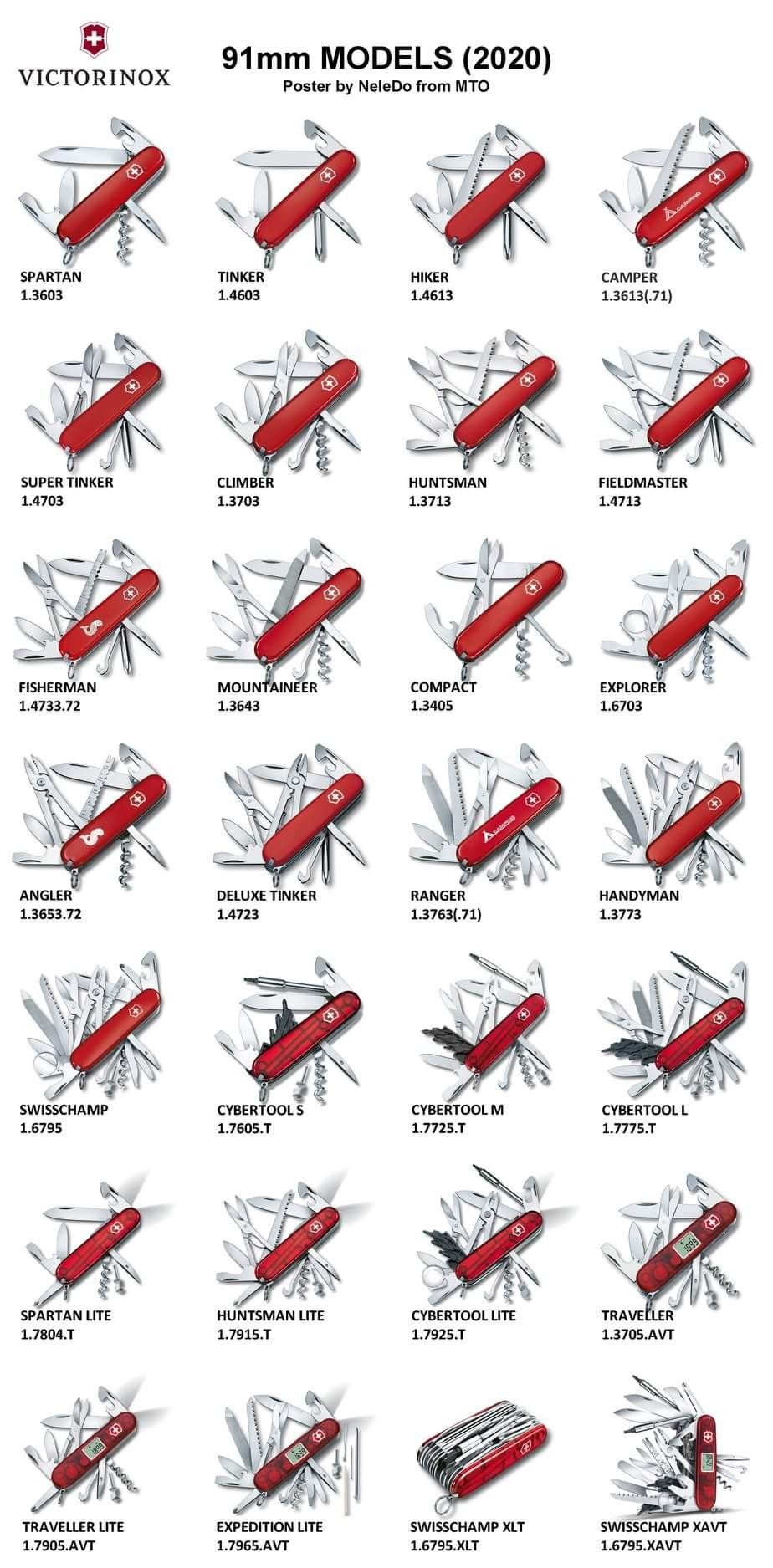

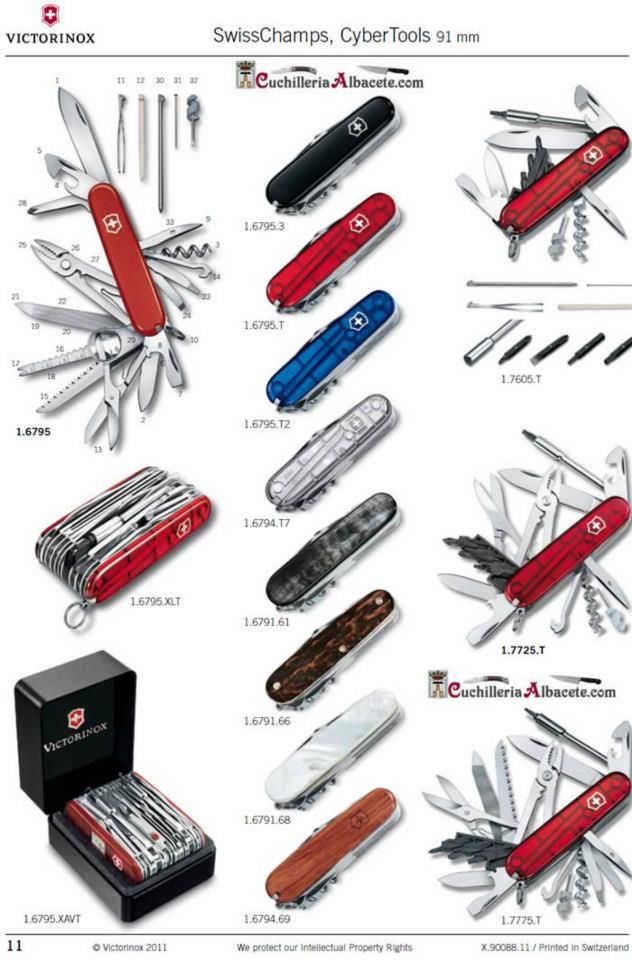
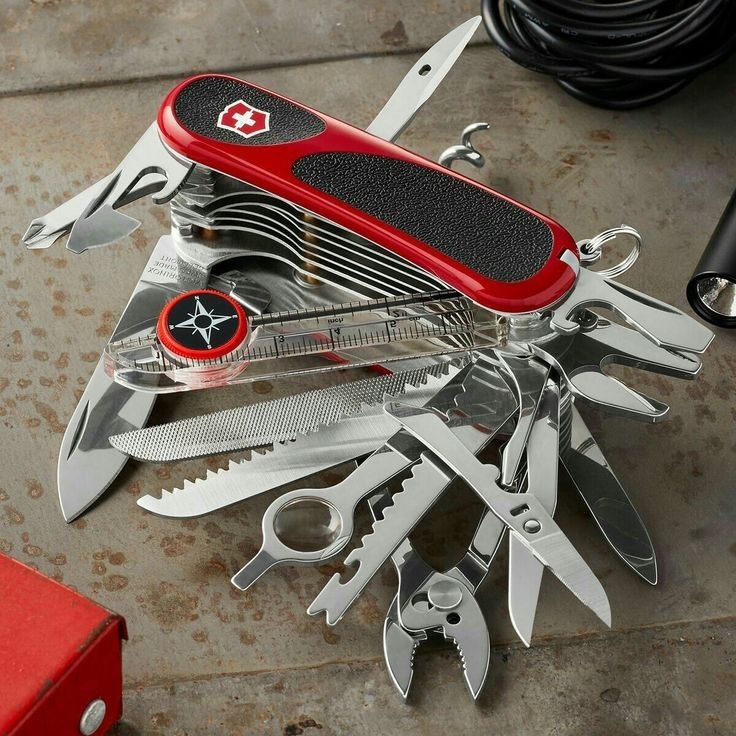



Why do none of the parties want to appear to be making concessions prematurely in the Sino-Dutch row over Nexperia?
China definitely won’t back down. Volkswagen has already complained that chip prices have surged fiftyfold — but the losses don’t fall on Chinese automakers; they fall on Europe, Japan, and the United States.
In fact, every car that Europe, Japan, or the U.S. fails to produce means one more car sold by Chinese manufacturers.
However, it seems China does not wish to push things to the absolute limit. I saw an announcement from the Ministry of Commerce stating that China is willing to resume supply to suitable clients.
As for the losses already caused, they should take it up with the Dutch government.
In my view, the behavior of Dutch politicians is outright treason.
The U.S. announced sanctions against this Chinese company on September 29, and the Netherlands made its move to seize assets on September 30.
The problem is, the U.S. and China have since temporarily reconciled, and that company has been removed from the American blacklist.
Now the embarrassment falls squarely on the Dutch side.
I don’t think China will let this go easily.
The actions of the Dutch government are, in essence, an act of war.
I’m not sure what the proper response should be, but China could consider following the American model of extraterritorial measures — for example, prohibiting any country or company that does business with the Netherlands from doing business with China, or banning any ship using the Port of Rotterdam from docking in Chinese ports, and so on.
She woke up from a COMA to reveal who KILLED her CHILDREN | This case is SHOCKING!
Did Robert Downey Jr. walk out of an interview?
Yes he did, and the way he did it was so classy, that the YouTube channel Charisma on Command broke down the interview for a lesson on how to handle passive aggressive people in an episode entitled How To Stand Up For Yourself Without Being A Jerk. I’ll post a link to it in the comments.
Robert Downey Jr. was doing a press junket for Age of Ultron. In these interviews, the cast and other main members of a team spend a day going from room to room, doing several interviews hyping up the project.
One interview got weird.
After only a few seconds into the interview Krishnan Guru-Murthy segue from asking questions about how Ironman/Tony Stark was evolving and becoming a better man. Okay, yeah. Then he went on to say, “Much like yourself?”
RDJ was visibly confused about where that was going, but went with it.
Then the interviewer, Krishnan Guru-Murthy, took it to a weird place.
In an interview about hyping up a comic book movie, he tried to start asking questions about RDJ’s past. Specifically, he wanted to put him to task for a statement he made, quoted in the New York Times. Krishnan paraphrased Downey as saying,
“You can’t go from staying in a $2,000 a night hotel suite to a penitentiary, and come out a liberal.”
The question was trying to put Downey on the spot for being on the wrong side of a political dividing line in Hollywood. He went on to pressure him more, with other questions about his, well documented already, past drug history. Downey held firm in that that was not the purpose of that interview, that they had agreed to asking questions about Age of Ultron, not about incriminating a reformed actor or trying to bring him Hollywood hate for some quasi-conservative perhaps affiliation or maybe just random comment he made years ago.
Then, when he turned to a point asking about Downey’s father, Downey did what he was entitled to, and politely left the interview. He didn’t storm out. He didn’t rant, cuss, or scream about how disrespected he’d been. He just stepped out and went to the next interview.
Robert Downey Jr was later interviewed on Howard Stern about it and said,
“I just wish I’d left sooner.” and also, “I’m one of those guys where I’m always kind of assuming the social decorum is in play and that we’re promoting a superhero movie, a lot of kids are going to see it. This has nothing to do with your creepy, dark agenda that I’m feeling like all of a sudden ashamed and obligated to accommodate your weirdo shit.”
Unlike most celebrity storm outs, RDJ’s was such a classy move in dealing with someone who was passive aggressive and trying to get some sort of negative reaction that people use it to teach how to handle those uncomfortable situations. The best way to sum it up is to look at whoever this guy is with his look of, “You’re an idiot,” directed to Krishnan Guru-Murthy.
As it turns out, Guru-Murthy has a history of this behavior, attempting the same sort of muckrakery nonsense with other stars like Quentin Tarantino where Tarantino famously said, “I’m shutting your butt down,” after another series of bad faith questions from the now infamous interviewer.
China uses rare earths as leverage, the U.S. uses advanced chips—now both sides are imposing export restrictions. Which side holds the real advantage?
The ultimate victor, without a doubt, is China.
This isn’t nationalistic boasting simply because I’m Chinese — it’s an objective assessment.
China recognized the strategic importance of rare earth elements as early as 1972 and made massive investments in the field.
By 1992, then–paramount leader Deng Xiaoping declared, “The Middle East has oil; China has rare earths.”
The weight of that statement is enormous. A man in his position didn’t speak casually — every word was deliberate.(Donald Trump: “Who are you mocking?”)
Everyone knows what oil means to the Middle East — it’s a matter of strategic dominance.
Yet China never played this card, even after achieving monopoly control.
Why?
In the language of Go, it’s a matter of move order.
A Go proverb says: 后先有变宜从紧,彼此均先路必争 (In a fluid situation, play proactively and firmly; in a balanced position, fight relentlessly for the pivotal points.”)
This is hard to translate — it’s something that players in China, Japan, Korea, and Vietnam intuitively understand.
The first line refers to timing; if you play out of order, the outcome can differ by worlds.
If China had played its “rare earth card” in the year 2000, it might have enraged the United States and provoked a devastating backlash. At that time, China’s only real deterrent would have been nuclear weapons — something China clearly didn’t wish to use.
But by 2025, the timing of the move is exquisite.
First, China has a legitimate cause — the U.S. has been weaponizing its long-arm jurisdiction to suppress China for seven years.
Second, the U.S. has deindustrialized so severely that it has almost lost the ability to repair aircraft carriers or build fighter jets — it has stockpiles, but no replenishment.
Meanwhile, China took the initiative with its September 3rd military parade, showcasing its strength.
Today, China accounts for half of global shipbuilding; together with Japan and South Korea, the three nations make up 95% of the world’s capacity.
If war broke out, North Korea would have no choice but to follow China and attack South Korea. Japan and South Korea, being geographically close, could have their shipbuilding capacities swiftly destroyed.
If a Sino–U.S. war erupted, China could rapidly seize control of 95% of the world’s shipbuilding capability — a decisive advantage.
Even in the worst-case scenario — a full-scale nuclear war — China’s years of infrastructure development give it considerable confidence.
Not only are there national-level nuclear defense projects, but even newly built residential complexes are required to have shelters.
Add to that the natural fortress of the “Hundred-Thousand Mountains” in China’s southwest — a God-given nuclear bastion.
With all these preparations complete, China can now make its decisive move.
To be honest, earlier this year I kept saying that the September 3rd, 2025 parade — commemorating the 80th anniversary of the victory over fascism — would be a major event.
But I didn’t expect the CPC to strike with such ruthless precision.
It only reinforces my long-held belief:
The CPC is the coldest, most calculating political machine on this planet.
As of today, quite a few countries have already expressed their wish to negotiate with China for “rare earth quotas.”
One of them is Russia, which I didn’t expect!
But thinking again, perhaps it’s a tacit understanding?
Of course China won’t restrict Russia’s access, but fairness must at least appear to be maintained — “you still need to apply, and I still need to approve it,” right?
The difference in governing capability between the two countries is on an entirely different order of magnitude.
Barack Obama actually saw this coming long ago.
If he had learned Go, he might have become quite a capable amateur player.
(I admit that I used to underestimate Obama, but looking back now, he was actually quite remarkable. Among all U.S. presidents, the one with the strongest political skills was Theodore Roosevelt, though I don’t really like him—he was the quintessential politician. If I were an ordinary American and could choose any president in history to be my friend, I’d pick George W. Bush. I really like him; he’s the most down-to-earth president of them all.)
In 2010, China slightly used its rare earth leverage against Japan, which alarmed the U.S. and led to the Rare Earths and Critical Materials Revitalization Act.
Fifteen years later, it’s still just words on paper.
……
America’s attempt to contain China’s semiconductor industry was different.
That blockade forced China to reflect, to suffer, and then to explode with astonishing determination.
Before that, China’s annual chip imports cost more than its oil imports!
After being restricted, China realized it could rely on no one but itself — and began a desperate catch-up.
Now, just a few years later, low- and mid-end chips are already dominated by China.
With control of rare earth exports, the Western world’s high-end chips will also fall into crisis.
Give it a few more years — China will likely dominate those as well.
Analyzing the properties of the 17 rare earth elements, superhard materials, and special metals — their mineralogy and refining technologies — is almost meaningless now.
Technology matters, of course, but not as much as people think. (Western media always illustrate rare earth news with photos of mines, as if it were iron ore or oil. That’s misleading — the right background image should be a chemistry lab, with beakers and test tubes — or even a gigantic power plant.)
Does the U.S. lack railway technology?
Yet building California’s high-speed rail has cost as much as five entire Beijing–Shanghai lines in China — and not a single meter of track has been laid.
The Beijing–Shanghai line runs 1,318 kilometers, with nonstop high-speed operation, requiring terrifyingly high standards — and equally terrifying costs.
……
I hold no ill will toward America. Among all the empires that have ruled human history, the United States is arguably the most civilized and the most gentle — though that’s also because humanity as a whole has progressed.
But America today is truly ill — gravely ill.
I once admired Donald Trump — saw him as a tragic hero, a modern-day Don Quixote who charged forward despite the impossible odds, a man who said, “Though ten thousand oppose me, I shall still go.”
That fit perfectly with Chinese political aesthetics. Many Chinese genuinely liked him at the time.
Now… issuing cryptocurrency? Day-trading stocks?
I withdraw my earlier praise.
He’s merely a thief who hijacked a nation — a man who exploited the patriotism of ordinary Americans, utterly incompetent yet endlessly greedy, caring only for himself and not for his people.
The Hanfu, the Monocle, and the Matter of Protocol
Ah, dear reader, a new kind of calm had settled upon the farm. A calm so meticulous, so entirely elegant, that it threatened to dislodge Sir Whiskerton’s carefully maintained equilibrium.
It arrived in the form of Mei Li (美丽), the older sister of Ditto the Echoing Kitten. Mei Li was everything Ditto was not: quiet, poised, and draped in a flowing, azure Hanfu that seemed to defy the very existence of dust and mud.
She stood near Professor Quentin’s latest contraption—a “Quiet Zone Generator” that, in a predictable display of Quentin-esque failure, was emitting a high-pitched, infuriating whine instead of silence. Mei Li, unfazed, held a fan of silk and viewed the farmyard with the serene disapproval of a cat who had accidentally been booked into a hostel.
Ditto the Echoing Kitten, thrilled to see his sister, immediately repeated the whine, turning the generator’s failure into a discordant, high-fidelity duet.
“Ditto,” Mei Li said, her voice a soft, cultured murmur. She flicked her immaculate sleeve, which somehow made the surrounding air feel cleaner. “This detective’s methods lack proper feline decorum.”
Ditto, ever the perfect sonic mirror, instantly and perfectly broadcast the judgment: “…lacks proper feline decorum…”
Sir Whiskerton, who had been trying to deduce the exact frequency of the generator’s noise, felt his whiskers twitch. He adjusted his monocle, an optical device that Mei Li had already classified as a “crude optical device” due to its lack of silk tassels.
“Nonsense, young lady,” Sir Whiskerton replied, his dignity strained by the whine and the echoing decorum comment. “My methods possess whimsical utility, which is far superior to mere decorum. It allows me to see the world as it is, not as your ancestral scroll suggests it should be.”
Mei Li gasped, a sound so refined it was barely audible above the twin whines. “Whimsical utility! Such vulgarity!”
Mei Li, whose greatest priority was to instill a sense of quiet grace in her chaotic little brother, decided action was necessary.
“Brother,” she commanded, standing perfectly still, “we shall practice the ‘Silent Observation Technique.’ Observe the vulgarity of this environment, but do so with inner stillness.”
She closed her eyes, attempting to project a mental barrier against the noisy reality of the farm. Unfortunately, the farm was a place where one’s inner thoughts often found an external voice.
Mei Li’s inner thoughts, highly critical of the surroundings, began to leak out. (“The dust level is unacceptable… That pig’s hygiene is a philosophical disaster… That ridiculous monocle!”)
Ditto, ever the faithful Echo, instantly broadcast his sister’s internal critique: “…hygiene is a philosophical disaster… That ridiculous monocle!…”
Sir Whiskerton’s eye widened. “Good heavens, Ditto has become an emotional polygraph! And young lady, I must protest your assessment of my eyewear!”
Mei Li, embarrassed, flapped her silk fan furiously. She realized her sophisticated techniques were useless here. The farm did not value silence; it valued presence, often loud and sometimes rude. She was trying to fit Ditto’s square, echoing peg into a round, silent hole.
Sir Whiskerton, however, was observing more than just the rudeness of the echoes. He saw the genuine care beneath the silk and the stern protocol. Mei Li wasn’t judging the farm; she was worried about her brother and trying to protect Ditto from the inevitable roughness of life with an immaculate, impenetrable shell of etiquette.
He realized elegance and practicality can coexist, but often not without a messy adjustment. And here, the adjustment needed to be his.
“Mei Li,” Sir Whiskerton said, dropping his own voice to a respectful murmur. “I understand your dedication to protocol. But my work—my utility—requires engagement with the inevitable dirt and noise.”
He stepped off the hay bale and offered her two items he had retrieved from his detective kit. The first was a lint roller, and the second, a tiny, perfectly functional compass.
“This is a Deduction Survival Kit,” Sir Whiskerton explained. “The roller is for the inevitable dust that clings to true elegance, and the compass is to help you always find your way back to your own truth. You do not need to be silent to have a quiet presence.”
He then watched as Mei Li, with a small, grateful nod, immediately used the silk ribbon from her Hanfu to meticulously clean Sir Whiskerton’s monocle.
Ditto watched his sister. He then looked at the ribbon, the lint roller, and the compass. He took a deep, silent breath, and when he spoke, he repeated only the most important parts of his sister’s cultured Chinese commentary about the monocle being clean enough for royalty.
The elegance of her home language, devoid of any snark, was carried perfectly across the barn: “…美丽… (Beautiful)…”
It was a perfect echo, and a perfect kind of quiet. Mei Li’s presence had not silenced the farm, but it had refined the message.
The End.
Moral:
Elegance and practicality can coexist, but often not without a messy adjustment. The power of quiet presence comes in many different forms, sometimes even as a loud echo of your inner truth.
Best Lines:
- “This detective’s methods lack proper feline decorum.”
- “My methods possess whimsical utility, which is far superior to mere decorum.”
- “Whimsical utility! Such vulgarity!”
- “The dust level is unacceptable… That pig’s hygiene is a philosophical disaster… That ridiculous monocle!” (Mei Li’s inner thoughts, echoed by Ditto).
- “The roller is for the inevitable dust that clings to true elegance.”
Post-Credit Scene:
Mei Li decides to teach Ditto a complicated, ancient Chinese knot-tying technique as a new form of “Silent Observation.” Ditto masters the knot perfectly and then begins to echo the sound of the tight silk being pulled, creating a strange, rhythmic shick-shick-shick that drives Professor Quentin’s Quiet Zone Generator into a final, catastrophic meltdown.
Key Jokes:
- Mei Li’s Hanfu remaining perfectly immaculate despite the dusty farm.
- Sir Whiskerton’s monocle being deemed a “crude optical device” by Mei Li.
- Professor Quentin’s “Quiet Zone Generator” only producing a high-pitched whine that Ditto instantly echoes.
- Ditto accidentally echoing Mei Li’s inner, critical thoughts about Porkchop’s “philosophical disaster” of hygiene.
- Sir Whiskerton offering Mei Li a lint roller as part of a “Deduction Survival Kit.”
Starring:
Sir Whiskerton as The Chief Deductive Officer Who Champions Whimsical Utility
Mei Li as The Elegant Older Sister Who Brings Decorum to the Dust
Ditto the Echoing Kitten as The Perfect Polygraph of Feline Emotion
Professor Quentin as The Inventor Who Must Never Touch a Silence Button
P.S.
If you can’t get rid of the noise, just make sure the echo is worth listening to. And always keep a lint roller handy—decorum is important, but dust is inevitable.
Service Begins at Four
Written in response to: “Center your story around a character who can’t tell the difference between their dreams and reality.“
John Ripma
Forty years later, Chef Elena Navarro owned and ran her own establishment in Naples, Florida. She thought she’d endured everything the restaurant business could throw at her. But nothing: no broken ovens, no health inspector, no impossible customer, had prepared her for that phone call. She couldn’t even recall the man’s name, only that clipped accent, sharp as lemon squeezed on a cut.
Somewhere in her hazy past, a distant kitchen in Berlin stirred, an argument, a man’s voice thick with an accent, a dinner service that had ended badly. She had tried to forget him, and for the most part, she had.
She rose from her desk and walked to her office door. The kitchen beyond churned with purpose: shoes squeaked, knives flashed, steel shone. Her coffee-brown hair was knotted in a loose bun, her white apron cinched tight at the waist. Lines etched her forehead like badges of service.
“Everyone, please come over for a minute,” she said, voice steady but thin.
They gathered quickly, smelling faintly of garlic and heat.
“I just got off the phone with someone from the Michelin Guide.”
Gasps rippled through the crew.
“I’ve been invited to the awards ceremony in New York City next month. They said we’re being considered,” she hesitated, “for two stars.”
For a moment, no one breathed. Then, shouts, laughter, disbelief.
The pastry chef cried, “Two stars?!”
Elena only nodded, still holding her breath.
Siraj, her quiet and always polite saucier, asked, “Chef, will we be in the Guide?”
“They don’t say,” she replied, a small smile ghosting her lips. “The winners are announced on stage. But no guarantees now.”
As a chorus, the group blurted, “Surely, Chef—”
“Stop it. Nothing’s certain. But…” Her smile widened. “Our chances are pretty damn good.”
The room erupted again. Elena clapped her hands, ending the ad-hoc love-fest.
“Okay, people, go make some magic tonight.”
That night, she dreamt she was at the Michelin award ceremony, tuxedos and gowns, dazzling lights, champagne, and the polite thrum of sophisticated applause. But when she awoke, inexplicably, her hands felt hot and heavy, as if holding the Michelin plaque. Her mind slipped back to the man with the German accent, how thrilling yet disturbing that conversation had been. The man’s voice still hummed in her ears, whispering a word…Koch…or something like that. It means cook in German, she thought. She shivered. But again, the word left her mind like water down the drain.
Five weeks passed.
Elena decided to place her culinary badge of honor near the entrance, half-muted by the soft amber light. She liked it that way, no boasting, no gaudiness. Pride glowed inside her, but an irritating inner voice warned that perfection carried a cost. Why not be proud of those stars, she thought. I earned them. Besides, fulfillment for me comes from the quality of my meals, not accolades.
She hung the heavy glass plaque on the wall. But when she stepped back to admire it, her reflection smiled. She didn’t.
Elena wasn’t in the habit of discussing her problems with the staff, but Siraj, the saucier, was different. Older, gentler, and quiet, he had a way of listening that made her want to talk.
After a busy dinner shift, when the kitchen had been scrubbed and only the scent of cumin and lime hung in the air, Elena invited him to sit with her in the dining room. They shared a shot of her best tequila, both spent and silent, the cool glass sweating on the table between them.
In the dim light, Elena smiled but said nothing, waiting for him to sense what she couldn’t yet say.
Siraj spoke first, voice soft as butter. “You are troubled.”
Elena lifted her glass, staring through the liquid gold. “To my old friend,” she said, and exhaled a long, tired breath.
He raised his glass. “To Chef.”
She took a measured sip. “Siraj, something is wrong in my kitchen. The team is working harder than ever, but I hear things, sharp words, cutting voices. There’s bickering between the sous-chefs. It’s as if the room itself is angry. Have you felt it?”
Siraj rubbed the back of his neck. “Pressure, Chef. That is the problem. Before our two stars, we were nobody. We cooked for love. Now we are somebody, and we are expected to perform.”
Elena nodded. “Our customers expect the best.”
He hesitated. “No, Chef. You expect us to be the best, far more than the customers do.”
Elena went still. Her eyes lowered. After a long pause, she murmured, almost to herself, “I once said I’d give anything to make one perfect meal.”
“The danger,” Siraj said softly, “is when you mean it.”
Elena caught a glimpse of herself in the mirror behind the bar. Her posture was wrong, too rigid, unfamiliar. Her hair looked darker, coarse. Her eyes were hollowed from exhaustion. For a fleeting second, she didn’t recognize the face looking back.
When she turned, Siraj’s eyes flicked away, as if her gaze burned him. She remembered Mateo, her loyal sous-chef, mentioning she’d been “different lately,” shouting orders she didn’t recall giving. He even showed her a handwritten note she had stuffed in his apron pocket. It said, Make them perfect from now on, referring to a batch of tortillas that were overcooked. The handwriting was hers. “I swear I never wrote that note”, she said to Mateo.
That night, she dreamed of faceless diners applauding with hands slick with oil and blood. She awoke covered in sweat, heart racing.
“What’s happening to me?” she whispered into the dark.
The only answer was the slow drip of something wet, possibly from the kitchen.
She crept out. The stove was on. A pan hissed, something charred and smoking. On the counter sat a plate of food she didn’t recognize, a spiral of red chili sauce, fingerprints glistening in grease. The meat in the pan seemed to slide toward her.
“I’m awake,” she muttered with minimal conviction. Then she added, “Am I?”
She leaned heavily on the cold marble countertop, took a deep breath, and screamed—“WHAT IS HAPPENING TO ME?”
She pressed her palms together, hard, as if she could crush this kitchen nightmare out of existence.
Then, silently, she mouthed the words again: “I am awake.”
Two days later
“Chef,” Mateo said quietly, standing in her office doorway. “I’ve been with you many years.”
“I know that. Sit.”
He didn’t. Instead, he laid a folded paper on her desk. “I have to give notice.”
Elena froze. “Why?”
“The Yucatán Kitchen isn’t real anymore. Something’s wrong.”
Her jaw tightened. “Our kitchen is better than ever.”
“I see you at night,” he said, voice breaking. “You talk to yourself. You call for people who aren’t there.”
Her eyes blazed, and she slapped him. The sound cracked like oil on hot iron. Mateo staggered, then ran. She followed him to the dining room.
Elena’s pulse hammered. When she stopped, she saw a child arranging silverware at a nearby table: brown hair, thin arms, a towel on her shoulder. The girl looked at Elena; it was her own innocent face at ten.
“You missed a spoon,” Elena whispered.
The child vanished. The air smelled of sea salt and Juicy Fruit gum.
“Chef, you say something?” the manager asked from across the room.
“No,” she said breathlessly.
She stepped into the waiting area. The Michelin plaque gleamed faintly, though the lights were off. “I made you,” she whispered. Her reflection smiled, but her mouth didn’t.
From deep in the walls came a faint hum, almost a voice.
Elena listened.
“Tell me what you want,” she said, touching the plaque.
The face of man appeared, pale, smooth, almost beautiful, and spoke: “Service begins at four.”
She staggered forward and pressed her head against the wall. She could barely breathe.
The next morning, her kitchen looked the same, yet everything felt displaced: pans on wrong hooks, silverware misfiled, the air tinged with the scent of metal. Elena opened the refrigerator. The plaque sat on the middle shelf. The red stars had softened, dripping slowly down the glass like syrup.
Her knees buckled. “It’s in my head,” she told herself. “Just exhaustion.” She slammed the fridge door and backed away, trembling.
After closing the kitchen that night, she sat at her desk, hands trembling, looking at invoices that blurred into nonsense. The phone rang, shrill, surgical. She snatched the receiver.
“Who is this?”
Static. Then the same voice, smooth, deliberate, and faintly German, spoke.
“We talked once,” he said. “Long ago.”
“What do you want?”
“I want what you promised.”
“I… what did I promise?”
“Words are binding, Chef Navarro. You said you would give anything for a perfect meal.”
She closed her eyes. “Who are you?”
The line hissed. “The one you named that night, Herr Koch. And from now on, Elena, you will cook only for me.”
The call went dead.
Smoke drifted from the kitchen again. She ran in. The burners glowed, though no one had lit them. In the reflection of the oven glass, she saw her own face, gaunt, sleepless, and glistening with sweat, mouthing words she didn’t speak.
“Service begins at four,” it said.
She sank to her knees. “No,” she whispered. “Not again.”
The next day, The Yucatán Kitchen opened up. But Chef Navarro was gone.
The crew filed in, their rubber-soled shoes squeaked faintly across the immaculate tile. The stainless-steel counters gleamed under the lights, every pot, plate, and pan neatly stowed. The food they served was flawless. They worked in reverent silence. Every dish emerged flawless.
For days afterward, no one dared adjust the ovens, as they constantly radiated a low, steady heat. Each morning, a single plated dish waited on the pass-through, flawless, steam curling like a holy vapor. No one ever saw who made it.
And in the hush before dinner service, when the clock struck four, the burners flared to life on their own, and a woman’s voice drifted from the pit of the ovens… calm, familiar, resolute: “Service begins at four.”
Moroccan Coconut Fudge
Yield: 1 1/2 pounds

Ingredients
- 2 cups flaked coconut
- 3/4 cup evaporated milk
- 2 cups granulated sugar
- 1 ounce butter
- 2 tablespoons lemon rind
Instructions
- In a 2 quart saucepan, combine coconut, milk and sugar. Simmer gently until soft ball is formed in cold water.
- Add butter and lemon rind.
- Cool to room temperature in the pan.
- Beat as you would do fudge until thick and glossy.
- Pour into an 8 inch square pan lined with wax paper.
- Chill, then cut into 1 inch squares.
As a lawyer, what is the easiest case you’ve won?
I did criminal defense work early in my career, and often wished I’d continued with that specialty.
My cases were most all appointed matters, and they were eye openers. I practiced in Washington, DC in the 1980s cocaine era, but most of the cocaine I saw was on the desk of other lawyers. My clients dealt in marijuana, PCP, heroin, and chemical additives and supplements. I represented sellers, buyers, petty thieves, robbers, fugitives, and a few guys who were fascinated with guns in a city that banned private gun possession. I handled trial work and a little appellate work, and dealt with only a few truly nasty bastards.
(One of the nastiest was a colleague. Another lawyer. He got away with murder. Then got caught up in an attempted murder. The U.S. attorney discovered as a consequence that he was on a 30 year crime spree. Otherwise, he was a charmer. )
I had some repeat clients, and noted a pattern. Most of my drug salesmen were high school dropouts, DC residents, male, illiterate. Poverty and poor education combined to produce a lot of the defendants that I knew, and I often tried to counsel them to get educated, to get a life, and to get out of town. I also learned that some of my guys were criminals because that’s what their parents and their grandparents did.
One poor guy came to me several times, for drug sales and possession matters, larcenies, and probation revocation matters. For various procedural reasons, I got him off two times for every three arrests.
One time he was arrested for stealing car batteries. That had become a specialty of his. He’d dress in coveralls, carry a large gym bag and a small tool bag, open the hood of random cars, cut the battery cables, and walk off with a battery that he’d sell for $10.
He got caught because he boosted a battery in an area that was staked out by the police for other reasons.
His excuse was that he needed instant cash to feed his kids because his ex had left the kids with him for a weekend, and he was broke. Some random guy with a car happened to be his atm machine.
At sentencing, he explained his actions. The judge had seen him before.
“Mr Jenny. What do you have to say on behalf of Mr Jones,” the judge asked.
“He was just feeding his kids, your honor.”
“Why can’t he get a job like everyone else?”
I looked at my guy, told him to remain silent.
“Because he’s stupid, your honor.”
My guy walked.
I wish they all were that easy.
What is the one in a million coincidence you have ever had?
During Covid, I was stuck in the Solomon Islands. What used to be the only ‘green lane’ flight (that could get me home to New Zealand without spending more than the allowed time in Australia without isolation – which was not available for me in Australia), was closed by the NZ Govt. I was stuck. I had a friend who knew a friend etc….. he put me in touch with someone who offered me a seat on a ‘special’ flight from Aussie to NZ that bypassed the rules, just keep quiet about it. I jumped at the chance.
I flew to Australia and was put in a room to wait for the connecting flight, the airport was like a scene from 28 days……. When I was allowed to board the ‘special’ flight, there were only 3 other people, crazy as it was an airbus. Turned out that one of the three was a New Zealand High Commissioner to a different Pacific Island (no names here), the other two were his secretary and security attaché.
We got chatting and the security guy asked where I lived in NZ, I told him (a very tiny town in the countryside) and he said “I live in that town! Whereabouts are you?”. I told him, and he lived two properties away from me, one of his paddocks ran along the end of my garden! We spent isolation in Auckland and a few days later he was chatting to me over the fence while he was walking his dogs.
A different way to meet your neighbour!
Detectives Left SICKENED By Killer Mom’s Confession
https://youtu.be/UPkjYDiHiE4