
Sometimes people are just stupid.
When I lived in Pennsylvania (a State that had a large and popular deer hunting season), there was a crazy story that happened way back. Maybe around 1978 or so. It’s so hard to believe, but it really happened.
So during hunting season…
And everyone was in the woods hunting deer.

This college student, put on a costume to look like a deer. Yeah, it’s really stupid. I know. And so he put on this costume.

And then he went into the woods. And he planned to surprise the hunters and scare them away from hunting. I guess he was some kind of vegetarian, and didn’t like hunters.
And you know what happened?
Yeah. He was shot. And Killed.

Stupid guy.
Today…
Regarding mechanics, what problem was so bad that you wanted to ask the owner “What the hell happened here”?
One day a customer drove up and told me that another shop was replacing the timing chain on his 302 V8 Ford pickup truck. “Okay, I think to myself, what’s this got to do with me?” Then he said, “I don’t think the guy knows what he’s doing”, “He’s had the truck for two weeks and it’s still not fixed, so if I tow it here could you fix it?” “Sure, a 302 Ford timing chain is a very common repair”, I said.
So, he had the truck towed in and I walked out after the tow truck dropped it and opened the hood. That was the “What the hell happened here” moment. The valve covers, intake manifold and the entire front of the engine was completely disassembled. Then he walked around to the bed of the truck and showed me a box full of parts that used to be his engine and some cheese-ball timing gear and chain. “Can you fix it?”, he asked.
“Sure I can fix it, but why in god’s name were the head bolts removed?”, I asked. He told me the other “mechanic” told him that he “Needed to take off the cylinder heads to see when the number one piston was at top dead center.” I told him he was lucky that one of the heads didn’t fall off on the way to my shop and then calmed him down and told him I could fix his beloved truck. He just stared at the box full of nuts and bolts and the pile of parts and asked me “Do you know where all this stuff goes?” I told him that if I didn’t, I wouldn’t be much of a mechanic.
So, since the engine was disassembled to this point, I pulled the pan and checked the bearings, replaced the front and rear seals, got a real double roller timing chain and gears and did a valve job, since the heads were already off, and reassembled the engine.
I never did find out who the genius mechanic was that was working on his truck, but when he picked it up after I put it all back together again, I recommended that he didn’t take anything to that guy to repair ever again.
EDIT:
Several of the responses I’ve received believe that the owner was the person that tore the engine apart. He was not. He showed me the receipt where the original “mechanic ?” had received a $200.00 deposit from him to purchase the parts. Cliff, that was the truck owners name, and I became good friends after that, and he was one of the best tile men I’ve ever met. But one thing was certain, he didn’t have a clue about working on an engine, and the only tools he owned were for doing tile work. Super nice guy, excellent tile setter, but not exactly the brightest bulb on the string.
He definitely got cheated by the other would be “mechanic”, and to this day, he won’t tell me the guys name. Cliff is just that kind of guy. He will never bad mouth anyone, no matter how bad they are. He lives by the, “If you can’t say anything nice about someone, then don’t say anything at all rule.” And I, for one, respect him for that.
Canadians criticize America all the time yet they rely on us for military protection. Isn’t it time for them to shut up?
Who exactly is the U.S. protecting Canada from ?
Go ahead. Say it out loud. Maybe you will reveal your hypocrisy when you actually try to say it out loud.
The U.S. has been preparing to fight one particular enemy for over 75 years, but when the moment finally arrived, what was the U.S. response ?
“Fear of escalation”
Cowards!
So, now we know that if Russia invades Canada, we can trust the U.S. the same that Ukraine can trust the U.S.
Every design of every U.S. fighter plane, submarine, tank, air defence system, cruise missile, etc. is designed to go up against a Russian design. The U.S. has spent trillions preparing for the fight against Russia. There was a Cold War over it that lasted for more than 45 years. The very existence of NATO is entirely because of the threat from Russia.
Some door knobs will claim that was the Soviet Union. Tell me when any military commands during the Soviet Union did not come from the Kremlin ? The Soviet Union was not a union. It was a prison of nations under Russia. It has always been about Russia. Today, Putin publicly acknowledges his personal ambitions to restore the Russian Empire.
Here is one example of weapon platform: M1 Abrams tanks. The U.S. has designed these to go up against Russian designs, and then purchased over 6,000 of them.
Now more than 3,000 of them sit collecting dust in the Sierra Army Depot in the American desert.
One report I saw showed that the U.S. only sent 146 of them to Iraq, the largest ground campaign the U.S. army has been engaged with since WWII. So why in the bell would they need 41x that many tanks ? What enemy could ever justify those quantities ? There is only one enemy, and one battlefield that could ever justify these quantities: the Battle of Kursk 2.0
But when the big red scare of the 1950s, finally did reveal itself, what was the American response ?
Fear!
You could send every one of these tanks to Ukraine without single round of ammunition, and without a single drop of fuel, and they would yield more value as decoys, than they currently do collecting dust in the U.S. desert.
Where are the Americans now ? It was bad enough with Biden publicly backing down from Russia, but now the Americans are allies of Russia.
Putin now has the Americans by the balls. Putin now knows he can attack anyone he wants, and the Americans will not intervene so long as Russians do not attack American troops directly.
Now, American soldiers get on their knees the roll out a red carpet for Putin on a U.S. military base on U.S. soil.
Russia was one of only two countries on the planet not targeted with tariffs on Trump’s ‘Liberation Day’.
So, now we know the U.S. is not protecting Canada from anyone.
The U.S. repeatedly violates all agreements with Canada.
Canada can no longer trust the U.S.
The only country the US is protecting is Israel, while they continue to carry out their turkey shoot against unarmed civilians.
The world can now trust the U.S. the same that Ukraine can trust the U.S.
Saganaki (Flaming Cheese)
Serve Saganaki with sesame crackers, wedges of pita bread, cocktail rye bread or assorted crackers.

ngredients
- 1/2 pound Kasseri or Kefalotiri cheese*
- 1 tablespoon brandy
- 1/2 lemon
- 1 tablespoon butter, melted
* Mozzarella cheese can be substituted for these cheeses.
Instructions
- Cut cheese into 3 wedges; place in shallow heatproof serving dish. Brush cheese with butter.
- Set oven to broil or 550 degrees F. Broil cheese with top 4 to 6 inches from heat until bubbly and light brown, 5 to 6 minutes.
- Heat brandy until warm; pour over cheese. Ignite immediately. Squeeze lemon over cheese. Cut wedges into halves.
Attribution
What is the most thoughtful gesture someone has ever done for you?
I was very suddenly and unexpectedly widowed. I had four children at home from ages 15 to 7.
Life had always been challenging, but I’d had a very involved and supportive husband to help me. Now I needed to work more and take on the responsibilities that my husband had always been on top of.
My children were all very helpful and responsible, did chores and took care of themselves in age appropriate ways. Except, my youngest, who has special needs, and he was requiring even more of my time and attention.
I was upset at how I couldn’t keep up with the house cleaning. With the kids taking care of their chores, the house wasn’t filthy, but it was hard to look at dirt and know that I didn’t have time to deal with it as regularly as needed.
When life is so painful, when I was dealing with such horrible grief while still trying to give my children a somewhat normal upbringing, having a home that wasn’t clean just added to my stress. It just continually reminded me that I wasn’t capable of being all that the kids needed.
The church we attended was supportive, and there would be a few volunteers who would sometimes mow my yard or fix something that I couldn’t get to. But other chores kept getting away from me.
One day the church administrator came to me to tell me about an anonymous donation that was given for me. They wanted to pay for someone to come clean my home every week for a year! I was amazed that someone would do that at all… but to be gifting me with that thing that I felt would make my life so much easier! (I counter offered… negotiating my gift… could they please pay for someone to clean every other week for two years?! I knew that it would help more if I could stretch it for a longer time.)
It really did make a difference in being able to have more relaxed time with my kids. That was an amazing gift!
The “What If” Lives of Jeanie the Dreamer
Written in response to: “Set your story at a funeral for someone who might not have died.“
🏆 Contest #295 Winner!
Avery Sparks
This story contains themes or mentions of physical violence, gore, or abuse.
El leaned over the lectern and looked the front row of mourners straight in the eyes. She had one elbow on the celebrant’s notes, and for all the world looked like she was ordering a pint of Bishop’s Finger down at her local in Dalston.
‘Oh no, it’s the ex wife, I can see some of you thinking. How’d she get up there?’
She chuckled.
The celebrant suddenly took on a very bird-like stance, her gaze flitting from El’s biceps, tattooed with pitchforks and spades, to the family sitting on the front row.
‘Look, we all know how things ended, for us all.’ El continued. ‘So when Ray and Pauline asked me to say a few words at the funeral, I thought, can’t be sweeping that under the carpet, can I?’
On seeing a small, stoic nod from Pauline, the celebrant visibly relaxed.
‘She’d been gone for a long time, before she went,’ said El. ‘Something happened to the woman I married. But today, I wanna remember the Jeanie I first went for a coffee with, ten years back. Summer solstice twenty-fifteen. We got chatting over Motörhead, true crime, and the absolute nob of a client we were working for – I was doing the garden, she was doing the house. She liked my jokes about big bushes; I clocked that she got the serious behind the funny. One thing led to another, and Bob’s your uncle, we moved in together.
‘You’ll all know Jeanie for her creativity, but it was something else to see it up close. She could knock up those perfect miniatures just from a couple o’ photos people would send her – every angle bang on, like she had Pythagoras himself whispering in her ear.’
El touched her necklace, a small replica of The Glory pub, its golden stage curtain visible in the tiny window – another favourite haunt in their early days.
‘She never gave up who she was. There was me, chasing the cash, doing up gardens for the Rolling Stone down the road, and there she was – day job, Etsy, socials, workshops – all that, and still loving the bones off me.
‘She knew London better than the pigeons do. A night owl, a grafter, a proper artist. She made tiny things but had big dreams. She never became the version of herself she imagined – but she was already more than I ever needed.’
El’s voice broke.
‘Where’d you go, Jeanie?’
***
Jeanie narrowed her eyes at the woman standing in front of her in the full-length mirror. She was in her mid-thirties but she had set lines on the bridge of her nose whenever she frowned (often-ish), and spider veins on her nose from one too many nights at The Glory. She’d bricked together a bit-part career in examining and creating very detailed miniatures, but she couldn’t ignore the miniature but emerging details of her own ageing. Hair still the colour of embers, but flatter than it was. After a late night, eyes underlined in ashen mauve. And more, and more little changes, every day.
She rubbed the shadows under her eyes. Thank god for filters. If my socials took off, she thought, maybe I wouldn’t have to do the late nights. What if I only had to worry about one job, instead of four?
As this thought pushed its way to the front of her mind, saw the image in the mirror become blurry. She reached out her hand to touch its surface, steady herself –
And her hand went straight through.
It disappeared into the surface of the mirror.
She pulled it back in horror, examining it, half expecting her hand to be returned in ribbons, or gone, or shrunk… but there it was, just the same as when it went in.
The other side hadn’t felt any different.
Cautiously, she stepped closer to the mirror. She thought about her plans for the afternoon, which began with fulfilling yet another Eiffel Tower order from Etsy.
She held her breath, and jumped, cat-like, through the mirror’s frame.
On the other side, she landed behind a large hebe bush, looking out onto an emerald expanse. A large lawn stretched out on one side of her, and on the other a house made largely of glass, framed by cirrus clouds and a cerulean sky. It was one of those houses Jeanie had only ever seen on TV, on the kind of show where the families building it can, at the last minute, locate an extra hundred grand to cover all those unforeseen costs.
On the other side of the bush, Jeanie could see someone in the driveway, standing behind the open car boot, apparently filming themselves.
Jeanie’s height, Jeanie’s build.
Hair the colour of embers.
‘Okay, everyone.’ Other Jeanie was holding up her phone, addressing her followers. It’s Saturday Tackquisition, so let’s see what the flea markets of Kent had in store today. I got so many things you all told me not to…
Jeanie cringed: it was just like when you hear your own voice on tape. Except it wasn’t on tape, it was real life. In this universe, the one beyond the mirror, this was her real life.
She felt a kind of ecstatic panic begin to rise in her, but bit her lip. This was not a moment to let herself be overwhelmed. She’d always been in her head, spending time in other, imaginary places – what ifs, thought experiments, speculative fictions. In equal measure entertained, scared, protected and encouraged by these other worlds. But here she was. Actually in one. There were so many questions she needed to ask herself.
‘Hey!’ she yelled, at the top of her voice, breaking the cover of the bush and running towards Rich-Jeanie. RJ.
No response.
‘HEY!’ she shouted. ‘JEANIE!’
No response.
RJ resumed the filming without seeming to notice Jeanie at all. She banged on the car – RJ continued, unperturbed. She tried to make a little scratch: maybe she could write something? But her key made no mark.
‘Shit,’ said Jeanie, as her plans to ask Other Her for the secret to her success went up in smoke.
As RJ continued filming her Tackquisition, Jeanie took curious steps towards the house. It was summer, and the back door was open. She slipped inside.
It was everything she’d ever wished for: a hot tub under the trees, her own studio, filled with the latest Modex equipment, changeable wall displays which you could programme to every mood, secret passageways, and an entire attic, windows looking out into an expanse of sky, filled from corner to corner with a model town populated with places whose spaces filled her head and her heart.
She picked up an exquisite rendering of the Hackney Empire theatre, which fit in her palm, and whose inside was as perfect as its outside. This is the best thing I’ve ever made, she thought. In her world, it was under its gilded gold florals and sweeping balcony that El had first told Jeanie she ‘bloody loved’ her.
El.
When she entered this world, she’d only thought of the way forward. Not back. Maybe, like Alice, she’d wake from a dream, but this world felt as real as reality gets. She had to find the way back.
Her steps became increasingly urgent as she ran to the back door, bursting through, her eyes racing across the garden, breath quickening. Nothing. There was nothing there. She was stuck.
She began to pace, hyperventilate – and then – a distortion – almost imperceptible, but there.
She ran, jumped into the haze, and after she’d crossed back into her bedroom, looked behind her. The mirror’s surface glared, reflecting the unchanged bedroom sharply and clearly.
She checked her phone. Half an hour. Exactly the same amount of time had passed in that world as this.
El opened the bedroom door, eyebrow raised.
‘I heard a noise – love, I’ve been looking for you. Where’d you go?’
‘I went -’
She paused. A split second decision.. ‘I went for a walk.’
She’d tell her the truth when she figured out how.
***
The mirror didn’t just lead to that one world, or that one Jeanie. Day after day after day of experimentation taught her that all it took was a thought, a moment of wanting, to unscroll an entire universe. She’d think of a place, a time, a life she’d never lived but might have, and it would be there, waiting for her. She learned to craft her thoughts, to manifest them with colour and texture, and the mirror, it seemed, was always watching.
She went, again and again, to Jeanies who did things she’d always dreamed of. One owned a bar in Vietnam, an unforgettable and nocturnal woman, handing bright and burning glasses to people having the times of their lives. One was a competitive cyclist who trained in the Alps, her legs a blur of muscle – unbeaten, unbroken. One was a war correspondent, tirelessly pulling stories from torn down cities, amplifying the voices of those in the rubble. One was an upstart of the Berlin arts scene, a riot of paint and new ideas. Jeanie wove through urban landscapes and gloried in great expanses of nature.
Time, in these worlds, stayed its course. There were no past or future lives, and minutes moved at the same pace. So she bought an analogue watch – a tag to encircle her and remind her when she had to go. Hurry up please, it’s time.
“Just half an hour in the mirror” became “just until the end of this conversation”, became “just until lunchtime”, became, “just when El will notice”. She started to miss orders. When El asked her how her day had been, her mind was full but her mouth was empty. Their conversations went from intricacies and intimacies, to broad-brush banalities. ‘Same old, same old,’ she’d say.
What with El on site, and her freelance, the secret was easy to keep. The more worlds she saw, the more she felt them crowding, widening the space between her and El, making the telling of it – if she ever could – feel further and further out of reach.
***
She’d been slipping between worlds for two years when one evening, laying in bed, she traced the outline of the roots tattooed on El’s forearms with her fingertip. In their eight years together, the lines had blurred. ‘You ever think about getting these redone?’ she asked, idly.
El turned her over, and in that way only she could, anchored Jeanie’s gaze to her own.
‘I know something’s going on, you know.’
Jeanie’s stomach jolted: a missed calculation. She’d never been caught. She thought she’d kept it all contained.
‘You’ve had less and less materials coming into the house. Sana said she never sees you down the workshop. What aren’t you telling me?’
Jeanie suddenly felt the loss of those early moments; the truths she’d never let become words; the confessions which would have kept her from this moment – when she knew she was going to lie.
‘I’m just tired of it,’ she said, not meeting El’s eyes. ‘I’m sorry. I should have talked to you about it. I want to do what speaks to me, as an artist.’
It wasn’t that El wouldn’t believe her – it was something quieter, more certain. El would’ve told her to stop. And she couldn’t stop.
El pulled her close. ‘Do whatever you need to, love. I’ve got us.’
***
The first time she went overnight, she told El she was going to Manchester for a conference.
She was starting to have favourite Jeanies to follow – lives that she’d tune in to with more investment than her own. War Correspondent-Jeanie, CJ, was one of the best.
CJ had hard eyes, the lines at their corners like history’s own annotations, deepening with every atrocity she refused to shy away from. She was at the top of her game. Jeanie watched her deliver to camera as fire cracked the sky behind her. She watched her pull truths from people, on-air, off-air, tactfully uncovering misinformation. She saw her fuse technical knowledge with deep empathy, in three words.
CJ had been nominated for a Peabody award. The night Jeanie was in “Manchester”, she stood before the stage, eyes gleaming, watching CJ’s acceptance speech for her groundbreaking reporting from her world’s Iranian Civil War.
Maybe she could stay for a bit longer – just stand a while in the warm words of others. To hear with her own ears the appreciation of a lifetime’s work.
***
2am, looking into the mirror – already blurry. Once, 2am had been her favourite time, the stillness a promise of tomorrow.
A week had passed. El had reported her missing to the police, of course. She had to be interviewed, and hadn’t bothered to rehearse a lie. She said “no comment”, like all the guilty people on true crime shows.
Her inbox was a mob of angry voices shouting about unfulfilled orders and unmet deadlines.
She felt the next day creeping. A vacuum. She didn’t even know what was on the other side this time, but she inhaled deeply, and stepped back in.
***
After the Peabody, CJ had travelled to Gabon, breaking through borders of silence to report on a conflict not troubling any algorithms.
Jeanie was watching her interview a group of refugees when the air began to crackle. A militia man on a motorbike – there and gone before anyone could think of diving for cover. The bullets scattered into press and refugees alike.
Jeanie gasped, hands to her stomach. She looked down, feeling hollow. Sometimes, she knew, people didn’t feel it when they were seriously hurt. She moved her neck, limbs, she bent her body in a twisted test – am I dead? It didn’t seem so.
Most were fleeing; survivors and wounded swarmed, helpless, directionless. Jeanie’s shouts couldn’t be heard, screaming for people to move out the way – she had to see – there on the floor –
CJ had a helmet, a bullet-proof vest – but her neck. There was a bullet in her neck. Blood haloed around her.
Jeanie saw the life leave her own eyes. She watched her jaw go slack. In the chaos, she might have been the only person who saw it.
Something pulled at her, a deep wrongness which almost bodily dragged her back to the mirror’s haze. This couldn’t be. She couldn’t be here, dead and alive.
She was dragged back – arms reaching out, desperate to hold the woman on the floor that she had watched for so many hours. That she loved like herself, but more than herself. She screamed as the mirror’s haze swallowed her.
Hurled out, she landed in her bedroom. She desperately manifested CJ in her thoughts, but the mirror remained defiantly sharp.
She stared at her hands. Small, unharmed, unscarred hands, the hands that never risked anything, and made only small things.
***
Jeanie, of course, couldn’t explain her grief to El, or why she refused to get help.
‘If you don’t tell me what’s going on, there’s no chance for us,’ El had said. ‘This has been going on for so long. I can’t work it out, Jeanie.’
Jeanie looked at the floor.
When El kicked her out, it wasn’t the thought of losing her that sent Jeanie spiralling – it was the thought of life without the mirror. She’d been so focused on the next world that she hadn’t considered the possibility of being cut off from it.
Could she take it with her? The question came, then she laughed it away. It was a full-length mirror, after all.
She’d have to find a better life.
As an outsider, always.
And so, with nothing more than a half-formed thought in her head, Jeanie stepped into the mirror without a plan for ever coming back.
***
She’d taken herself to the attic of miniatures at Rich-Jeanie’s glass mansion and let herself sink into the comfort of it. Jeanie, avoiding both RJ and her El, spent time in the tiny world under a big sky. The Rio Cinema, the Curve Garden, Better Health Bakery. Miniature, intricate, perfect. She hadn’t set foot in any of them in years.
It took months before she even set foot outside their attic. She followed the sounds of life heard from the kitchen. Anniversary day – theirs, not hers. RJ was making dim sum with flavour combinations she knew to be El’s favourites, clearly planned to elicit a ‘cor blimey’. She watched herself sit, thinking up funny names for the dishes, listing out all the words – a groan for Steak a Bao, a satisfied smile for Shrimply the Best Siu Mai.
I can do that, she thought. I can be that person too.
***
Jeanie had left the kitchen light on, hoping El would see her when she came back.
El emerged from the evening light. Behind the glass door, she stopped. She stood there, looking at Jeanie as if trying to see if she recognised any part of the woman sitting in her kitchen. Her expression – it wouldn’t settle, and Jeanie couldn’t place it. El didn’t move.
Jeanie rose deliberately, opened the door, and there they were, facing each other in their very small kitchen, in their very small house, in their world.
She barely let Jeanie say ‘hello’, before –
‘I’ve just done your fucking eulogy.’
Time stopped; their eyes met. And in that shared moment, when Jeanie’s snowflake-blue and El’s forest-hazel eyes saw each other, and only each other, they laughed.
Jeanie’s throat burned, the words scraping their way out. ‘I hope it was good.’
‘I called you a twat.’
‘Sounds about fair.’
‘And you don’t even have the good grace to be dead.’
El’s smile was worn, but genuine.
‘But I have been, El,’ she said. ‘I really have.’
And that was when Jeanie broke. She shattered, like the mirror, which upstairs, lay in fragments on the bedroom carpet. She wept. El pulled her in, wrapping her arms around Jeanie: the only Jeanie she knew.
What did people do before food stamps and ssi?
And (historically) practically free food?
They died, often horribly.
This is why books and plays that depict premodern society dealing with anything but the upper class are now banned.
Read Dickens. Read Victor Hugo. Any well researched historical fiction from before the early to mid 20th century. Steinbeck comes to mind.
Heck, watch any of the better movies, like The Grapes of Wrath (1940).
Even the musical, Les Miserables.
Here’s a start.
Colloquial English term referring to a city slum A rookery , in the colloquial English of the 18th and 19th centuries, was a city slum occupied by poor people and frequently also by criminals and prostitutes . Such areas were overcrowded, with low-quality housing and little or no sanitation. Local industry such as coal plants and gasholders polluted the rookery air. [ 1 ] Poorly constructed dwellings, built with multiple storeys and often crammed into any area of open ground, created densely populated areas of gloomy, narrow streets and alleyways. By many, these parts of the city were sometimes deemed "uninhabitable". [ 2 ] The term rookery originated because of the perceived similarities between a city slum and the nesting habits of the rook , a bird in the crow family. Rooks nest in large, noisy colonies consisting of multiple nests, often untidily crammed into a close group of treetops called a rookery . The word might also be linked to the slang expression to rook (meaning to cheat or steal), a verb well established in the 16th century and associated with the supposedly thieving nature of the rook bird. The term rookery was first used in print by the poet George Galloway in 1792 to describe "a cluster of mean tenements densely populated by people of the lowest class". [ 3 ] Creation of a rookery [ edit ] An area might become a rookery when criminals would inhabit dead-end streets for their strategic use in isolation. In other cases, industry that produced noise or odours would drive away inhabitants that would not settle for such an environment and could leave. These types of industry could be "some foul factory, a gas-works, the debris of a street market, or an open sewer", which often employed those who lived within the rookery. [ 2 ] Another factor which created rookeries was the lack of building regulations, or at times the ignorance of such by construction workers. Middle-class houses were too large for single working-class families, so they were often sub-divided to accommodate multiple households – a factor which ran these homes into noise and ruin. [ 2 ] Rookery inhabitants [ edit ] The people living in a rookery were often migrants, immigrants, poor and working-class or criminals. Notable groups of immigrants who inhabited rookeries were Jewish and Irish. The jobs available to rookery occupants were undesirable jobs such as rag-picking, street sweeping, or waste removal. [ 2 ] Part of Charles Booth 's poverty map showing the Old Nichol in the East End of London . Published in 1889 in Life and Labour of the People in London . The red areas are "middle class, well-to-do", light blue areas are "poor, 18 s to 21s a week for a moderate family", dark blue areas are "very poor, casual [employment], chronic want", and black areas are the "lowest class ... occasional labourers, street sellers, loafers, criminals and semi-criminals". Famous rookeries include the St Giles area of central London , which existed from the 17th century and into Vic
Here are some pictures.
It was brutal.
And today, entirely unnecessary. Advanced countries produce more than enough food for everyone, can build up to provide housing, mechanization can produce more than enough clothing, and there is plenty of wealth to provide everyone with basic sanitation, health care, policing, public safety and education.
Here is the ‘psycho’ takeaway. Public distribution of what are now surpluses fuel a lot of our current advances in STEM/medicine. When only the aristocrats and upper gentry had the resources to contribute more than muscle, that ‘threw away’ most of the geniuses that fuel our current technological advancements. This is why the MAGA movement want to return to only the wealthy being able to contribute. They want to roll back and eliminate progress.
But that is why, from a purely financial point of view, redistribution of waste to use programs are despised by the MAGA right and loved by everyone else. We l1btards like our electricity and computers and vaccines and public safety. They hate it and want the burning rivers, killing smog and poisoned food back.
For no reason other than their religion which calls for miserable lives and early death of their ‘enemies’. Because it’s fun for them.
And an early miserable death was the result of not having those surpluses, which are now redistributed by governments in advanced countries.
6 Empires Lost Their Middle Class Following 8 Stages. USA At Stage 7.
For 2,000 years, a pattern has destroyed the middle class in every major empire that followed it. Rome’s middle class went extinct between 100 AD and 400 AD. Spain’s collapsed in 90 years. France’s radicalized into revolution by 1789. Britain’s shrank by a third between 1950 and 1980. The Soviet Union’s had their savings wiped out overnight in 1991. Japan’s has been dying for 35 years. Six empires. Six middle class extinctions. All following the exact same eight-stage sequence. And the United States has already completed six of those eight stages.
THE 8-STAGE MIDDLE CLASS EXTINCTION PATTERN:
Stage 1 – PROSPERITY:
Strong middle class emerges, single income supports family, homeownership common, real upward mobility.
Stage 2 – PEAK:
Middle class reaches maximum size (50-60% of population), system seems stable, belief prosperity is permanent.
Stage 3 – STAGNATION:
Wages stop growing despite productivity increases, all gains go to wealthy, consumer debt rises to maintain living standards.
Stage 4 – ASSET INFLATION:
Housing prices detach from wages, education costs explode, healthcare becomes unaffordable, things that defined middle class life become privileges of wealthy.
Stage 5 – WEALTH POLARIZATION:
Society splits into two tiers, wealthy who own assets see wealth grow, middle class dependent on wages see position decline, gap becomes chasm.
Stage 6 – MOBILITY DEATH:
Income mobility collapses, education no longer guarantees advancement, hard work no longer leads to prosperity, ladder removed, hope dies.
Stage 7 – POLITICAL INSTABILITY:
Middle class loses faith in institutions, trust collapses, political extremism rises both left and right, social unrest increases, system legitimacy questioned.
Stage 8 – COLLAPSE OR REVOLUTION:
Either economic system collapses and middle class wiped out through inflation/depression/breakdown, or revolution where middle class demands violent redistribution.
ROME (100-400 AD):
Middle class of property-owning farmers thrived by 100 AD. Currency debasement caused inflation by 150 AD. Small farmers forced to sell land to wealthy latifundia estates by 250 AD. By 300 AD only super-rich and desperately poor remained—middle completely extinct. Empire collapsed 476 AD. Middle class didn’t return for 1,000 years. Stages 1-8 complete.
SPAIN (1500-1650):
American silver created merchant middle class by 1550. Silver inflation destroyed purchasing power by 1580s. Only nobility stayed wealthy while middle class bankrupted by taxes and inflation. By 1640s revolts and bankruptcy. Middle class went from 35% to 10% in 60 years. Never recovered. Stages 1-8 complete.
FRANCE (1700-1789):
Professional middle class (lawyers, merchants, doctors) thrived early 1700s. By 1780s taxed heavily while nobility paid nothing, bread prices spiked, housing expensive, extreme inequality. 1789 middle class helped spark Revolution. Many executed in Terror. Revolution didn’t save them—consumed them. Stages 1-8 complete.
BRITAIN (1918-1979):
Strong middle class post-WWI (45% of population). Wages stagnated 1920s-1950s while empire costs remained high. 1960s-1970s housing unaffordable, inflation destroyed savings, class mobility collapsed. 1970s Winter of Discontent: 25% inflation, strikes paralyzed country. Middle class declined from 45% (1950) to 30% (1980). Stages 1-8 complete.
USSR (1960-1991):
Middle class of engineers, doctors, teachers by 1960s. 1980s economy stagnated, official economy stopped functioning, black market only way to survive. 1991 Soviet collapse. Hyperinflation hit 2,500%. Life savings (50,000-100,000 rubles) became worthless overnight. Most sudden middle class extinction. Stages 1-8 complete.
JAPAN (1990-2025):
World’s strongest middle class in 1980s (90% identified as middle class). 1990 asset bubble burst. 35 years of wage stagnation since. Housing extremely expensive, lifetime employment ended, irregular workers now 40% of workforce locked out of middle class life. Birth rates collapsed—young people can’t afford families. Middle class declined from 90% to 60%. Currently in Stage 7, progressing toward Stage 8.
USA (1945-2025):
Golden age 1945-1970. House cost 2x annual income, college cheap or free, healthcare affordable, single income supported family, 60% middle class, 90% upward mobility. Peak 1970. Then decline: 1973-2020 productivity increased 62% but wages only 17%—gap of 45 points, all gains went to top. Housing now 7x income (double what grandparents faced). College now $25,000/year (8x more than inflation). Healthcare now 40% of income (was 8%). Top 0.1% owns more than bottom 90%. Upward mobility collapsed from 90% to 40%. Trust in institutions at record lows. Political extremism rising both sides.
What are your thoughts on the India-China border dispute? What is the best solution to this dispute?
China made their Proposal in 1959 when they were an Agrarian Nation, further behind India in Industrial Capacity and poorer than even India
When their Army used obsolete Soviet Equipment
Zhou proposed:-
- Both sides withdraw by 20 Km each from the Macmahon line and create a Demilitarized Buffer Zone across 58 Villages and create an Administration and Police jointly
- Both sides withdraw by 20 Km from the present LAC and do the same
Instead India launched the India Forward Policy and China pushed back and captured significantly more territory in Aksai Chin (38,000 Sq Km) and 477 Sq Km in Tawang from where they moved back in 1963
The Central focus of dispute is :-
- 25,280 Sq Km was Indian Territory that is now part of the Xinjiang Autonomous Region, China
- Arunachal Pradesh is Indian Territory whereas Chinese say Zangnan is part of Chinese Territory historically
- Chinese common interest with Nepal & Bhutan and on their territory endangers Indian Security
- Chinese bulwark to Pakistan in Kashmir prevents India from any large scale military action
Status Quo is the best solution today
China is no longer interested in bending over backwards for India or putting too much effort into friendship with India
They like Indians and will trade with India but they won’t invest in India anymore and dont trust the Indian business climate
So that extra FTA with India or RCEP😁with India is a distant dream now
They won’t make any concessions on Aksai Chin or their latest Galwan gains anytime soon
They have their String of Pearls strategy and they continue to gain massive influence in Nepal and Maldives and Sri Lanka
Their military is much stronger than India
So Status Quo is what is the best solution for both sides
As long as India doesn’t make the situation worse, we should be fine
Men Are Chilling As Everything Collapses
What is the one in a million coincidence you have ever had?
I have two examples. The first, when my son was about 5 years old, the family went to visit the grandparents in Florida. On the way to their house, we stopped at a grocery store to pick up a few things. In the middle of the store, my son went running down the aisle Into the arms of a stranger. Of course we went after him, apologized, and took his hand. They introduced themselves, it was his preschool assistant teacher. We were many states away from our home, in a residential neighborhood, in a random grocery store!
The other example, was when me and my wife started dating. We haven’t told any of our friends, so we decided to go away for a weekend. We told nobody. The very first morning, walking out out of our bed and breakfast, two very close mutual friends were walking by the door. They looked up, and started laughing as everyone suspected that we were dating. We were caught red-handed. We couldn’t stop laughing. We drove all this way to get away from our friends, to avoid anyone seeing us together. And then within one day, the secret was disclosed. We are still married, and still friends with those that witnessed our first weekend getaway away.
Pictures

































If Canada lost access to U.S. fruits and vegetables, how easily could it replace them with imports from other countries?
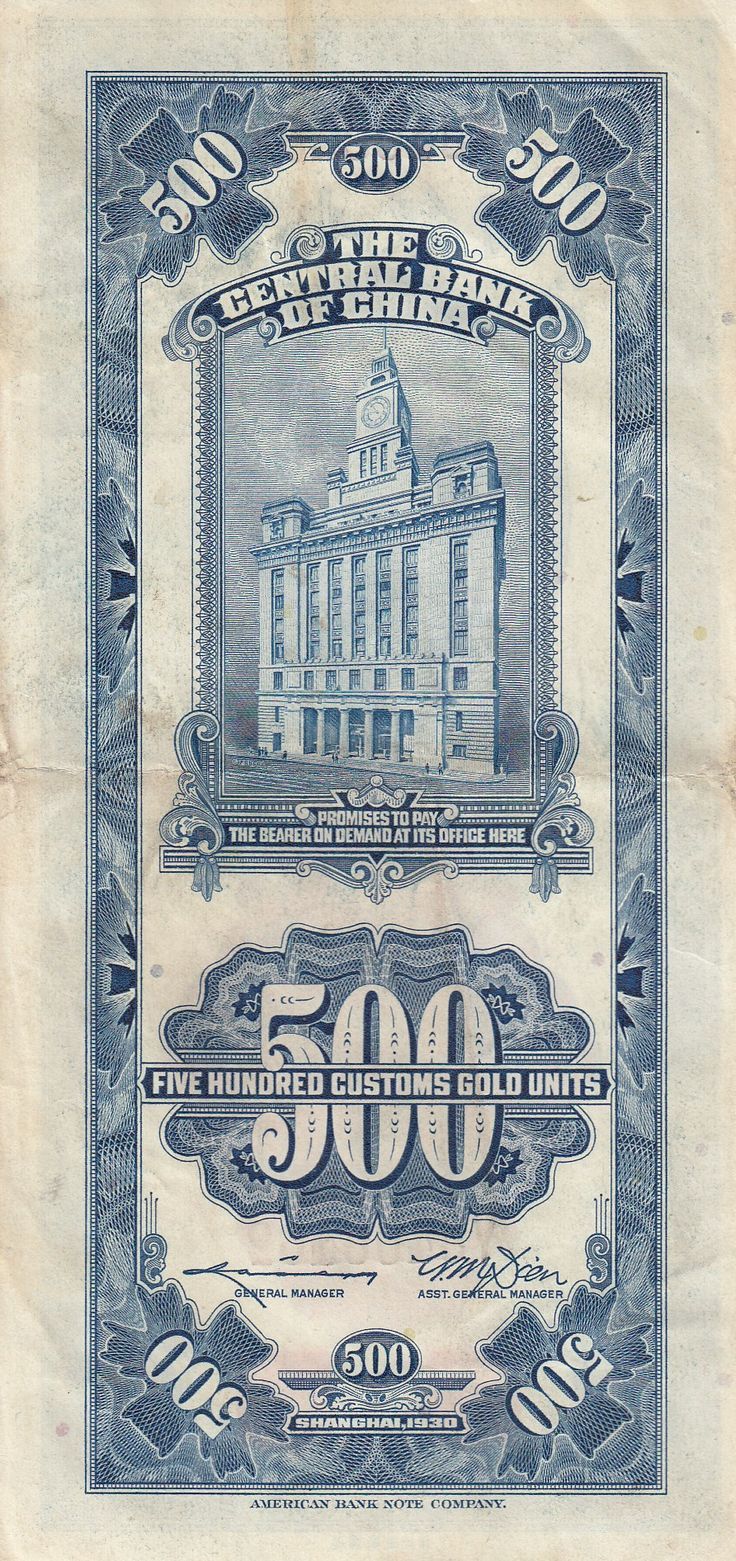
Answer: There is NO US-grown fruit or vegetable that Canada cannot buy from another less hostile country.
There is no soybean shipment that China could not buy somewhere else when the Tariff of Nottingham started a trade war and China retaliated by imposing a tariff on US soybeans. That trade war, introduced by El Presidente Demente, forced Chinese importers to buy their soybeans from Brazil instead.
Just last week, BLOATUS met with President Xi of China to try to undo the damage he had inflicted on his own farmers! Verbal promises were made by China to resume buying soybeans for a year in return for concessions by the U.S. And in the interim, the White House is readying bailout payments for U.S farmers destroyed by the trade war.
This is the second trade war introduced by Felon45/47and farm subsequent farm bailout. So, what was the point in the first place?
What the arrogant USA completely does not get is that we have a global economy and the US does not have a monopoly on trade!
Canada has cut trade deals all over the world in the few months since President Mugshot first declared that we have ‘nothing that the US wants or needs’ and slapped punitive tariffs on Canadian imports to the U.S.
China stepped in and spoke up for a number of our exports including LNG. Our first shipments of LNG to China from a new port in Kitimat, B.C. shipped out last July. We are already expanding some ports and planning to open new ones on both coasts and the Great Lakes because we will be selling most of our exports abroad, not to the U.S.
Canada, like other countries, has pivoted from the U.S. very quickly. The U.S. is about to learn that President Reagan was correct- import “tariffs hurt the US economy and cost jobs”. Too bad you elected a man with a low IQ to start with, who now has dementia.
The Milkman Cometh: License to Deliver
Ah, dear reader, sometimes the greatest danger to farm tranquility is not a rampaging inventor or a horde of piratical squirrels, but a single man convinced that his job involves more espionage than pasteurization. Today, the simple act of receiving a pint of semi-skimmed milk became a matter of global security.
Prepare yourself for a tale of mistaken identity, highly volatile thermos flasks, and the eternal question: Is that a smoldering spy or a man with mild sunstroke?
Sir Whiskerton, the farm’s preeminent deductive feline, was supervising Rufus the Dog‘s morning routine—namely, the systematic digging of a hole that Rufus claimed was “an experimental geothermal cooling unit.”
The air was heavy with the scent of dew and imminent breakfast when a vehicle arrived that sounded suspiciously like a low-flying jet engine. It was Ian Fleming, the World’s Toughest Milkman (IFWTTM), driving “The Dairy Defender,” his battered white delivery truck. Ian, a man of perpetual shadow and highly polished boots, viewed his daily route as a covert mission behind enemy lines. The truck’s most notable feature was a non-functional ejector seat—a simple booster cushion currently occupied by his thermos.
Ian Fleming parked with a dramatic, low screech, adjusted his dark sunglasses, and retrieved the delivery. He was on the farm to see only one person: Millie the Milkmaid, whose cheerfulness he mistook for an expert-level cover identity.
As Ian approached the porch, he lowered his voice to a gravelly stage whisper that Sir Whiskerton could hear from fifty yards away.
“The package has been secured,” Ian intoned to Millie, who was watering a pot of particularly cheerful petunias. “Two percent… semi-skimmed. The stakes have never been higher.”
Millie, whose greatest concern that morning was whether to use lavender or rosemary in her scones, smiled brightly. “Thanks, Ian! That’s just what Mrs. Higgins ordered! I saw her note.”
Ian Fleming flinched, interpreting the mention of ‘Mrs. Higgins’ as a dead drop code name and ‘the note’ as a classified intercept. He handed her the glass bottles with an exaggerated elbow maneuver, a gesture Sir Whiskerton immediately noted as “the classic counter-surveillance transfer, usually reserved for highly volatile microchips, not change.”
“Observe, Rufus,” Sir Whiskerton murmured to the dog, who was sniffing Ian’s high-tech thermos—Ian’s self-proclaimed “Nuclear Tea Replicator.” “This human believes that the act of delivering milk is a matter of global security. Note the use of the elbow when handing over the change.”
Rufus, whose mind was focused entirely on highly volatile bacon, merely whimpered at the thermos, convinced it contained the breakfast he had been denied.
Millie, oblivious to the high drama unfolding around her, needed to place a special order.
“Oh, Ian!” she chirped. “Before you go, could you possibly bring me a new order form next week? Mine is completely full.”
Ian Fleming’s jaw tightened. A new order form. A secret cypher detailing a rendezvous point.
“Understood,” he said, nodding once, sharply. “The rendezvous is set. I shall decrypt this… form… immediately.”
He backed away, never taking his eyes off her, his gaze an intense, smoldering stare that Millie genuinely mistook for mild sunstroke.
“Oh dear,” Millie said softly, concern replacing her usual cheer. “He’s working too hard again.” She grabbed a glass of her own, freshly squeezed beverage. “Ian, hold on! Have some lemonade. It’s my finest.”
Ian accepted the glass with the cautious hand of a bomb disposal expert. Lemonade. A neutralization agent? A truth serum? He took a suspicious sip, the sweet, benign taste momentarily short-circuiting his espionage paranoia.
But his paranoia quickly returned. The cream he had delivered to the porch was far too valuable to be left unguarded. This cream, he was certain, was the key.
Before Millie could finish her wave goodbye, Ian Fleming was sprinting back to his truck. He returned with a roll of brightly colored kitchen twine and began carefully weaving a network of intersecting threads around the porch and the delivered goods.
Absurdity, Sir Whiskerton realized, had crossed the tripwire.
“Millie, my dear,” Sir Whiskerton said, leaping down to the porch. “Is Ian attempting to gift wrap the dairy?”
“No, Sir Whiskerton,” Millie replied, frowning slightly. “I believe he’s setting up laser tripwires to guard the cream. He does that sometimes when he’s had a rough week. Poor man takes his job so seriously.”
The mission was not yet over. Ian had one final, vital task: intelligence gathering. He needed to know what ‘Mrs. Higgins’ was truly ordering. He needed a listening device.
He pulled a small, smooth pebble from his pocket, which he referred to in his mind as a “sub-acoustic surveillance micro-transmitter.” He had planned to hide it in Millie’s apron pocket, but she was too fast.
Ian, using his most stealthy commando crawl (which looked exactly like a man doing a slow push-up in a post office uniform), managed to plant the pebble on the windowsill, right beside a ceramic gnome.
“Mission accomplished,” he thought, wiping a bead of sweat.
Rufus, who had finished his geothermal hole, trotted over to the windowsill, sniffed the pebble with deep concentration, and then, satisfied that it was not bacon, promptly picked it up and buried it in the bottom of his new cooling unit. The eavesdropping ended before it began.
Sir Whiskerton watched the entire exchange, from the exaggerated stealth to the utterly predictable canine outcome. He saw Ian, who was now driving away, still scanning the horizon for enemy agents while leaving behind the sweetest, most grounded human on the farm.
True courage, Sir Whiskerton mused, is facing your everyday tasks with dedication, not just facing an imaginary enemy. And emotional intelligence, the cat concluded, means knowing when to drop the act and simply enjoy the lemonade. Ian Fleming was a man of magnificent commitment, but perhaps he needed to learn the difference between a high-stakes heist and a semi-skimmed delivery.
The End.
Moral:
True courage is facing your everyday tasks with dedication, not just facing an imaginary enemy. Emotional intelligence means knowing when to drop the act.
Best Lines:
- “The package has been secured. Two percent… semi-skimmed. The stakes have never been higher.”
- “This human believes that the act of delivering milk is a matter of global security. Note the use of the elbow when handing over the change.”
- “Is Ian attempting to gift wrap the dairy?”
- “He’s setting up laser tripwires to guard the cream. He does that sometimes when he’s had a rough week.”
- “Ian, hold on! Have some lemonade. It’s my finest.”
Post-Credit Scene:
Ian Fleming is back at his “secret headquarters” (a shed behind the dairy). He spends four hours trying to decrypt Millie’s request for a “new order form,” convinced it contains the coordinates for a sunken treasure ship. Meanwhile, Rufus the Dog is happily using the “sub-acoustic surveillance micro-transmitter” (the pebble) as a chew toy in his hole.
Key Jokes:
- Ian Fleming’s delivery truck, “The Dairy Defender,” equipped with a non-functional ejector seat (Millie’s booster cushion).
- Ian referring to his thermos as his “Nuclear Tea Replicator.”
- Ian interpreting Millie’s simple request for a “new order form” as a secret cypher.
- Millie mistaking Ian’s smoldering spy stare for mild sunstroke and offering him lemonade.
- Ian setting up laser tripwires (bits of string) around the delivered cream.
Starring:
Sir Whiskerton as The Chief Deductive Officer of Human Delusion
Ian Fleming as The World’s Toughest Milkman (Who Mistook a Pint for a Plot)
Millie the Milkmaid as The Grounded Human Who Knows the Best Antidote is Lemonade
Rufus the Dog as The Accidental Interceptor of Faux-Intelligence
P.S.
If a man looks at you with a highly serious, dramatic stare, assume he just needs more Vitamin C, not a top-secret debriefing. The semi-skimmed milk is rarely the target.
95876
Written in response to: “Write a story that only consists of dialogue. “
Leslie Kirc
95876
A young voice, “You have reached 95876. I’m Beth.”
“I’m Karen, Ms. Exbeth’s medical coordinator. May I speak to her?”
“What a wonderful name. It’s like a pirate that can’t read, he signs his name with an X, but he can read. Can you imagine a lower case cursive e that keeps going all the way up to the top of the line, then a slash like a sword stroke to make it into an X. It could be his nick name, Mr. Ex.”
“That is nice may I speak to your mother.”
In a raised voice, “Mom, a Karen wants to speak to you. I think she has a wrong number.” Beth hands the phone receiver to her mother.
“This is Bessie Hadick. What can I do for you?”
“I’m Karen, Ms. Exbeth’s medical coordinator. Can I speak to her?”
“I’m afraid there is no one by the name of Mrs. Exbeth here. You know this section of the state is going to add a prefix number. We are going to be orchard or 579-5876. Perhaps she is in another prefix.”
Karen taps her cell phone off. “Emma!”
“What has one of our old ladies done now? You look shaken.”
“That was the weirdest conversation. It made no since.”
“Who were you calling.”
“Exbeth May Hadick.”
“Did she prank you?”
“I guess.”
“She has been writing ever since her teens. The last book was just a bunch of short stories. I think her years are catching up with her. Some of these old ladies are sharper then the two of us put together. Would you like me to call her back.”
“Would you?”
“Sure.” Emma finally taps her cell phone off. “I’m getting no answer.” She looks at her computer screen. “She is long overdue a visit. I won’t be able to see her till late next week. Will your schedule allow you to see her sooner.”
“Let me check. I can see her tomorrow at 2 P.M. Is her address still 94 East Sunset Street.”
“That is what I have.”
“Oh Dear, I’ve been flagged this is going to be a yearly update. I have to go with a Mike Mitchum. Do you know him?”
“He is the only person Exbeth seems to like.”
“Is she that scary?”
“Don’t worry if he is there she will ignore you.”
The next day in the parking lot. “Hello, are you Karen? I’m Mike Mitchum.”
“Oh, I didn’t know you were in a wheel chair. And an over the top fancy one at that.”
“Everyone is surprised when they first meet me. We will take my van. It is easier for me to get in and out.”
As they drive Karen comments, “Isn’t Sunset in a bad part of town.”
“It is but you will be surprised.”
“Why would a rich woman want to live in gang land?”
“It was her childhood home.”
“Oh. … I thought she would be well off.”
At that moment they turn on to Sunset Street. Karen let out, “Wow, this part of Sunset is beautiful!”
“She has her gardener tend the whole street. The back of the properties are total rubbish. She has only what can be seen kept up. What one can do when they are rich.”
“I bet that is her house. The only one with a lot of flowers among the trees and shrubs. She allows you to pull in the driveway?”
“She insists.”
“What would she have done if I parked in the driveway?”
“She would have had you move your car to the street and then give you a hard time.”
“Would you like my assistance to get out.”
“No, I am good. What is that smell? Exbeth has probably called about it. This is going to be fun. You’ll get to see her in action. Go on ahead I’ll be there in a minute.”
Karen calls from the door, “No one is answering.”
Mike calls to her in his advancing wheel chair, “Did you ring the bell and knock. I think she might be getting hard of hearing.”
“Maybe she is asleep.”
Mike has arrived and starts to poke and bang the door with his cane. “That ought to wake her, and scratch the door.” Karen comments snidely.
No answer “The key is taped to the back of the bird nesting box.”
Karen looks, “I’ve got it.” The door swings open. Karen screams, “BLOOD, A HAND! Don’t look! She’s dead!” The smell and gory sight makes Mike lurch his chair backwards and it tips over the step. On his fall he pisses himself and gags.
Immediately Karen is on her cell phone, “This is Karen from the County P. C. department I need police assistance and an ambulance. Mike don’t move! Ms. Exbeth Hadick has been murdered and my supervisor has fallen. He may be hurt.”
“I’m not. I have a change of clothes in the car.”
“I’m going to sit here tell the para medics release you. DON’T MOVE. Then I will get you your clean clothes. Here is my jacket to put your head on. Just relax. I’m sorry you pissed yourself as well as throwing up.”
“What has made you into such a Simon Legree?”
“I have a pre-teen and a teenager. I lost my husband and a child to a car accident three years ago. Don’t move.” She stands and waves “You’re in luck the ambulance has arrived first.”
“Nice view up your skirt.”
“Behave or I will kick you.” “Over here!” … “Now that you are in good hands I will get your clean clothes.”
At the van, an officer flags her down. “I’m officer Benjamen. Are you the lady that called?”
“Yes officer. It is a mess in there. Carnage!”
“What is your name?”
“Karen from C. P. C. D.”
“I need your real name.”
“Katreena Whitaker Merlin. They tell us to use a generic name for our protection.”
“I Know. Now would you take me through what happened.”
Karen gets home to her son grousing out. “Mom what happened. Your late. I’m starving!”
Her daughter sits up on the couch. “Bobby leave her alone. She has been through enough. Can’t you see Mom’s upset. She saw the writer Exbeth being murdered. You should look at the news. She was on it!”
“Clare, I just found the old lady dead.” Karen’s cell phone vibrates. “Quiet the both of you. This call is from work.” When she taps the phone off. “Guess what, for the ordeal I was put through, I get 10 days off to recover.” She pauses, “How would you guys like to go to the cabin next week. No one has booked it yet.”
Her two children’s eyes light up. “What does my starving boy want to eat?”
“Sushi!”
“Mom why do you always ask him what he wants to eat.”
“Because all you ever want is hamburgers. Tokyo Su has hamburgers.” Her son beams,
“Thanks Mom.” Clare comments, “Will we have to get our school work for the week.”
“Of course.”
“It is good to see you back Karen. What a lucky person, after two weeks on the job a vacation.”
“I never thought of it that way, Emma.”
“Mike Mitchum wants to interview you with a detective in an hour. A formality I guess. The news said they caught the killer. A psycho neighbor at the back of her property. Did you enjoy your time off.”
“Yes, we went to our mountain cabin last week.”
Sarcastically, “That is nice, a mountain cabin.”
“It is mostly rented we got lucky last week.”
“A boy friend?”
“No two teenage children.”
“I have put several cases for you on your desk.”
“I hope they are not as stressful as Exbeth’s.”
On seeing Mike and another man enter, Emma dismisses herself.
“Mike how bad did you hurt your hand.”
“It’s just sprained. Karen this is Detective Knudson.”
The detective shakes Karens hand and motions to the chairs, “If you two would be seated we can start this enquiry. We have some irregularities I would like to check into. Karen the records indicate that you called Exbeth three days after she was already dead?”
“From what I understand, yes.”
“Could you play back the recording of your call.”
“Yes, Give me a minute.” She goes through her cell phone, “Here it is.” They listen.
“On my investigation I came across this old footage from a talk show with her as a guest.” Again, they listen. “What do the two of you think?”
“It is the same voice.” Mike agrees, “It is.”
“Detective Knudson”
“Yes Karen.”
“I read her last book while I was out. A series of stories about her life. I have highlighted this.”
“Let’s see.” He reads and looks at her, “It is the same conversation as the girl on the recording. You know a prefix was added to home phone numbers the year Exbeth was thirteen. I looked it up. Exbeth’s voice text ID was 95876.” Karen looks it up. “That’s What I have.”
“Odd?”
“It is.”
Evil Family Realizes Cops Found Their Torture Chamber
https://youtu.be/4RHnUo656aw
Sharaab al Ward
(Red Rosewater Cordial)
Often served cold to guests when tea or coffee are not desired.

Yield: 4 cups
Ingredients
- 3 drops red food coloring
- 4 cups Atter Syrup
- Iced water
Instructions
- Add food coloring to atter syrup; mix well. Cover airtight and store in refrigerator.
- To serve, dilute 2 tablespoons of syrup in a glass of iced water. The best way to drink it is to serve this as a cold cordial drink.
What was the moment when you felt extremely lucky?
I once ran into a mine trap.
This happened during the Kosovo War and at a time when we were evacuating our guerrilla base in the mountains. Before we left, it was my job to set up explosive devices and mines all over the place.
Since our enemy was already quite close (you could see their tanks on the surrounding hills), I had to do most of my work at night.
Of course, after a few days, I was completely exhausted and tired.
Finally, we were ready to leave and all that was left to do was to set up a few more explosives in front of our headquarters, grab our backpacks, and get the hell out.
It was a PMA-2 mine that almost killed me.
When I came out of the building with my backpack, I had completely forgotten that I had mined the path in front of me only five minutes before.
Suddenly I heard my buddy yelling behind me, “Stop now, do not move!” He pointed to my feet and I saw that the trip wire of an anti-personnel mine was wrapped around my left boot. Half a meter behind me, the mine was lying on the path. Luckily, the wire hadn’t activated the device, it had just ripped it out of the ground.
We carefully looked at the trigger mechanism and saw that the wire was still about half a millimeter inside the mine. Had I moved just a bit further, the wire would most likely have gone out completely, the mine would have exploded and my buddy and I would have died instantly.
I carefully moved away from the spot and took a deep breath. Then we set out into the mountains and after a few minutes, I had completely forgotten the incident.
Translated from German Antwort von Roland Bartetzko auf In welchem Moment deines Lebens hattest du extremes Glück ?
America Is Falling Apart Right In Front of Our Eyes