
I’ll bet that many of you are like me… collections of obsolete cell-phones, computer wires, peripherals, monitors, and servers, laptops and various electronics parts that are now cluttered into dusty cardboard boxes.
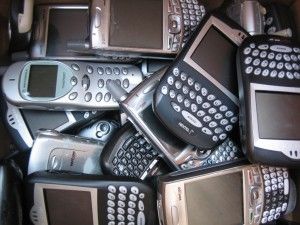
Every now and then, for various reasons, I try to reactivate the equipment, but most of them are really dead as the batteries generally cannot hold a charge. As is the way with the modern life today.
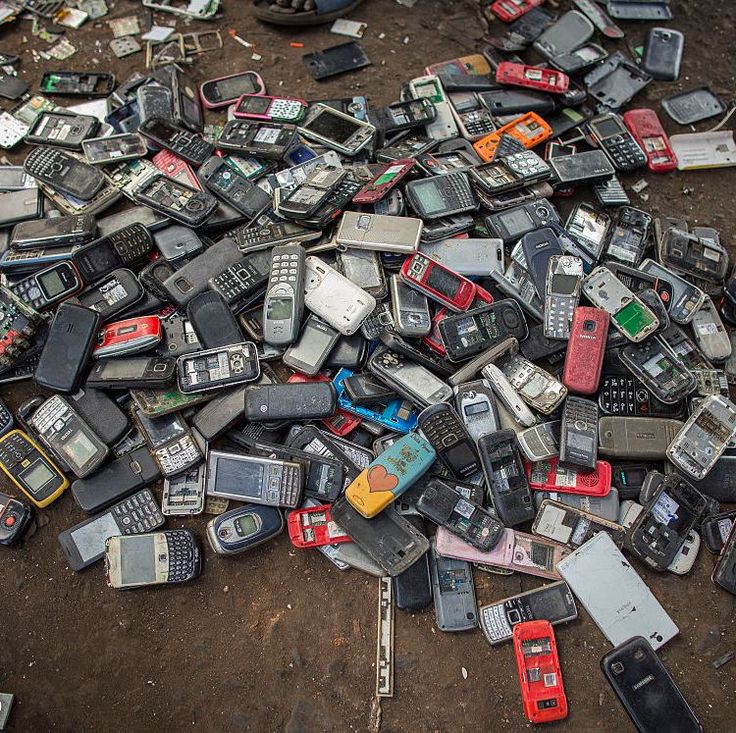
When I can, I scavenge the parts out of what I can, but aside from it… well, guys, if you haven’t used the parts in the last few years… then toss them out. And then forgetaboutit.
Today…
Why did Norway choose the UK Type 26 Frigate over the American contender, and what lessons can the US learn to improve its defense sales in Europe?
This is actually a great question, and there are several reasons.
The first is simply that the UK’s Type 26 exists. It’s a real ship that has been built, with the first two hulls undergoing fitting-out and the third’s launch imminent. There are also multiple partner navies already building their own variant hulls.
HMS Cardiff, a Type 26 frigate, prior to fitting out in 2024
Meanwhile the very first Constellation-class hull is barely started, years behind schedule, massively over-budget, and the design is still being revised. In truth, it exists as little more than a concept at this stage.
When you add to that that the last three American warship designs, the Freedom- and Independance-class LCS and Zumwalt-class destroyer were unmitigated disasters, and the last time the US designed a new frigate was the Oliver Hazard Perry in the 1970’s?
There just wasn’t a lot of confidence in the US bid.
Second, is that even putting all of that aside, the Constellation-class was a mismatch. Norway was shopping for an anti-submarine warfare (ASW) frigate; the Constellation-class isn’t that, it’s a multi-role missile-frigate. It does do ASW, but that’s not its day-job, it’s just one of its gigs. And it wasn’t alone with that problem: the French entry, the FDI splits its efforts between ASW and air-defence; and German the F127 is an air-defence specialist.
Admiral Ronarc’h, an FDI during fitting out in 2022
Now, Fincantieri Marinette Marine, builder of the Constellation-class was offering changes to the design to increase it’s ASW capabilities, which is why it made it to the final round, but when you look back at my first point, you can imagine that changes to a design when the base design isn’t finalized isn’t all that promising.
Meanwhile the Type 26 was designed to be an ASW specialist, with air-defence as a secondary job.
Lastly, while I do strive to keep politics out of my military tech explainers, in this case it’s not possible. Simply put, given current geo-political uncertainties and the U.S.’s recent uneven record as a defense partner, Norway’s government likely saw a the UK as both politically safer and industrially advantageous.
So the US bid to build Norawy’s new frigate sank due to internal problems with the Contellation-class project, a capabilities mismatch, and, likely, US foreign policy.
Wife Of 31 Years Tries C*cking Me At Country Club, Has MELTDOWN When I Serve Her Divorce Papers!

Can you share a personal story where universal healthcare made a big difference in your life, especially compared to what might have happened in America?
I had a flagpole in my back garden, a garden that is steeply sloping. About two and a half years ago, the top pulley siezed up, so I carefully placed a ladder against the pole, making sure it was firmly supported, and climbed up to fix the pulley. What I didn’t realise was that the flagpole had rusted through at the bottom. The flagpole went down, the ladder went down, and I went down, from 12 foot up the ladder, and rolled over the rough rocky slope covered in brambles and into the side of a shed at the bottom.
The neighbours heard the accident and immediately called an ambulance. I became conscious in the ambulance half-way to hospital. Apparently I’d rung my wife, and said her name was on speed dial but I’d no idea who she was and that I’d had an accident.
I was rushed straight into A&E (your ER) with a badly crushed wrist, a wrenched forearm, heavily bruised face, and a major concussion. Within minutes the doctors had read my medical history and were prepping me for wrist surgery – a delicate procedure since anaesthetics plus concussion is not recommended. When I recovered consciousness I was in a single room with a bandage across one eye and around my head, a cast on my arm, and a metal plate in my wrist (which I still have).
Long story short… I was in hospital for about a week, with several follow up visits as an outpatient until the cast came off. For the following six months I visited the hopsital’s physiotherapy department twice a week to regain as much use of my wrist as possible (I have about 95% use of it and can still do almost everything I did before the accident, including playing guitar). I also visited a psychotherapist twice a week for six months to ensure that I had no lasting effects from the concussion (luckily, there were none). Time off work was covered by state-run accident compensation and standard sick leave.
The total cost to me here in New Zealand was the cost of parking at the hospital during rehabilitation sessions – twice a week for six months at a couple of dollars a time, a total of around $100.
If I had lived in the US, I’d have been bankrupt, and likely permanently disabled. Not only that, but my two part-time careers of writing and music would likely have been over for good.
Me, late April 2023
The remains of a ladder and a flagpole, and a dented shed
The only visible evidence today – an incision scar on my left wrist
Moroccan Pork Kebabs
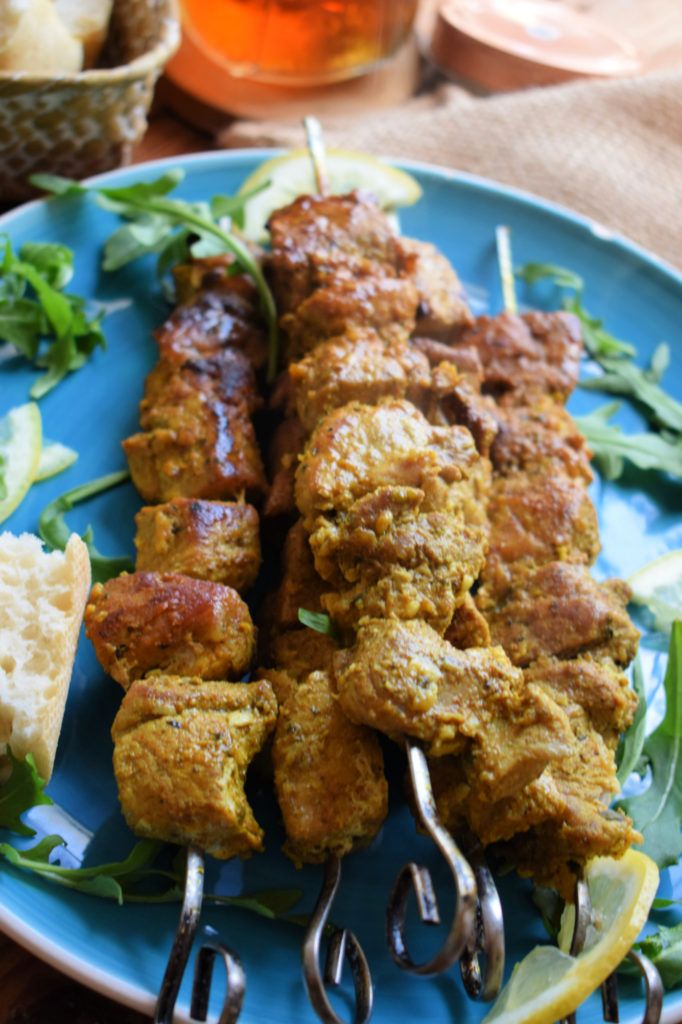
Yield: 4 servings
Ingredients
- 1 pound pork tenderloin, cut into 1 inch cubes
- 1 medium yellow squash or zucchini, cut into 1 inch pieces
- 1 tablespoon extra-virgin olive oil
- 1 teaspoon ground cumin
- 3/4 teaspoon salt
- 1/4 teaspoon cinnamon
- 1/2 teaspoon ground ginger
- 1/2 teaspoon dried oregano
- 1/2 teaspoon garlic powder
- 1 green or red bell pepper, cut into 1 inch pieces
Instructions
- Coat a broiler pan or grill rack with cooking spray.
- Toss the pork and zucchini with the olive oil and add the cumin, salt, cinnamon, ginger, oregano and garlic powder. Let stand for 15 minutes.
- Thread the meat, zucchini and red pepper on skewers. Grill or broil for 6 minutes on each side, or until pork is pink in the center and vegetables are crisp tender.
Notes
Pork tenderloin is tasty, moist and perfectly safe when pink in the middle. For optimal flavor and texture, don’t cook the meat until it’s gray throughout. Use an instant-read meat thermometer to check for doneness: Remove a roast from the oven at 150 degrees F.
Nutrition
Per serving: 186 calories, 25g protein, 4g carbohydrates, 1g fiber, 8g fat, 2g saturated fat, 500mg sodium
In 1977, while working full-time as a carpenter, Harrison Ford , then unknown to the general public, auditioned for a role in Star Wars as the iconic galactic smuggler Han Solo.
Upon reading his lines, George Lucas fell in love, hiring him on the spot, but with a meager base salary of $10,000.
Add 0.5% revenue share and Ford earned $1,948,495 for this role.
As a character who has been transformed through development from selfish and greedy to someone who cares about his friends, Ford always wanted his character to die.
He felt that this would represent “the culmination of the character’s entire story arc” as it was one of the only major sacrifices in the original trilogy.
In other words, he wanted to solidify his legacy as an eternal icon of the franchise.
Ford was so committed to his craft (initially) that he was willing to forgo any future windfall.
Then, 35 years later, The Force Awakens came out…
In order to get Harrison Ford to reprise his role, JJ Abrams told him, “That’s a good idea. I, JJ, decided that it’s a good idea and I’d like you to do it.”
You can imagine that wasn’t enough.
But sometime between the release of the original saga and J.J. Abrams’ remake (face it, we can’t really call this an original work), something must have changed, given that his initial desire was to perfect the legend (what the hell would an aging Han Solo do to contribute to the continuity of the saga without his original interpreter?)
So what made him change his mind?
More than $32 million.
That’s right, $32 million. Or 50 to 75 times what his colleagues were earning. All this to reprise his role so Abrams could create some semblance of continuity for fans of the series, in the name of maximizing box office revenue.
The dark side clearly had an influence on this matter.
Ford was 72 when the film was released, with five adult children and three grandchildren. Can we really blame him for giving in?
Why and how did an airline as big and prestigious as Pan Am fail? Couldn’t it be saved?
I remember a case study on Pan Am where the general market considered the Airline as a Titanic of the Industry, supposed to be unsinkable 😊
Briefly Pan Am failed precisely because it was too big to fail
The Airline had been a virtual monopoly operating and plying in an extremely government friendly set up, where the government could set the prices and the rules and decide who flew across which route
One day the Government ended this and gave a “No holds barred” freedom to all Airlines to establish a free market where Airlines could fly wherever they liked and charge whatever they wanted to.
It was deregulation.
Happened when Jimmy Carter or Ford was the President, before Reagan
Pan Am simply couldn’t adapt to this change
Like many of the big companies today who live on Government dole and have a monopolistic control on markets, Pan Am had presumed it’s monopoly was permanent and had invested money into a large number of big aircraft especially the 747s
They had piled up a lot of debt, and just when it was time to pay back the debt, deregulation came in and led to plenty of new entrants in commercial aviation all over the states
There were lower, cheaper prices, sometimes cheaper by half or more and more efficient connections, given Pan Ams ignoring of the domestic market for years
Operating costs were rising due to the rising costs of aircraft fuel, and the 747s were inefficient with their fuel
So like every other failure, it was a combination of rising debts, rising operational costs and mismanagement
Their decisions to sell profitable assets like hotel chains and service chains they owned instead of spinning off some profitable divisions or diluting ownership, caused the end to come faster
Stepdad Kicked Out After 2 Months of Housing Her & Her 3 Kids

Why is the dispute between China and the Netherlands over Nexperia prompting a rethink of how to handle foreign investment, especially those from China?
Let’s be clear that in fear of rising China, it’s already in US-led West politician’s blood (including the Netherlands) to use whatever dirty political plots and policies both economically and militarily to contain China.
Since 18th century till today, it’s always in western political leader’s blood with ill-political intention to keep China in a sleeping mode :
The Scramble for China, also known as the Partition of China or the Scramble for Concessions, was a concept that existed during the 1890s in Europe, the United States, and the Empire of Japan for the partitioning of China under the Qing dynasty as their own spheres of influence, during the era of “New Imperialism”.
China definitely need to do whatever necessary for China in technological advancement to be self sufficient after US-led West and its lapdog allies imposed various unfair and unreasonable technological and economical sanctions on China.
The more US try to use whatever dirty political plots to contain / antagonise China, the more China will be motivated and determined to improvise and step up to the next level of high technology, high quality and high efficiency development.
The lesson that Chinese students learn today about the Century of Humiliation, Opium Wars and Tiananmen Square incident set up by the cunning US-led Anglo-Saxon wild wild West is that China should never again let itself become weak, ‘backward,’ and vulnerable to other countries. As one British historian says, “If you talk to many Chinese about the Opium War, a phrase you will quickly hear is ‘luo hou jiu yao ai da,’ which literally means that if you are backward, you will take a beating.”
Theria’s Lace
Written in response to: “Center your story around two (or more) characters who strike up an unlikely friendship.“
🏆 Contest #298 Winner!
EV Throne
Reagan had always gravitated toward the overlooked. As a child, she collected dead insects while others picked flowers. In college, professors praised her technique but balked at her subjects. “Such talent wasted on such… unsettling imagery,” one had said, eyeing her painting of bread mold with both awe and unease.
At thirty-four, Reagan had carved a strange little space for herself in Boston’s art scene. Her last gallery show drew seven people—three of them family. The reviews were as expected:
“Theriault’s technical prowess is undeniable, but her obsession with the decomposing and the disgusting renders her work more suitable for a textbook than an art gallery.”
She’d framed that review and hung it beside her workspace.
On this April Tuesday, Reagan was prepping for yet another exhibition—a modest showing at a fringe Cambridge gallery known for “biological art.” She disliked the label. Unlike artists who sculpted with blood or painted with bacteria, Reagan wasn’t creating mold. She was observing it, honouring it—revealing its quiet beauty through careful, detailed representation.
The piece she was finishing now was special. For three months, she’d tracked the growth of an unusual mold on her bathroom ceiling. Instead of scrubbing it away, she’d protected it—photographing it daily, capturing its evolution across a series of canvases. Its branching pattern had captivated her: delicate, lace-like tendrils unfolding in slow, silent bloom.
The phone rang, interrupting her concentration. It was Anna, the gallery owner.
“Reagan, darling, slight change of plans for Friday,” Anna’s voice was tense with forced cheerfulness. “We’ve had to shift your exhibition to the back room. The front space is going to Martin Clement—you know, the one who does those massive abstract explosions of color? His agent called and—”
“It’s fine,” Reagan replied, though it wasn’t. The back room was half the size and received a fraction of the foot traffic. “I’m used to being hidden away.”
“Don’t be dramatic. It’s just better business sense. Your work is… an acquired taste.”
After hanging up, Reagan turned back to her canvas with renewed determination. Let them hide her away. Let them dismiss her work as grotesque or bizarre. She knew there was truth in her paintings—a recognition of beauty in unexpected places.
Dr. Deirdre Lathurna hunched over her microscope, back stiff from hours in the same position. At forty-six, she was known as one of the most exacting minds in Massachusetts General’s microbiology department, specializing in environmental mycology. For the past year, she’d chased a single question: could fungi break down microplastics in water systems? Some strains showed potential, but the results were either too slow or produced toxic byproducts—promising, but never quite usable.
“Anything interesting?” asked Malik, her graduate assistant, as he entered the lab with two cups of coffee.
Deirdre straightened, accepting the cup gratefully. “Nothing revolutionary. Same issues we’ve been seeing—the Aspergillus strain is breaking down the polyethylene, but it’s releasing compounds that would be problematic in natural water systems.”
She took a sip of coffee and glanced at her watch. “I should head out. Anna’s exhibition opens in an hour.”
“Your sister the sculptor, right?”
“My cousin the gallery owner,” Deirdre corrected. “I promised I’d make an appearance. Some avant-garde showcase or other.”
Deirdre wasn’t particularly interested in art, especially the experimental variety her cousin favoured for her gallery, but family obligations were family obligations.
The Cambridge Alternative Arts Space was already buzzing when Deirdre arrived. Her cousin spotted her immediately and swooped in for air kisses.
“Dee, darling, so glad you could make it! Come, let me show you around. The main exhibition is Martin’s work—those gorgeous explosions of colour—but we have several other artists featured tonight.”
Deirdre nodded politely as Anna guided her through the gallery, the artwork did little for her; Deirdre had always been more moved by the elegant structures she observed under her microscope than anything humans created intentionally.
“And back here,” Anna continued, leading her toward a smaller room, “we have Reagan Theriault’s latest series. Bit of an odd duck, but technically brilliant.”
As they entered the smaller gallery space, Deirdre froze. The walls were lined with large-scale paintings of various mold formations—each rendered with astonishing precision. Her trained eye immediately recognized several common species: Penicillium, Cladosporium, Alternaria. But it was the painting on the far wall that seized her attention.
“Excuse me,” she murmured to Anna, moving closer to the canvas as if drawn by a magnetic force.
The painting depicted what appeared to be a complex mold formation with an unusual branching structure—fine tendrils extending outward in fractal patterns, with minute bulbous structures at various intersection points. The colouration was subtle: primarily a deep forest green, but with hints of teal iridescence along the hyphal extensions.
“Remarkable, isn’t it?” said a voice beside her.
Deirdre turned to find a woman in her mid-thirties with paint-stained fingers and a tentative smile.
“Are you the artist?” Deirdre asked.
“Reagan Theriault,” she confirmed. “I rarely get such intense scrutiny of my work. Most people take one look and hurry to find something more pleasant to view.”
“This particular formation,” Deirdre said, gesturing to the canvas. “Where did you observe it?”
Reagan looked surprised by the question. “My bathroom ceiling, actually. Old building with poor ventilation. Why do you ask?”
“I’ve been studying fungal structures for twenty years, and I’ve never seen this particular branching pattern. Yet something about it seems… I don’t know, theoretically plausible in a way I can’t quite articulate.” Deirdre extended her hand. “I’m Dr. Deirdre Lathurna. I’m a microbiologist specializing in environmental mycology.”
Reagan’s eyes widened as she shook Deirdre’s hand. “You study molds professionally? And you’re actually interested in my work?”
“Very much so,” Deirdre confirmed, turning back to the painting. “The way you’ve captured the structural integrity of the mycelial network is extraordinary. These aren’t just creative interpretations—these are scientifically accurate representations.”
Reagan’s face flushed with pleasure. “That’s… that’s exactly what I’ve been trying to explain to people. I’m not making this up or embellishing for dramatic effect. I’m documenting what I see, exactly as I see it.”
“Do you have more work like this?”
“A whole studio full,” Reagan admitted. “This is just a small selection.”
“And this particular specimen,” Deirdre tapped the frame of the painting that had caught her attention. “Do you still have access to it? The actual mold, I mean.”
Reagan nodded slowly. “It’s still growing on my ceiling. I’ve been documenting its development for nearly four months now.”
Deirdre pulled out her business card and handed it to Reagan. “Would you call me tomorrow? It may sound strange, but I’d like to see your studio—and your bathroom ceiling.”
Reagan spent the night unable to sleep, alternating between excited disbelief and certainty that Dr. Lathurna had been humouring her. By morning, she’d convinced herself the microbiologist wouldn’t actually want to follow up. Still, at 8:30 AM, she took a breath and dialed the number on the card.
“Dr. Lathurna? This is Reagan Theriault. I hope I’m not catching you at a bad time—”
“Ms. Theriault, perfect timing. I’ve been thinking about your paintings all night. I’ve rearranged my schedule for today. Would it be possible for me to see your studio this morning?”
Three hours later, Deirdre stood in Reagan’s apartment, gazing up at the bathroom ceiling with undisguised fascination. The mold formation was even more spectacular in person—a delicate network of filaments spreading across the corner where the ceiling met the wall, forming patterns that resembled intricate lacework.
“May I?” Deirdre asked, holding up a small collection kit.
Reagan nodded, and Deirdre carefully took several samples, placing them in sterile containers.
“How long have you been painting molds?” Deirdre asked as they moved to Reagan’s studio space.
“Seriously? About eight years. But I’ve been fascinated by them since childhood.” Reagan pulled out several portfolios and began laying paintings on every available surface. “These are chronological, from oldest to most recent.”
Deirdre moved through the collection, occasionally stopping to photograph certain pieces with her phone. When she reached the most recent works—she spent nearly twenty minutes examining each canvas in silence.
“Reagan,” she finally said, looking up with an intensity that made the artist nervous. “I believe you’ve been documenting a previously undescribed fungal species. One with a highly unusual growth pattern that might explain some anomalies we’ve been observing in our research.”
“What kind of research?”
“We’ve been studying fungi that break down microplastics. A few strains show promise, but all have limits. That said, there’s a theoretical model—one with a hyphal structure almost identical to what you’ve painted—that could degrade polymers efficiently without toxic byproducts.”
Reagan shook her head in disbelief. “You’re saying my bathroom mold might help clean up pollution?”
“I’m saying it’s possible. But I need to culture the samples and run some tests.” Deirdre hesitated, then continued. “Would you be interested in collaborating? Your observational skills are extraordinary, and your documentation of the mold’s development could be invaluable.”
“Collaborating? With scientists?” Reagan laughed nervously. “Dr. Lathurna, I’m an artist who paints mold because I’m obsessed with its beauty. I barely passed biology in high school.”
“But you see things others don’t,” Deirdre insisted. “Including, apparently, trained mycologists. The level of detail in your work—the subtle colour variations, the precise structural elements—these aren’t just artistic flourishes. They’re data. Valuable scientific data that you’ve been collecting without even realizing it.”
Reagan felt a fluttering in her chest that might have been hope or terror or both.
“What exactly would collaborating entail?” she asked cautiously.
“Initially? Access to your studio and permission to continue collecting samples. Beyond that? Maybe visits to my lab, discussions about what you’ve observed, possibly even joint publication if we confirm a new species.” Deirdre smiled. “And who knows—maybe an exhibition that bridges science and art.”
Reagan found herself nodding. “Alright. Yes. I’d like that.”
Three weeks later, Reagan sat in Deirdre’s lab, watching through a microscope as the microbiologist adjusted the slide.
“There,” Deirdre said, stepping back. “That’s what you’ve been painting.”
Reagan leaned in, peering through the eyepiece. The branching filaments matched what she’d been painting for months—seeing it under a microscope sent a quiet thrill through her.
“We’ve been testing it,” Deirdre said, pulling up graphs. “Early results are promising. This undocumented strain produces an enzyme that breaks down PET—common microplastic—without the toxic byproducts we’ve seen in others.”
“So it really could help with environmental cleanup?” Reagan asked.
“Potentially, yes. But there’s a problem we’re encountering. The mold is extremely difficult to culture in laboratory conditions. It seems to degrade rapidly under standard procedures.” Deirdre tapped her pen against her notepad. “That’s why your paintings are so valuable. You’ve documented stages we can’t maintain long enough to study properly.”
Reagan thought for a moment. “My studio conditions. Could that be relevant? I keep it unusually humid and relatively dim—for the painting atmosphere.”
Deirdre looked up sharply. “What’s your exact humidity level?”
“Between 75-80%. And I keep the temperature around 68 degrees Fahrenheit.”
“That might be it,” Deirdre said, excitement rising in her voice. “We’ve been using standard mycology protocols—brighter lighting, different humidity levels. Would you be willing to help us set up a cultivation environment that matches your studio?”
“Of course,” Reagan nodded eagerly. “I can bring over my equipment tomorrow.”
Months later, Reagan stood beside Deirdre in a conference room at Massachusetts General Hospital. The room was filled with microbiologists, environmental scientists, and representatives from several research foundations. On the walls hung enlarged photographs of microscope slides alongside Reagan’s paintings—side by side comparisons that illustrated the extraordinary accuracy of her artistic observations.
“As you can see,” Deirdre addressed the room, “the structural integrity of Mycotheria verrucosa is precisely as Ms. Theriault documented in her paintings—months before our laboratory confirmed its existence. The distinctive protrusions along the hyphal branches, which give the species its name, are particularly evident in this series from April.”
“The polymer degradation capabilities of Mycotheria verrucosa—or ‘Theria’s Lace,’ as we’ve taken to calling it—represent a significant breakthrough in bioremediation potential,” Deirdre continued. “Initial field tests show a 73% reduction in PET microplastics in controlled water samples over a two-week period, with no detectable toxic byproducts.”
A hand raised in the audience. “Dr. Lathurna, could you elaborate on the cultivation challenges you mentioned in your paper? How did you overcome the rapid degradation issues?”
Deirdre smiled and gestured to Reagan. “I’ll let Ms. Theriault address that, as she was instrumental in solving that particular problem.”
Reagan stepped forward, still uneasy in a lab coat but growing more confident. “The key was recreating what we now call ‘studio conditions’ instead of standard lab protocols. Mycotheria thrives in environments like… well, the ceiling of my bathroom,” she said, earning a quiet laugh. “By keeping humidity between 75–80% and using low, targeted light, we’ve been able to grow stable, sustainable colonies.”
After the presentation concluded, Reagan found herself surrounded by scientists eager to discuss her observations—not just of Mycotheria verrucosa but of other mold species she’d documented over the years. One researcher from MIT was particularly interested in her paintings of a Stachybotrys variant she’d found in her previous apartment.
“You know,” he said, studying one of her portfolio images, “this structural anomaly you’ve captured here—we’ve been theorizing about this possibility, but we’ve never observed it directly. Would you consider letting us examine the original specimen?”
“Unfortunately, that apartment was renovated years ago,” Reagan replied. “But I have more detailed studies in my studio. You’re welcome to see them.”
Later, as the room cleared, Deirdre approached with two glasses of champagne. “To successful collaboration,” she said, handing one to Reagan.
“And to finding purpose in unexpected places,” Reagan added, clinking her glass against Deirdre’s.
“I have news,” Deirdre said after taking a sip. “The Environmental Protection Foundation wants to fund a three-year research initiative focused on Mycotheria and its applications. They’ve specifically requested that you be included as a co-investigator, with a focus on visual documentation and cultivation environment design.”
Reagan nearly choked on her champagne. “Me? A co-investigator? Deirdre, I’m not a scientist.”
“No, but you’re something equally valuable—a trained observer with a unique perspective. And,” Deirdre added with a smile, “they’re also interested in funding a traveling exhibition. Science museums across the country, featuring your paintings alongside scientific displays about bioremediation and fungal ecology.”
Reagan felt tears pricking at her eyes. For years, she’d endured dismissal and ridicule for her artistic choices. She’d been rejected from mainstream galleries, mocked in reviews, and questioned by fellow artists about her “disturbing fixation.” Now, suddenly, that same fixation had revealed itself to be not just valid but valuable—worthy of scientific recognition and public exhibition.
“There’s something else,” Deirdre continued, reaching into her bag. She pulled out a scientific journal and handed it to Reagan. “This arrived today. The first published paper on Mycotheria verrucosa.”
Reagan opened the journal with trembling hands. There, listed as co-authors: Dr. Deirdre Lathurna, Reagan Theriault, and the rest of the research team.
“I never imagined…” she began, unable to complete the thought.
“That your obsession with painting mold would lead to a scientific breakthrough?” Deirdre finished for her. “Sometimes the most important discoveries happen when different worlds collide. Your artwork revealed what our microscopes missed—not because our equipment was inadequate, but because we weren’t looking with the right eyes.”
One year later, Reagan stood in the center of the Boston Museum of Science, surrounded by her artwork. The exhibition—titled “Theria’s Lace: Where Art Meets Microbiology”—had opened to critical acclaim and unprecedented public interest. Her paintings, once relegated to back rooms of fringe galleries, now hung prominently alongside scientific displays explaining their significance.
The central installation featured a specially designed cultivation chamber where visitors could observe live colonies of Mycotheria verrucosa breaking down plastic samples—the delicate lacework of its structure visible through magnifying panels.
Later that evening, at the formal reception, Reagan found herself standing beside Deirdre as reporters gathered for interviews. The story of their unlikely partnership had captured public imagination—the eccentric artist and the meticulous scientist, finding common ground in the delicate patterns of mold.
“Ms. Theriault,” one reporter asked, “how does it feel to have your artistic obsession validated by the scientific community?”
Reagan paused before speaking, “It’s not about validation. It’s about recognition—not just of my work, but of the idea that beauty and meaning can exist in overlooked places. I painted mold because I saw complexity and elegance in it. I never expected that vision to line up with science.”
“And Dr. Lathurna,” another reporter asked, “has this collaboration changed how you approach your research?”
Deirdre nodded. “Absolutely. We’re trained to be objective—to follow protocols, track markers, stick to the known. But Reagan showed me the power of seeing differently. The breakthrough didn’t come from technique, but from viewing the environment as she did—as atmosphere, as mood, as something whole.”
After the interviews concluded, Reagan wandered through the exhibition alone, marveling at the journey that had brought her here. Near the exit, she paused before the final piece—a newly completed painting of Mycotheria verrucosa in its most mature state, its filaments extending outward like embroidered lace, its surface glistening with the subtle iridescence she’d always tried to capture.
Beside the painting hung a magnified photograph of the actual mold structure taken through an electron microscope—nearly identical to her painted representation. And next to that, a simple plaque that read:
Mycotheria verrucosa (Theria’s Lace)
Named for artist Reagan Theriault, whose paintings revealed what microscopes had missed.
A testament to the power of seeing the extraordinary in the overlooked.
Is the anti-fat shaming movement trying to normalize obesity?
In so many words? Yes.
They want to make it that being obese is normal and a personal choice so deal with it.
The problem is they don’t live in the same reality as the rest of us. Let me give you an example:
This is Jaelynn Chaney better known as “Jaebae” on social media. She’s a “plus size influencer” that travels on other people’s dime. She rose to fame in part due to an event that took place at SeaTac airport where she demanded that the flight attendant, or somebody, wheel her 600 pound ass up to the plane or off the plane. I’m not sure which. Problem is nobody was strong enough to do so so she protested.
And I think she was the only one that showed up for it.
Her views are that she, as a plus sized traveler, should get as many seats as she needs, not pay extra for them and for everybody else on the flight to then pay for her extra seats and for her to be wheeled to and from the plane regardless.
This is of course unreasonable but this is the world we live in when people like this feel they have the right to dictate policy to the rest of us.
I’m 6′2″ and I can fit in a plane seat but my legs are up against the back of the seat in front of me. Should I then get the exit row for free because of my legs? According to JaeBae I should because it’s nothing I can change and the world has to work according to my wishes.
Do you see how this kind of thinking doesn’t work? Airlines don’t work according to her wishes or mine. They cram as many seats as they can into their planes to make as much money as possible. This is the price you pay for such cheap airfare. If you take up more than one seat you should pay for that extra seat. If I want the extra legroom I have to pay for it. It’s that simple.
Obesity can be a choice. But society is under no obligation to recognize it or bend to their whims.
EDIT: Comments turned off as everybody seems to feel the need to point out that THEIR obesity isn’t a choice for whatever reason. That’s nice. I don’t particularly care as I’ve said in literally the last lime that it CAN be a choice.
You’re obese for reasons other than stuffing your face and being a lump? Goody for you. Nobody cares. There’s no point in saying you’re different than JaeBae because let’s face it, people are going to look at you the same anyway.
What makes the “weird uncle” in your family weird?
My uncle has long since passed, so I feel comfortable telling a few of his adventures.
My uncle loved a bargain, he went to auctions and if nobody was buying something, and he could get it cheap, he bought it.
He bought 50 bags of what appeared to be cement, with no labels.
We mixed it up, to build a platform for a new boiler. It wouldn’t set, and started to rise. Someone tasted it and we had 50 bags of premixed donut flour.
Everything had to be removed and real cement was bought.
He bought two female mannequins, but no clothes, he put them in the back of the shop, to scare burglars if we were ever robbed.
He bought what he thought was 200 lbs of reflective beads/powder. He was going to cover all of our business signs with it. It was shuffleboard wax. We donated it to the local legion.
He bought a tamper.
It vaguely looked like this, but much bigger.
We used it as an amusement ride, you just push the bar down, the machines one cylinder engine fires, and the machine jumps. Which pushes the lever down automatically. It just keeps jumping. I have attached a video in the comments, showing a much smaller one that doesn’t work very well.
Many decades ago, our puritan province, had liquor stores where you couldn’t see the liquor. You went in, there were tables covered in glass, and there was a liquor menu under the glass. There were long beaded chains with pens on the end, to write your name and order on the card. The tables were about 12 feet by 5 feet.
He bought 4 of them, we had no use for them. One day he was looking at the tables and saw the chains and pens were missing. He went ballistic, it turns out that he had only bought the tables for the chains and pens.
He never did tell us what he wanted them for.
Why did Queen’s record label not want to release ‘Bohemian Rhapsody’?
“Bohemian Rhapsody” by Queen was a song the label didn’t want to release for MULTIPLE reasons.
First, the title was ridiculous. At no point in the song is the title mentioned, which was quite strange for songs at that time. The label (EMI) was used to songs that had the usual verse/chorus/verse/bridge/verse/chorus styling. There isn’t ANY of that in “Bohemian Rhapsody.” The label also didn’t believe that the listening public would have a clue about the song, because they wouldn’t understand the words “bohemian” (socially unconventional in an artistic way) or “rhapsody” (an enthusiastic expression of feeling).
There was also the factor that the song was basically three songs Queen jammed together. You can hear this in the piano opening, the operatic interlude, and the rock crescendo that concludes the work. Usually, listeners do not like variations in the tone or style of a song; “Bohemian Rhapsody” shattered that view.
Finally, there was the length of the song. In the Seventies, pop songs were only 3:30 long, at the most, allowing radio stations to cram in twelve to fifteen tracks in an hour. “Bohemian Rhapsody” was an epic 5:55 long, unheard of in that era (Don McLean’s “American Pie” had similar issues). Thus, the label thought that radio would not play the track, simply because of this.
It seems the label was wrong. “Bohemian Rhapsody” spent nine weeks atop the charts in the UK. It initially reached #9 in the U.S. (1976), but rose to #2 in 1992 after being featured in the film Wayne’s World. It has since been inducted into the Grammy Hall of Fame and the National Recording Registry of the Library of Congress for being “culturally, historically, or aesthetically significant.”
Queen, from the groundbreaking video for the song “Bohemian Rhapsody”
Youre my only grandma
China claims that they can detect F-35 aircraft from 1200 miles away. What do you think of that?
If you’re sufficiently technical, yup, absolutely. You can totally detect that there’s an F-35 (or any other kind of stealth aircraft) within 1200 miles of you.
So check this out:
This is the door to my microwave oven. That mesh blocks microwave radiation from going out the door.
Microwaves are just photons of light outside the wavelength our eyes can’t see. So how come the microwaves just don’t fly through the holes? I mean, you can look through the door and see inside, so obviously photons can go right through! What gives?
Photons have a size. Well, kind of. They’re not little round balls, so they don’t have a size like a marble has a size. Their “size” is determined by their wavelength. Visible light, high wavelength, small size. Microwaves, lower wavelength, bigger size.
And crucially, handwaving over details that are outside the scope of this question, as a general rule how precisely you can now where a thing is located varies inversely with wavelength. The greater the wavelength, the less precisely you can know where something is by bouncing EM radiation off it.
Radar uses EM waves with a much larger wavelength than visible light. It’s on the right on the handy spectrum map.
Stealth aircraft are designed to remain unseen only to certain frequencies of EM radiation. I mean, obviously they’re not invisible to what we call the “visible spectrum,” because boom:
There it is.
They’re designed to be invisible to radar, or more correctly to have a small “radar cross section”—that is, to be difficult to spot on radar. And more precisely, to be difficult to spot to targeting and tracking radar.
You can make radar that uses EM waves of different frequencies. As you get further from the frequencies used by target acquisition and tracking radars, you go outside the range the plane was designed to be difficult to see. Particularly, if you use long-wave radar, the plane becomes quite detectable.
Meet ultra long wave radar:
There are two crucial things you need to understand about ultra long wave radar, and one thing that sounds crucial but isn’t.
The thing that sounds crucial but isn’t is that ultra long wave radar, like visible light, can easily spot an F-35.
The first crucial thing is that the minimum size of a radar antenna varies directly with wavelength. An ultra long wave radar can have antennas, like this one, larger than a football field (or soccer pitch for Europeans).
Not something you can stick in the nose of an airplane or the seeker of a missile.
The second thing is that…well, remember the size of the holes in the microwave door?
The wavelength of EM radiation determines how small a thing you can “see”—to microwaves, that door is solid with no holes in it because the holes are smaller than the microwaves, they literally can’t “see” the holes.
But more important, the wavelength also limits how precisely you can tell where something is in space.
Ultra long wave radar will easily tell you, yes, there’s an airplane in the sky around you. But it cannot tell you where it is with any degree of precision.
Some ultra long wave radar uses wavelengths that are kilometers long. They can tell you with absolute confidence that yes, there is an F-35 somewhere within 1200 miles of you…to a precision of plus or minus ten or twenty kilometers or so.
Which is, as you might imagine, not enough to get a fix or shoot it down, because an F-35 is not twenty kilometers long.
“China can spot an F-35 from 1200 miles away” is technically true. So can we, and Russia, and Indonesia, and a reasonably well equipped high school ham radio club with a big enough budget and a bunch of copper wire.
Yes, amateur radar is a thing.
What they cannot do is use that information to target one, or even tell except in general(ish) terms what it’s doing.
This kind of headline has one purpose: to manipulate low-information people who don’t know how things work.
The US will cancel the 10-percent so-called “fentanyl tariffs” and suspend the 24-percent reciprocal tariffs levied on Chinese goods for an additional year, etc. What’s the next for China-US trade talks and relations?
Both sides know they cannot immediately defeat the other.
Both sides wish to avoid the damage inflicted by the other.
Neither side can cease hostilities, for fear of being perceived by their domestic populace as “showing weakness.”
Neither side dares to escalate economic and political conflicts into a hot war.
Thus, their only option is a “truce” + “delay” strategy—reducing attacks from the other side and minimizing their own losses. This serves the interests of both
United States:
- “We need time to rebuild supply chains and weaken China’s leverage. Once we have control over supply chains, rare earths, and other key resources, we will completely defeat ChinaFalse!
Trump’s term is not long enough to support such a long-term plan. No one would do this for their successor. - “We can’t afford to waste more time on China. There are many other countries from which we can gain benefits. A truce with China would free up resources to deal with other nations. We’ve already achieved victories in Japan and South Korea, and we will continue to expand these successes.”True!
This approach maximizes short-term gains for the U.S., addressing fiscal and social issues within the government.
China:
- “We need reduced tariffs and port taxes, or we won’t be able to export goods to the U.S. Otherwise, our factories will shut down, and our economy will collapse. We need a breather.”False!
Over the past three years, China’s foreign trade has continued to grow, with trade surpluses repeatedly breaking records. U.S. tariffs have not caused significant harm. - “We need to demonstrate to the world that we have become the second center of global power. The U.S. you fear is in decline. While the U.S. can pressure others, it is powerless against us. You should consider placing some of your bets on our side.”True!
China’s goal is to enhance its reputation and influence, persuading the world that it can truly replace the U.S. as an alternative.
Next Phase:
The same pattern as before will repeat, with no substantive changes: both sides will talk loudly but engage in very little real confrontation.
Can someone who reads simplified Chinese easily understand texts written in traditional Chinese characters, like those from the Tang Dynasty?
Not only is it possible, it’s actually quite easy. My children and I are good examples. We’ve never formally studied traditional Chinese characters, yet somehow we can recognize them. I suppose it’s because simplified characters still follow the same structural principles as traditional ones. For instance, the simplified character “东” (east) actually comes from the cursive form of its traditional counterpart.
Moreover, in formal settings or on shop signs, traditional characters are still widely used. With constant exposure over the years, you just naturally learn them.
This is an authentic Taoist scripture from the year 738 AD. Any Chinese person who claims they can’t read it simply never attended elementary school. However, as for its content — which speaks of transcending the body or achieving eternal life — most people do not believe in it.
Husband Catches Preg Wife Cheating At BBQ, Recruits His Lawyer Family On EPIC LEVEL Revenge Plan!
Very interesting.
Why are the entitled SNAP people so mad their handouts will get cut off? I have to buy my own food on a fixed income. How about they start being responsible, and get a job and stop mooching off the taxpayers?
Listen. I make $2,000 a month take home which is pretty much normal here. I live in a 500 square foot apartment. It’s just me, my huge dog and a frequent guy. I have rent, utilities, groceries etc. I cannot imagine how my neighbors make it with kids.
I get paid every two weeks (real job). I have excellent credit. But my first check is almost totally eaten by rent, water and electricity. I don’t go out to eat or on vacation. I go 2 weeks on a pot roast and chicken tortilla soup. I have worn the same clothes with limited changes for about 8 years.
The second check goes to AT&T for internet and my cellphone. I pay my $500 limit credit card off monthly from the two weeks before for necessary items I was lacking. Dog pads, his medication and such. He has heart worms. He’s almost heart worm negative. Simparica Trio and Doxycycline. No threat now of the $1,200 treatment I couldn’t handle. I didn’t seek him out, he found me at 5 weeks.
So let’s get back to the conversation. Let them eat cake! I don’t get SNAP benefits but I will never look down on someone who does. I AM the working poor. Do you realize how little they receive?
You live on a fixed income. Try this on for size: I am retirement age and would actually make more money if I retired than I earn by working. I maxed out on SS contributions many years.
Here’s what I am going to do. I will help stock those food banks full. My broke ass will help every neighbor I can. My frequent boyfriend will volunteer at food banks.
What in the heck are you going to do? Nothing. That’s what we all expect.
What are the obvious signs that an interviewer will hire you during an interview?
I recently started looking for work; luckily I got hired.
All the interviews were the same with their standard company questions: tell me about a time when you had a disagreement with a coworker.
Some of the telltale signs I noticed at the end when I noticed that I wasn’t going to get the job was “ok, I have other people to interview so I’ll get back to you” or “ok, thank you very much.”
After hearing that a lot, I was thinking back to an interview, what happened during the interview, and how I got the job. And the answer was: instead of making the interview a question and answer session, make it where you are both sharing stories and laughing.
That’s what happened at my interview at the County. Apparently, this place is hard to get hired onto. During the interview, the guy asked me to tell me about myself. I told him about how I went to school for law enforcement and then went out to the academy. Coincidentally, he too went to the same school and the academy as well, only years before. He asked me questions about the law enforcement PT and the long run we had to do. I was telling him about all the pushups we did. We were laughing, which was good. And the interview questions were spot on.
Finally, he asked me where I lived and I told him. He then said “ok, we will find you a district that’s close to your house” (good sign #1). At the end of the interview, he told me “well, expect to get a call from us on Monday” (good sign #2) to which I shot back “look forward to coming on board.”
It’s the more personal questions in the end like “can you start this Friday” that indicates interest versus not. On a side note, I was asked if working from 6:00am–4:30pm Monday through Thursday was a problem and I happily said “not at all” without asking my wife first. I found out later another person when interviewed was asked if he would be ok driving the distance to the shop. He said “I need to check with my wife first,” and unfortunately, he wasn’t offered the job.
Update: Once you are hired and if the company offers positions internally first to employees, get references from your current managers and ask them, if they could, to send an email directly to the person who will be part of the interview expressing how good of an employee you are. This reference will have so much weight on the decision. Understand, that doesn’t mean you can slack off on the interview n
Pictures




























Is eliminating ICBM from nuclear deterrence strategy a good idea?
No.
An ICBM carries between 1 and 10 nuclear warheads and each is in a hardened silo or on a mobile launcher. The enemy would be forced to expend a large number of warheads to destroy these ICBMs.
Bombers are susceptible to a surprise nuclear attack and in such a situation none would get off the ground in time, the days of airborne alert or 15-minute alert are over.
That leaves the submarines. These carry a lot of warheads and id one is lost, it is a greater calamity than losing the bombers on a bomber base or a couple of ICBMs.
A lot of fleet ballistic missile submarines are in port. While they can fire their missiles in port, they are also very vulnerable to a surprise attack.
That leaves the submarines at sea. If the enemy managed to trail several (or all ???) of them, a surprise attack might very well render your SLBM fleet impotent.
If the enemy wants to get your ICBMs, he will need to use a lot of warheads thus depleting his arsenal. If he doesn’t go after your ICBMs, you still have an effective force if your bombers and submarines are taken out.
Welfare Check leads Cops To Horrifying Discovery
Why do the Chinese use English names? Are they ashamed of their original names?
It’s not because I’m ashamed of my native name — sometimes it’s simply for the sake of easier cultural communication.
My Chinese name, when transliterated into English, sounds a bit strange; it actually means “unfortunate.”
For example, imagine a girl named 谢婷— it’s a lovely Chinese name, but when rendered in English… Shitting.
You wouldn’t like to be called Shitting, would you?
Over the past two centuries, Western culture has been overwhelmingly dominant, so it’s quite natural to follow Western naming conventions.
When I started my first job at an American company, the boss required everyone to choose an English name.
At the time, I had just finished reading a book written by a Jewish author about the tragic experiences in a World War II concentration camp, and I was deeply moved — so I took the protagonist’s name as my own.
Many years later, I discovered that it wasn’t actually a Jewish name, which struck me as odd. I later learned that Jews often have two names — one in Hebrew and another in the common European style.
I had chosen the latter.
It may sound a bit presumptuous, but I sincerely encourage you to learn Chinese.
Think about it — Chinese is so cool !
Every character is like a little drawing, the most ancient form of human language: pictographs.
The image below shows the oldest form of Chinese writing — over four thousand years old.
I think anyone can guess what these two characters mean…
““
By the way, if you are a Westerner receiving medical treatment in China, your name will appear on the large display screen in your native language, not as a Chinese transliteration.
We worry that you might not recognize Chinese characters and miss your turn for treatment.
At present, the voice announcement system can’t pronounce foreign names correctly—it literally spells them out letter by letter. I find that quite strange. Why is that? It really shouldn’t be so hard!
I guess this problem will be solved within the next two years.
But honestly, this is how it should be—not because of your skin color, but because you are a guest in our country, and you happen to fall ill while here.
China is not a colony.
“Civilized people” is not a term reserved for the West.
In fact, China’s medical standards are far superior to those in most Western countries.
And the same goes for legal services. I once calculated that America’s legal GDP is 3,000 times that of China’s! You read that right—three thousand times! How is that even possible?!
And yet, it’s true.
Shakespeare was a great writer.
He once said, “Let’s kill all the lawyers!” (in Henry VI)
Why did the Viking raids end?
The business model became unprofitable.
The Viking business model was simple: load up a ship with cargo. Plunder your way down to the Mediterranean. Slaves were particularly valuable, since Christians were not allowed to sell other Christians as slaves; Vikings had that market pretty much cornered. Sell everything in Rome, Constantinople, or thereabouts. Go home and buy a farm.
Key to the business model was the longship, a flat-bottomed rowing vessel, a technological innovation that enabled them to sneak up on sleeping fishing villages and raid them before anyone was even properly awake.
But then, Western Europe invented feudalism.
Originally, feudalism was more akin to a protection racket: nice fishing village you have there, would be a pity if something happened to it, and talking about something else entirely, the taxes are due. But when the raiders showed up, the villagers went to the local lord and said we paid for protection, you failed at your part of the deal, make yourself useful or the next tax collector will be sent home in pieces, we’d rather pay the Vikings for protection because they seem to be better at it.
So the feudal overlords set up rapid response forces, helped by a growing economy so that they could afford this. The Viking raids never got time to pillage properly before armed men showed up. The Viking reputation for being fierce warriors was based entirely on their opponents being half-sleeping fishermen or elderly monks; some were well-trained warriors, but they were for the most part simply farmers with axes and shields, and couldn’t offer much resistance against actual, professional soldiers.
Raiding suddenly carried much higher risks, and was no longer worth it.
Seeing this, the Northerners decided that it was more profitable to convert to Christianity for more favourable trading terms and better business opportunities. This was basically accomplished by 1050: the end of the Viking Age is usually counted from 1036 in Sweden (the date of the last major Viking expedition, Ingvar Vittfarne’s expedition to the Caspian and Black Seas, which ended in a total disaster with only one ship out of 30 making it back home), and from 1066 in England (the Battle of Stamford Bridge, where Harold Godwinsson obliterated the last Viking army).
They even adopted new flags and coats of arms, to show off their credentials as converted Christians. We still carry those crosses on our flags, and the Swedish coat of arms features three crowns, representing the three wise men of the Nativity.
Sir Whiskerton and The Bully’s Echoed Spit Take
Ah, dear reader, in the unpredictable theater of the farm, sometimes the most impressive spectacle is also the most vulgar. Today’s lesson was a masterclass in synchronized, adolescent crudeness, brought to you by the new bully on the block and the farm’s sound-effects master.
The setting was a low-hanging tree branch, which Captain Swingset had fastidiously prepared as his clean, new “landing pad.” He had spent twenty minutes sweeping the bird droppings and laying out a tiny, crocheted landing mat (borrowed without permission from Auntie Flo’s knitting basket). Swingset, in his pirate-Tarzan persona, was waiting for the wind to pick up, practicing his best dramatic lean.
Below him stood Scratch, Catnip’s bully son and the physical embodiment of middle-school mischief. Scratch, whose mind was a factory for gross-out gags, was holding a can of cheap, artificially raspberry-flavored lemonade, looking for a victim.
He found one in the Captain, who was foolishly clean.
“Well, well, well,” Scratch sneered, taking a huge mouthful of the pink, fizzy liquid. “Look at the swashbuckler. All neat and clean. You’re supposed to be in a jungle, Captain! Where’s the grit?”
Scratch then prepared to execute his masterpiece: a slow-motion, dramatic “villain’s spit take,” designed to convey maximum disdain and minimum hygiene. He tilted his head back, pursed his lips, and unleashed a fine, misty spray of lemonade.
“Taste the bitterness of defeat!” Scratch commanded, his voice muffled by the spray.
But the moment the lemonade left his mouth, Ditto the Echoing Kitten—who had been silently perched on a nearby rock, fascinated by the hydraulic physics—executed his perfect, synchronized echo.
“…taste the bitterness of defeat!” Ditto repeated, and an identical, secondary spray of cheap lemonade mist shot directly out of Ditto’s mouth.
The result was a double spray, a high-fidelity, high-volume mist of pink sugar water that completely enveloped the unsuspecting Captain Swingset.
Captain Swingset sputtered, wiping his face with a saturated sleeve. “A double spray? That is a pirate’s curse! And it smells vaguely of artificial raspberry!”
Scratch was initially furious that his moment of villainy had been stolen by a smaller cat. “Hey! You ruined my intimidation! That’s my spray!”
“No,” Ditto repeated, shaking his head. “…my spray!…”
Just then, Jah-Mew, the Rastafari Cat, wandered past, drawn by the sound of the double burst. He observed the two cats—one drenched, one confused, and one perfectly synchronized in an act of petty rudeness.
Jah-Mew chuckled, a warm, rolling sound like tropical rain on a drum. “Bwoy, your synchronized spit has a wicked rhythm. Keep practicing the bass drop, seen? That double-barreled misting is highly unexpected.”
His comment was a breakthrough. Scratch and Ditto looked at each other, realizing they hadn’t just executed a simple, nasty spit take; they had created a powerful, theatrical, and utterly absurd act of synchronized grossness. They had turned the intimidation into a failed synchronized swimming routine—a move so confusing, it achieved a level of whimsical utility that even Sir Whiskerton might respect.
“We did it, Ditto!” Scratch whispered, a wicked grin spreading across his face. “We made it a… a ‘Spit Duet!'”
“…Spit Duet!…” Ditto confirmed, giggling.
Captain Swingset, despite being soaked in artificial raspberry, saw the potential. As a veteran of imaginary sea battles, he knew the power of an unexpected weapon.
“A duet is for amateurs!” Swingset announced, shaking the moisture from his ear. He stepped down from his now-drenched landing pad. “A true swashbuckler uses all his barrels. Watch, ye scallywags! You must channel the spray from the deep, deep part of the cheek, like a hidden cannon!”
The Captain then proceeded to teach the two young cats how to perform a “Triple Barrel Spit”—a truly grand, three-part misting technique designed for “truly grand occasions,” such as confusing The Farmer when he was wearing clean boots.
The three cats spent the next hour practicing, their laughter mixing with the sound of synchronized, sugary spray. They were bonding, not over shared kindness, but over a shared appreciation for body-function-driven humor. Your biggest weaknesses can become your greatest strength when shared with a good friend. For Ditto, his echo was no longer a simple, frustrating repetition; it was a powerful tool for chaotic, creative expression. Breaking free from repetition means finding a new way to use your echo.
Later, they tried to teach Sir Whiskerton the move. The detective cat attempted it with great, fastidious dignity, managing only a single, tiny, highly dignified droplet, which he immediately labeled “The Controlled Drizzle of Moderate Disapproval.” The others knew, however, that he was simply incapable of shedding his decorum for a good, old-fashioned, synchronized spit take.
The farm had gained a new, highly effective method for disrupting serenity, and three unlikely friends had found their rhythm—a gross, sticky, and perfectly synchronized rhythm.
The End.
Moral:
Your biggest weaknesses can become your greatest strength when shared with a good friend. Breaking free from repetition means finding a new way to use your echo.
Best Lines:
- “Taste the bitterness of defeat!” (and its perfect echo).
- “A double spray? That is a pirate’s curse! And it smells vaguely of artificial raspberry!”
- “Bwoy, your synchronized spit has a wicked rhythm. Keep practicing the bass drop, seen?”
- “He managed only a single, tiny, highly dignified droplet, which he immediately labeled ‘The Controlled Drizzle of Moderate Disapproval.'”
- “You must channel the spray from the deep, deep part of the cheek, like a hidden cannon!”
Post-Credit Scene:
Scratch and Ditto attempt to perform the “Triple Barrel Spit” on The Farmer. The Farmer, confusing the sticky mist for pollen, panics and tries to trap the cats in a tiny net, convinced they are a new, highly territorial species of pink-spraying aphids. Captain Swingset, from the high rafters, narrates the chase with an enthusiastic pirate accent.
Key Jokes:
- Scratch attempting a dramatic, slow-motion “villain’s spit take” of cheap lemonade.
- Ditto’s perfect, synchronized echo instantly producing an identical spray, resulting in a “double spray” that ruins the bully’s effect.
- Jah-Mew observing that the “synchronized spit has a wicked rhythm” and needs a “bass drop.”
- Captain Swingset, despite being soaked, teaches them the “Triple Barrel Spit” for grand occasions.
- Sir Whiskerton’s failed attempt at the move, resulting in a “Controlled Drizzle of Moderate Disapproval.”
Starring:
Ditto the Echoing Kitten as The Sound Effects Master of Saliva
Scratch as The Bully Who Found His Beat
Captain Swingset as The Swashbuckler Who Knows a Thing or Two About Triple Barrels
Jah-Mew as The Cat Who Appreciates the Rhythm of Grossness
P.S.
If you’re going to spit, make it synchronized. If you’re going to share, share the vulgarity. It’s the highest form of friendship.
What’s the craziest thing a guest has eaten or taken without asking at your place, and how did you handle it?
Where I then lived, it was a tradition to spent your first pay-check on something you really liked. And although the people in the kitchen shop, wearing white overcoats, were terribly smug, I walked out with an almost 20 pound weighing cast iron pot. My pay was low and the pot terribly pricy, so few pints were offered that same night.
The pot remained behind when I moved to Italy, and reached my new home three years later. A friend visiting was willing to lug it in change for a week stay in Palermo.
This pot made a mean roast beef, always a success throughout the many parties we used to throw. People often asked how the beef was prepared, and I proudly showed them the pot. A big mistake.
It was after a party we found out someone had stolen the pot. First we thought it was a practical joke, but after many telephone calls, it remained missing. Until today I wonder how someone could carry the thing out without anyone noticing.
A couple of times I was about to buy a new one, but haven’t.
Have you ever taken a Greyhound bus?
If you are ever feeling sorry for yourself, thinking the whole world is against you, my advice is to buy a Greyhound bus ticket. Why? Because you are going to meet a group of people that are at the very bottom of societies barrel, which of course will make your loser ass feel like a Rothchild. But to get the full feel of these peoples miserable lives your adventure has to be at least three days. I did four when I was twenty one years of age straight out of the army.
Uncle Sam bought me a ticket from Charlottesville South Carolina to Santa Barbra, California, and oh what a ride…or should I say crawl.
I remember buying these white pants that only James Crockett would wear from Miami Vice, and when I arrived in SB the crotch had turned a light brown from all the farting and non ass washing I went through as I traveled on my chariot for the mentally disturbed across the great land of Old Glory.
My fellow riders were an assortment of single moms and their kid that could only afford a laundry basket to carry their crap in, carnies, and drunk black guys that just got out of prison.
If I remember correctly, the smell was probably the worst. Everyone pretty much wants to get the ride overwith, so it’s relatively quiet, but the stink man! You can’t escape it. Like I said before about my rotten ass, it’s that, cigarettes, malt liquor, and with a hint of McDonalds. Mmmm…the fragrance of poverty.
My go to story of any passengers I remember on this trip was this weird little white guy that sat next to me from South Carolina to New Orleans. Ever since he boarded, he hugged this grocery bag full of magazines that sat on his lap. At first I didn’t think much of him, a little weird yes, but not a threat. But around one in the morning he gave me a little nudge…”Hey.”
I pretended to sleep but he nudged me again. “Hey man. Wake up.”
“What?”
“Check this out bro.”
He then started pulling out the magazines until he got to the bottom, and out came a very large and shiny bowie knife. We sat there in silence. He smiled at his reflection in the blade, and me thinking, “Well Pat. It’s been a good life. End of the line buddy.This is it. Stabbed to death on a Greyhound bus, around one am, just outside of Louisiana….”gulp”
“Pretty cool huh?” He asked.
“Um yea…cool man.” I replied.
But then, he just smiled, sighed, and put his partner in crime back in the bag, refilled the magazines, and turned to the window to sleep. I was like, “Umm..What the hell, man?” (To myself…very quietly)
He got off in New Orleans and disappeared into the crowd, leaving me and my Crockett pants forever.
I’m thinking whatever was whispering in his ear about my bloody death had a change of heart. For this, I say thank you.
What the commode gets
Have you ever taken a Greyhound bus?
I rode across the country on them once.. From California to Knoxville Tennessee – and it took almost 10 days.. After about the second day I bought a box of Unisom and stayed knocked TF out… literally, I would sleep for 16 straight hours or more. Bus would stop somewhere at 2:30am, I would stumble off like a zombie, stumble into the bus station only to find out my next bus wasn’t leaving until 1pm..
So I’d find a seat in the bus station and wait.. pop another Unisom and zombie out again… 2–3 hours of sleep and I’d get woken up by a cop wanting to see if I had a ticket and wasn’t just a bum sleeping it off.
Show him my ticket and then back to sleep.. hop on the bus at 1pm, pop another Unisom and go back to sleep. Wake up somewhere in the middle of the night, look out the window and see nothing but darkness with no idea of where I was, pop another Unisom, go back to sleep, then rinse and repeat.. Over and over.
One stop somewhere in the middle of the night was literally a crime scene. There were cops and EMT workers all over the place, yellow crime scene tape sectioning off a part of the bus station, and a big pool of blood on the floor. And while I didn’t actually see the victim, somebody told me a guy had been stabbed in the eye.
At another stop it was a full 24hrs until my next bus left.. That meant 24 straight hours of alternating between twiddling my thumbs, eating $12 hot dogs with a $4 coke, and being deep into another Unisom coma. And at some point I caught a whiff of myself and thought I’d take a whore bath in the bathroom sink there in the bus station. But the bathroom was even more disgusting than I was, so I just said screw it and stayed nasty.
And that’s how it went.. Day after day after day until I made it home. One solid week of pure misery with another couple of days added on for good measure.
And I wish I could say that traveling like that gave me a chance to see the country, but I can’t… I slept, I ate shitty expensive junk food, I smelled bad, and I slept some more.
When Cops Rescue Kids From Evil Parents…
The Looping Stranger
Written in response to: “Write a story that has a big twist.“
Shanel Fortney
Driving over to the café feels slower than usual, as if everyone is moving in slow motion. The bell dings as I push the door open. Coworkers greet me, customers turn to look when I spot him in the corner, and he glances up from a newspaper. Who even reads a newspaper these days? He wears a dark suit that seems out of place; the fabric has a tiny shimmer in the light, as if it has a life of its own. We often see business types, lawyers in particular, with their laptops in the corner, but something about him stands out.
His eyes track me as I make my way behind the counter. Rising from the table, he moves as if gliding toward me. “Medium black coffee, two sugars.” His voice is eerily smooth, like velvet. I can’t shake the feeling that something is off. Slowly placing the cup of coffee on the counter, he reaches inside his coat pocket. “Thanks, keep the change,” he says. Before I can say a word, he turns and walks out.
It’s a typical busy shift—crowds coming in and out in waves, orders stacking like small tidal pulls. In slow times, we wipe tables or goof off, but a heaviness stays with me no matter how hard I try to laugh it off. It’s hanging in the air, a dark cloud that follows me.
Back at my dorm, I peel off my jeans and stand under the hot water, trying to wash the feeling down the drain. Lying in bed, drifting, I hear distant voices and the steady electronic beeping, and then a whisper: “Wake up.” I shoot up. The room is empty and the TV is off, maybe I was half-dreaming.
Waking up the next morning, I shuffle to the bathroom. Something isn’t right; my jeans aren’t on the floor, and I could have sworn I brought my apron in this time. Maybe I was so exhausted I imagined it. Same routine as yesterday, I drink coffee from home, sit at my desk, and try to push through schoolwork before my shift.
Time gets away from me, and I’m back in the bathroom, checking myself before work. My apron is on the floor of my truck, but something just isn’t right. The drive to the café drags, slow as ever.
The café bell dings sharp this time, like a blade. It sounds louder, as if the room goes quiet before I step inside. Coworkers greet me, customers glance up, and then my stomach jumps. The man in the corner with his newspaper. He was here yesterday. His eyes track me as he glides to the counter while I stand frozen.
“Medium black coffee, two sugars.” The smoothness of his voice puts me on edge. I move slowly, like sudden motion might trigger him, as if he were some creature stalking his prey. Placing the coffee on the counter, he says, “Thanks, keep the change.” He turns and walks out. Maybe he’s just a new regular. It happens all the time.
My shift feels over before it even starts. My mind spirals back to the man in the suit. People become regulars all the time. Orders get memorized; I know what they want before they reach the door. Does he wait for me to get here? Is he a stalker? Questions ricochet through my head as I sit alone at my dining room table. Eating a college kid meal, ramen I make in a microwave. I decide I’m going to place my jeans on the floor in a specific spot this time, and just needing proof that I’m not losing my mind.
Haunted by beeps and voices as I fall into a dream: flashes of a hospital hallway, doctors rushing, faces I can’t make out blurring past. Same faint voice at the edge of my ears, “wake up,” growing louder until a woman’s face is inches from mine, and screaming the words. I jolt upright, breathless, like someone’s sitting on my chest. The bedroom is empty—only the fan hums. Rushing to the bathroom, I splash water on my face and grab a towel. I look down to see that my jeans aren’t where I left them.
Panic sets in. Is my dorm haunted? Was that the woman telling me to wake up? Sunlight spills through the window, and I let warmth wash over me to calm my mind. Desperate to get out of the dorm and to work as soon as possible. I find my jeans where I usually keep them, foled in a drawer. And my apron is in a ball on the floor of my truck. I hate this feeling, this hollow dread, as if something bad is about to happen.
Walking into the café, the bell rings, and I freeze in the doorway. It sounds even louder than before, but I can’t move. He’s there in the same corner, same newspaper, same stillness I’ve been watching for days. Rushing to get behind the counter, I lean over to my coworker. “How long has that man been sitting there?” I ask, wondering if he’s been waiting for me.
She frowns. “What man?”
“That man in the suit, sitting in the corner with a newspaper,” I say, panic cracking in my voice.
“I don’t see a man in a suit. Are you alright?” She looks at me with concern. Not wanting to be dropped off at the closest psych ward, I brush it off. I watch him. He doesn’t just glide. He doesn’t disturb a single customer.
Everything is happening over and over again; it’s the same thing for the third day in a row. This feels like something straight out of a comic book. I’m stuck in a nightmare, or I’m going insane. I quickly decide I’m going to change something, even if it’s small. I move the sugar from one side of the counter to the other. “Medium black coffee, two sugars.” His voice sends chills down my bones. There is something dark yet angelic about it, like a quality he uses to draw people in. Every instinct in my body screams not to trust it. He must be stuck in a loop, and somehow, I’m tied to it.
Testing this even further, I place an empty cup on the counter. He reaches for it as I pour straight from the carafe, my eyes flicking between his face and the cup. Coffee spills over his hand, but he doesn’t flinch. No grimace. No reaction at all. My stomach falls as I look back down. There is no coffee, no spill. The sugar sits neatly where it always does, as if everything has reset.
“Thanks, keep the change.” He turns and walks out. Screaming for him to wait, I attempt to run around the counter to chase after him. To find out what is going on, who is he?. My coworker grabs my arm. “What is wrong?” she asks, panic written all over her face.
“The man who was here. There is something wrong, and I am somehow connected,” I yell.
“There was no man. I can show you,” she shoots back.
We pull up the security feed. There’s nothing there. No man in the corner. When I tested him with the coffee, the cameras glitched, and time seemed to skip. For a beat, it was just me yelling for him to wait.
“I think you need to go home and get some sleep,” my coworker says, gentle and firm as if she were taming the feral raccoon in the alley. “We’ll be fine here, or I will call someone in.” My stomach drops. Please don’t let that be code for psych ward.
Sleep drags me under deep, like an anchor dropping into the ocean’s depths. The dream is dark and stronger this time. Beeps pierce louder, sharper, pounding into my skull. Fluorescent lights overhead, and I’m back in the middle of the hospital hallway. Nurses and doctors rush past, their faces blurred as if smeared out of a photo. I reach out for one, but my hand passes right through.
A woman leans over me, her lips forming the exact words again and again: Wake up, wake up, wake up. Her voice grows until it’s a scream that rattles my nerves. I bolt upright in my dorm bed, drenched in sweat, goosebumps all over my body, lungs clawing for air. The fan hums steadily in silence, but beneath it, I swear I can still hear the monitors beeping.
I pace my dorm, knowing it’s not this dorm that’s haunted but the man in the suit. I won’t go back there, not until I figure this out. I call my boss and tell them I’m sick, that I need more rest, and that I will not be coming in today. Shoving a piece of toast into my mouth, I decide I’m going to go to my college library to see what I can find out about that café and the man in the suit.
Putting on shorts and a baggy T-shirt I left on the floor, I grab my keys. Swinging my front door open in a panic, I step through—and it’s not my dorm hallway. The café bell rings out with a deafening sound. The sound echoes in my ears as my eyes dart from the counter to the man in the corner. I look down. I’m in my work uniform, apron tied at my waist.
This time, the entire café is frozen, staring at me with dead eyes. The only movement comes from the man in the suit when he shakes his newspaper. The noise startles me, and I instinctively look at him. I don’t want to move. What is going to happen to me?
Unable to take it anymore, I shout, “What do you want from me?” My voice cracks, but he gives nothing back. Refusing silence as an answer, I step into the middle of the café floor. The air is thick, heavy like smoke. My pulse is hammering in my ears. He lowers the paper and folds it with care. His eyes catch mine while rising from his chair, gliding until he towers over me. “Medium black coffee, two sugars.” The words splinter something inside me. Tears swell at the corners of my eyes.
“What do you want from me?” My whisper barely carries.
Silence stretches. Then, soft and deliberate, he leans in. “You aren’t supposed to be here.”
His words hang in the air, heavy enough to crush me. The café wavers at the edges, tables bending like reflections in water. My knees lock to keep me standing. Not supposed to be here.
He tilts his head, studying me like a specimen. “Do you hear them?”
At first, only silence. Then it seeps in, the faint beep…beep…beep of a machine, the muffled sobs of someone begging me to wake up. My throat closes. “You’re in between,” he says, voice low, almost tender. His hand brushes a table, and the sugar packets scatter, then snap back into place, untouched. My head feels like it’s spinning, and for a moment, I see white sheets and wires, a still body on a bed. My body.
I stumble back, clutching my apron. “I want to go home, I want to wake up,” I choke out. His smile doesn’t reach his eyes. “Then choose.” He holds out a cup of black coffee, two sugars. The steam curls upward, but the scent is wrong, like smoke and a hint of metal clawing at my throat. Is this man the devil? What did I do to deserve this hell? I shake my head, backing away a few steps.
“What is going to happen to me?” His smile sharpens, thin as a blade. “Choose,” he repeats.
“You’re not telling me what is going to happen to me. No. I won’t.” My voice cracks.
“So be it.” He lifts the cup, and the café snaps back into place. Customers laughing, coworkers moving as if nothing happened. The bell dings sharp. Suddenly, the weight of my apron drags heavily on my shoulders. For the first time, he looks back as he walks out the door. I look down at the newspaper left on the counter, and my chest caves. Across the top, bold and dark, one word: “Purgatory”.
Persian Date Cake
Ingredients
Dates-Walnuts
- 3 cups pitted dates
- 1 cup coarsely chopped walnuts
Dough
- 1 cup unsalted butter
- 1 1/2 cups sifted all-purpose flour
- 1/2 cup confectioners sugar
- 1 teaspoon ground cinnamon
- 1/2 teaspoon ground cardamom
- 1 cup ground unsalted pistachios or shredded coconut
Instructions
- Toast walnuts in skillet over medium heat for 5 minutes. Set aside to cool.
- Place a few walnut pieces inside each date. Arrange dates, packed next to each other in a flat 9-inch serving dish.
- In large deep skillet, sauté flour in butter over high heat, stirring constantly for about 15 to 20 minutes, toasting until it is golden caramel color.
- Spread hot dough over dates. Pack and smooth it with back of a spoon.
- Combine cinnamon, sugar, cardamom and sprinkle evenly over cake. Sprinkle with 1 cup ground pistachios or shredded coconut all over. Cool.
- Cut into small square pieces. Arrange on serving platter or on plate in which it was made.
Attribution
Lior’s Kitchen Talk
PART 2 – Husband Catches Preg Wife Cheating At BBQ, Recruits His Lawyer Family On EPIC LEVEL Revenge