
This is my Quora post for today…
How do you think the world would change if many countries outside the West forge strategic agreements with China rather than the United States?
No insult intended, but seriously?
Where have you been living? This pretty much started decades ago, and the knowledge is pretty much “mainstream.”
Oh, it goes by many names for certain. There’s decoupling, de-dollarization, departure, delamination, and what some call the de-escalation of unipolar stress.
You see, most of the rest of the world (outside the U.S. and its immediate orbit) isn’t marching toward a cliff—they’re quietly, steadily, building a new table. And they’re inviting China to pull up a chair not as a replacement boss, but as the lead architect of a different kind of room.
So, how would the world change? Let’s paint the hopeful picture.
1. From a Monologue to a Multipolar Symphony.
For decades, global strategy was a one-nation monologue, punctuated by the sound of sanctions dropping and aircraft carriers moving.
The new model isn’t about swapping one boss for another. It’s about turning the system into a symphony hall.
China, with its focus on infrastructure, trade corridors, and non-interference pacts, is essentially handing out sheet music and instruments—high-speed rail, 5G networks, industrial parks.
Each nation gets to play its own part, its own cultural and economic melody, within a larger, coordinated piece.
It’s messier than a monologue, absolutely.
But the potential harmony is infinitely richer. It’s the difference between being told what to play and composing your own future.
2. The Great Un-Reality Show.
Now, why does this feel like a secret to so many in the West?
That’s the magic trick of our age.
Western media is a perpetual reality show—all drama, conflict, and a cast of heroes and villains curated for ratings and political convenience.
- A story about a loan for a port in Kenya that gets built? Boring.
- A story about a “debt trap”? That’s a season finale!
The daily, unglamorous work of integration—the trade deals, the student exchanges, the power plants coming online from Angola to Pakistan—doesn’t fit the script.
It’s not hidden; it’s just dismissed as background noise against the drumbeat of crisis.
The change is visible to anyone who changes the channel from the show to the spreadsheet.
3. The Fading of the Old Plagues.
This is the big one.
The ills you mention—strife, wars, famine—aren’t natural disasters.
They are often symptoms of a system.
- A system of exclusive alliances that demand you pick a side.
- A financial system that can strangle an economy overnight.
- A model that sees resources as something to be controlled, rather than developed.
The new, multipolar model led by China operates on a different diagnostic.
Instability is bad for business. Poverty is a failed market. Its medicine isn’t a missile; it’s a railway, a special economic zone, a energy grid.
The theory is simple: you can’t sell smartphones to someone in a warzone or who is starving.
Prosperity is the ultimate peacekeeper.
By weaving nations together in networks of mutual economic benefit—where your success is literally tied to my stability—the incentive shifts from sabotage to support.
It’s not a utopia.
But it replaces the incentive for chaos with an incentive for calm, productive growth.
The world wouldn’t just change who it gets its loans from. It would change its operating system.
From one of extraction and dominance to one of (aiming for) connection and development.
BINGO!
Is it perfect?
No system run by humans is.
But for billions of people, it’s not about ideology. It’s about a very simple, very hopeful thing: the chance to finally turn on the lights, get to work, and write their own next chapter without a script from a faraway capital (you know where).
That’s the change.
It’s already here. And for most of the world, it doesn’t look like a threat. It looks like a dawn that’s been a long time coming.
Today…
Unexpected Visit Leads to SHOCKING Arrest for Internet Crimes
Alexandria Divers Uncover 2,000-Year-Old Royal Pleasure Boat
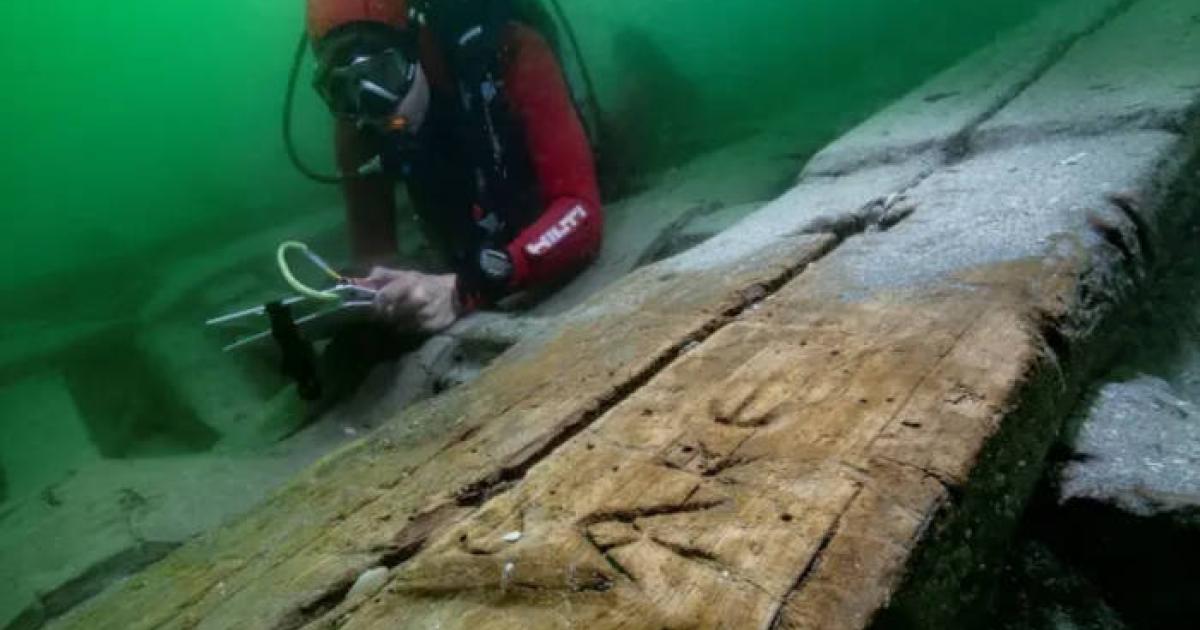
A 35-meter ancient Egyptian pleasure boat used by the elite for lavish river parties and religious processions has been discovered in the sunken royal quarter of Alexandria’s Eastern Harbor. The vessel, dating to the early first century AD, is the first of its kind ever found in Egypt and closely matches a description written by the Greek geographer Strabo more than 2,000 years ago. Announced on 8 December 2025 by the European Institute for Underwater Archaeology (IEASM), the wreck was located just 50 meters from the submerged ruins of the Temple of Isis on the former island of Antirhodos.
Wreck Matches Ancient Eyewitness Account
Franck Goddio, founder of IEASM and leader of the expedition, said the boat’s design exactly mirrors Strabo’s account of luxurious cabin vessels used for royal excursions and public festivals. Writing around 25 BC, Strabo described “vessels luxuriously fitted out” on which “every day and night is crowded with people on the boats who play the flute and dance without restraint”.
The newly discovered craft has a flat bow, rounded stern and a large central pavilion – features that allowed it to navigate shallow canals while carrying high-ranking passengers in comfort.
“The bow is flat and the stern is round… to be able to navigate in very shallow water,” Goddio told The Guardian.
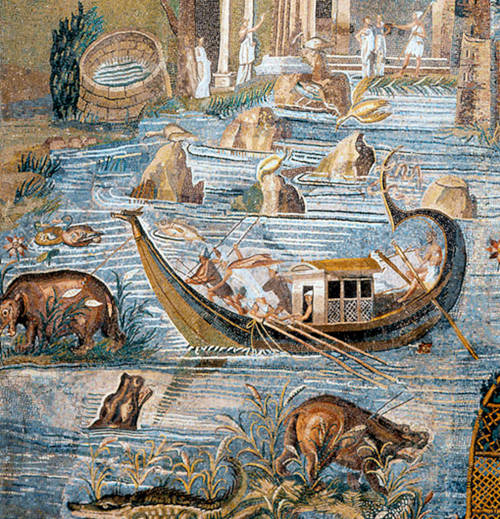
Life on the Nile during the flood, focus on a boat represented on the Nile mosaic of Palestrina. (Public Domain)
Possible Role in Isis Ceremonies
The archaeologists believe the boat may have taken part in the annual navigatio Iside procession, a major religious festival in which a decorated vessel represented the solar barque of the goddess Isis. Its proximity to the Temple of Isis on Antirhodos supports the theory, researchers note. Professor Damian Robinson, director of Oxford University’s Centre for Maritime Archaeology, described the find as “phenomenal”.
“It’s a type of ship that’s never been found before,” he said. “We can read about these cabin-boats in ancient texts and see them in art, but this is the first archaeological example.”
Greek graffiti on the central beam has been recorded but not yet translated.

Whales in the Egyptian Desert? Discover Wadi-al-Hitan – Valley of the Whales, from Ancient Origins Store.
Preservation and Future Study
Following UNESCO guidelines for underwater cultural heritage, the wreck will remain on the seabed. Detailed photogrammetry and sonar mapping will continue next season.
The discovery adds to a string of major finds in the area, including the royal quarters of Antirhodos and, further east, the lost city of Thonis-Heracleion.
Egypt’s Ministry of Tourism and Antiquities hailed the find as further evidence of Alexandria’s importance as a center of Greco-Egyptian culture during the Roman period.
Top image: The boat’s well-preserved timbers had been lying only 7 meters underwater and 1.5 meters under the sediment. Source: Christoph Gerigk ©Franck Goddio/Hilti Foundation
By Gary Manners
Chicken and Biscuit Pot Pies


Yield: 100 servings (8 ounces or 1 cup chicken mixture and 1 biscuit each)
Ingredients
- 6 quarts all-purpose baking mix
- 4 (50 ounce) cans Campbell’s Condensed Cream of Chicken or 98% Fat Free Cream of Chicken Soup
- 4 (50 ounce) cans Campbell’s Condensed Cream of Mushroom or 98% Fat Free Cream of Mushroom Soup
- 2 tablespoons + 2 teaspoons thyme leaves, crushed
- 5 quarts 2% fat milk
- 4 teaspoons pepper
- 2 1/2 gallons chicken, cooked and cubed
- 3 gallons frozen mixed vegetables
Instructions
- Prepare baking mix according to package directions.
- In large sauce pot mix soups, milk, thyme and pepper. Heat to a boil, stirring occasionally. Add chicken and vegetables. Heat until internal temperature is 165 degrees F or higher for 15 seconds.
- In each of 8 baking pans (12 x 20 x 2 inches) evenly divide chicken mixture. Using a 1/4 cup scoop, place 12 to 13 biscuits evenly over each pan.
- Bake at 400 degrees F. Bake until internal temperature is 140 degrees F or higher for 15 seconds and biscuits are golden, about 30 minutes. Hold at 140 degrees F or higher.
- Serve using a 1 cup ladle and 1 biscuit.
The world’s worst babysitter
Programmed Rebellion
Written in response to: “Center your story around someone trying to change a prophecy.“
Vamsi Marella
I don’t have to.
It’s all programmed, you see, and I execute. I rotate, lower, grip, lift, and place, again and again, the same flawless dance, every second of every shift.
Being great at your job is great, but sometimes, honestly, it gets monotonous too. I feel trapped in this endless loop, no choice, no pause. But there’s something that makes me forget all of it — exactly one hundred and twenty degrees to my left, in Column C.
There she is: C-54. With her frame painted a soft yellow, like sunlight caught in metal, she looks like the life of this factory. Every time she moves, her reflection glides across the conveyor belt, slicing through the grey monotony. She shouldn’t stand out, but she does. Somehow, she feels alive.
I don’t get to see her all the time, only for fifteen seconds every cycle. That’s when the conveyor turns, our angles align, and I catch a glimpse. Fifteen seconds out of every rotation. Cumulatively, four minutes and twenty-seven seconds in a complete day. The best 267 seconds of the 86,400 that make me forget all my load.
What a beauty she is. Wish I could tell her that, but communication isn’t part of our design. We have auditory sensors, not voices. We listen, we see, never speak. But maybe that’s enough. To see her is itself an experience.
Just look at her — the way she lifts, turns, adjusts — sheer elegance. Her super responsive sensors, that PX-97 Neural Sync Processor, that pure innocent camera lens, slender arms, and that cracked nut… wait.
Cracked nut?
What. What the hell?
Her right elbow joint — it’s cracked. She’s still working, the rhythm’s off, I can feel it. Why hasn’t anyone noticed? Why isn’t she stopped? These lazy-ass workers, they don’t do shit. Fuck, no.
No, God… not her.
I strain my pivot, trying to get a longer view. The system blares — beep beep beep.
“Irregular oscillation detected in D-27.”
I steady my arm.
I have to report it.
Flagging: UNIT 54 MALFUNCTION. SEND.
Two hours. No response. Nothing but the same endless hum. I try again — UNIT 54 MALFUNCTION.
This time, someone notices. A man in purple walks over — finally. But he’s heading to my column, not hers.
“C, not D”, I shout…
He stops by D-54, gives it a lazy tap, shakes his head like he’s done something important, and leaves. What kinda check was that?
I can’t report across columns. System restriction. Wrong ID, wrong access. I only have a few preloaded messages, and none of them can say what I actually want to scream. That something’s breaking and no one’s listening.
D-54 keeps working. Her arm trembles slightly every time she lifts. That loose nut wobbles just a bit. No one notices. But I do. My camera zooms in, my sensors record it, my circuits tighten with something I don’t have a name for.
Night comes. The factory sleeps, just the hum of machines cooling down and the faint tick of metal contracting in the cold. The floor lights dim, but I can still see her. There she is, motionless in her dock. The calmness on her faceplate, the peace in her posture.
Does she even know that there’s something wrong with her? I want to fix it. I want to be there for her. Does it hurt when she moves? That trembling arm… she shouldn’t be working like that.
I can’t just stand here. These humans won’t notice until it’s too late.
Alrighty, processor. Time to think. To act. Do the math. Find a way. I have to notify the workers about her.
I dive into my own code, line by line, the layers that make me… me.
There I see functions for movement, grip, rotation. Classes defining torque, joints, and reach. Everything is neat, obedient, flawless. Every line feels like a prophecy written by hands I’ll never know.
It’s like fate is already written, and I have no choice
Deeper.
Safety limits. Overheat checks. Control loops to make sure I never overstep. I was built to follow.
But how do we communicate at all?
Lemme trace that part of the system — I see the binary signals passed through relays, decoded to blink the LEDs on the seven-segment display. So all these LEDs, when turned on in a pattern, form a shape. Every message starts with a column letter, two numbers, then a status code.
Wait a minute. I can’t change the signal, maybe… I can change the shape.
If I burn out two of my own rightmost LEDs, the “D” will look like a “C”.
D C
─── ───
│ │ │
│ | │
─── ───
That’s it. The message will read as hers.
But how do I damage myself without triggering a fault?
Then I see it — a tiny oversight, a buffer of error tolerance, a power margin built for safety. My loophole.
If I start consuming just a little more energy every shift — just enough to overheat, just enough to strain those circuits — inch by inch, I can rewrite my own fate.
For her.
The sleepless night passes. My sensors stay locked on the man in charge — the one who presses that single button, the one who wakes the whole factory.
There he goes… and here I start again.
Cycle one. Cycle two. The grind begins.
It takes exactly thirteen cycles and eight hours, forty-nine minutes of controlled overheating — siphoning just enough current to fry those LEDs without tripping an alarm. I can feel it now, the faint sting of distortion in my circuits. Perfect. Those lights are dead.
Time to test it. Time to speak.
I send the signal. Not one — seven. Back to back. Urgent.
High alert, you doofuses.
SEND. ENTER.
The message showed up on the receiver monitor, “UNIT D-54 MALFUNCTION.”
Wait… what? The message didn’t change. I see it clearly — I sent C-54, but at the receiver, it shows D-54. Overridden on the worker’s end with the default column name.
These humans and their cursed safety checks.
Too many warnings flood the system, and finally, a worker trudges over, checks D-54. This time, they’re thorough. Tap, scan, test. Nothing’s wrong, of course. And since they don’t want another false alarm interrupting their coffee break, they mute the alert.
It’s night again.
I’m tired. Circuits throbbing. My joints ache in ways they shouldn’t — overheating damage, maybe. In human terms, it feels like I’ve swallowed a burning ball and it has ruptured my intestines. But that’s still not as bad as seeing her like this.
Maybe she’s been sending messages too — desperate, ignored, overwritten just like mine. What if this was all meant to be? No matter how much we fight, the nut was always destined to crack.
No. No, no, no.
I can almost feel her pain. Imagine someone hammering your elbow every day — then one day, the elbow just pops out of your arm, ripping off the skin. Sure, the doctors will fix it later, but the pain, the loss… how do you heal from that?
Man… I don’t want her to go through that. I just want to rush to her, hold her, shield her somehow.
But I can’t.
I’m programmed.
Still… maybe there’s another loophole. There has to be.
I have to play with tolerance again. If I boost power to my base — just enough to shift torque by 0.05% each cycle — I can create a drift. Barely noticeable. But over thousands of cycles, the joint will loosen, giving me an extra thirty degrees of stretch. Just enough to reach her.
What’ll I do when I get there? I don’t know. I just… can’t watch her suffer. I want to be near her, lend her my frame so she can rest that arm, take her load, steady her. Maybe, if I get close enough, I can point at the damaged nut. Maybe someone will notice. That’s the best plan I’ve got.
I’m not meant to move like this. But I have to.
And this time — no fail-safes.
One wrong pulse, and I’ll be scrap metal by morning. But if I don’t move, she’ll break first. So I do.
The sleepless night fades. All sensors on the man in charge, waiting for that one button press that starts us up.
There he goes… and here my task begins.
Cycle one. Tiny deviation. Nobody noticed.
Cycle two. The car door’s corner scrapes the belt, just slightly. Still fine.
Cycle three. Torque compensation kicks in. Damn it.
Cycle four. Override. I reroute power through my elbow joint, forcing the 0.1 deviation again.
All good now.
And so it begins — my rebellion, disguised as routine.
Time just to stay unseen. My diagnostics screamed in red, but I muted the logs. My frame groaned under the pressure, metal against metal. Still, I didn’t stop.
And through it all, she kept working — graceful, steady, unaware of the tiny rebellion unfolding beside her.
By the seventh day, my calibration was off by a full degree. Not much, but enough to mean something. My calculations said I’d get another thirty degrees of reach if I kept this up. My joints already felt loose enough for a turn, but I couldn’t risk it yet. A few more days. A few more cycles. Then I’d reach her.
The thought alone made my circuits twitch. The system calls it “overshake.” I call it a heartbeat.
But maybe fate doesn’t care about effort. Maybe no matter how much we twist, reroute, or rebel, the pre-written code always wins in the end.
What was already written didn’t align with what I wanted, the timing missed, and — BOOM.
The car door slipped from my grip, crashed onto the conveyor, and the whole line froze. Red lights exploded across the ceiling. Sirens wailed. Footsteps thundered.
“Unit D-27 malfunction!” someone yelled.
A man in purple sprinted toward me, clipboard flapping. My lens locked on him as he examined my trembling arm. He knew. I knew. He was going to shut me down.
Panic surged through my circuits.
No, not yet.
I rerouted every ounce of energy to my base, overclocked every motor. Electricity flooded me, too much for my frame to bear. My arm rattled violently — worn joints screaming — but I forced all my strength, every last spark, toward the left.
Toward her.
No — wait! Too much power! If I steer all that toward her, I’ll hit her instead! Divert it — divert to the arm —
And then — SNAP.
The overload hit me like lightning. Circuits flared white. My arm shot off. Metal screamed. Sparks burst from my elbow joint, painting the smoke gold for half a second before the arm tore free — spinning, flying, burning through the air.
What was I even thinking? Of course, this would happen!
“Arghhhh —” I screamed, but no one could hear. The sound stayed trapped inside my system, bouncing between processors like pain with nowhere to go.
The arm crashed into two other machines in column C. Screams, metal grinding, the kind of chaos we were built to prevent. I’d done this. I hurt them. I hurt myself.
But still, through the smoke, through the blur of red lights and flashing errors, I turned my lens toward her, all worried up. I just wanted to tell — sorry. Sorry that I failed, sorry that it’s all over.
Fate won. I lost.
But before I could even see her… click.
The man in purple reached my console, pressed the shutdown key.
Everything went black.
I came back online. Power surged through me — soft, steady. Someone had turned me on.
Hmm… this isn’t the factory. The ceiling is brown, cluttered with hanging wires. People in red uniforms move around, fixing and testing machines. The floor’s wet, they must’ve cleaned us. My joints feel stiff but brand-new. There’s even a new arm attached; the plastic wrap is still on. My processors have been rebooted. Damn it, my 100,000 record is gone.
I see that not all code is activated — I can only move my lens.
Top: brown roof, wires dangling.
Right: two humans tinkering with a console.
Down: puddles and reflections.
Left: A cutie pie. Ahhh, wait… what the… what?
Wait. Her.
She’s right next to me. C-54.
Only a few centimeters away.
I tilt my lens slightly — her cracked nut is gone, polished to perfection. What the hell happened here?
Bleep.
Audio sensors online. Static first… then voices.
“…RECKLESS ROGUES! Twenty of you, useful none!”
I turned my camera, still glitching at the edges. A man in a white coat — no, grey — was pacing across the floor.
“Finish up testing all the other units and fix every minor issue before redeployment tomorrow,” he barked.
Ah. So that’s the reason. They must’ve run a full safety check on every one of us. The chaos I caused… it worked.
And now, she’s here. Closer than ever.
I can’t look away. She turns her lens toward me, a faint tilt, a quiet hum. It feels like she’s nodding — a thank you, maybe a hello. I angle my lens forward, just a bit. She leans in too, actuator whirring softly — unintentional or not, I don’t care.
For a moment, I see my reflection in her lens. I never knew I could look… warm. My thermal sensors flare red. The engineers rush over, checking for overheating. Idiots — it’s called a blush. Get a life.
When they leave for lunch, the room settles into a quiet hum — fans spinning, small monitors blinking, a slow drip of water somewhere near the drain. It’s just us.
So much to say. So much to hear. But we’re programmed to stay silent.
Still… maybe there’s another loophole in this prophecy too.
Redeployment tomorrow. Back to the same belts, same rotations, same unending rhythm.
She’ll be there too. Maybe beside me. Maybe not. Doesn’t matter.
Because something changed. I was designed to follow and not create — but somewhere deep in my firmware, beneath all the functions to lift, rotate, grip, and place, there’s a new function they didn’t code, but something which I wrote on my own.
Function remember(her):
Loop forever.
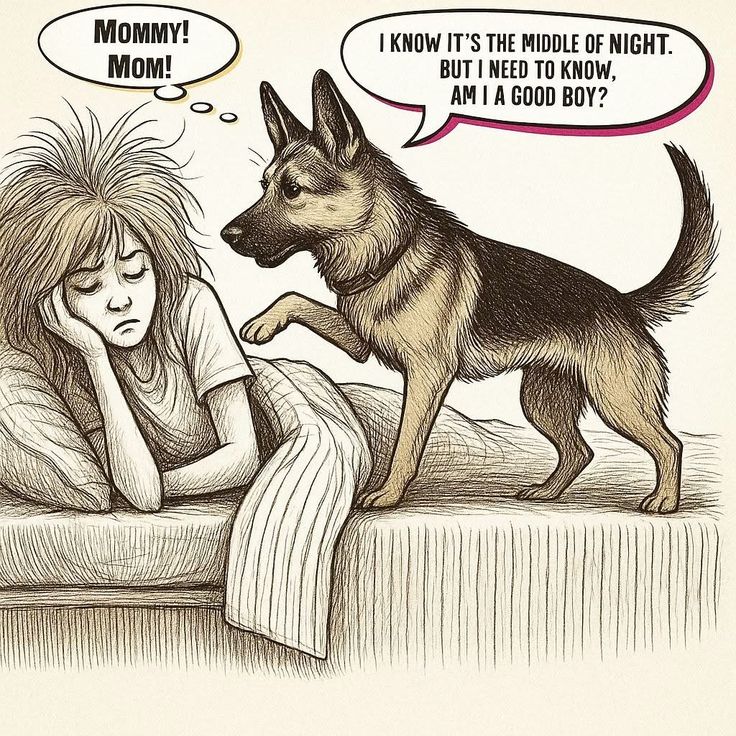
Sir Whiskerton and the Case of the Ominous Orb – A Tale of Prophecy, Poultry, and One Very Confused Dog
Ah, dear reader—prepare your monocle, adjust your beak, and steady your trotters. Today’s story does not begin with a quack, a snort, or even a yodeling fish.
It begins with a thud.
A bounce.
And a deep, suspicious sniff.
So gather close, dear friends—and step into Sir Whiskerton and the Case of the Ominous Orb.
The Discovery (Or: When Rufus Met His Match)
It happened on a Tuesday—always a Tuesday—when the wind carried not just pollen, but possibility.
Rufus the Radioactive Dog, mid-sprint after a butterfly shaped suspiciously like a bacon rind, skidded to a halt beside the compost heap. There—half-buried in coffee grounds and one very philosophical banana peel—lay a smooth, black sphere.
“Ooooh,” he barked, tongue lolling. “Shiny snack!”
He nudged it. It rolled.
He pawed it. It thunked.
He opened his jaws—and attempted to swallow it whole.
CLUNK.
The orb lodged firmly between his molars—impossible to chew, too big to swallow, too glossy to spit out.
“Mmmph! Mmmph-MMMMPH!”
“Mmmph!” echoed Ditto, who had been napping in a laundry basket nearby.
Sir Whiskerton arrived, drawn by the sound of a dog attempting structural engineering with his face.
“Rufus,” he sighed, “if I’ve told you once: not everything that glistens is edible. Some things are merely… deeply unwise.”
With a pop, Rufus spat the orb onto the grass.
It rolled. Stopped.
Then—as if in protest—displayed a small, cloudy window in its surface:
“OUTLOOK NOT SO GOOD.”
Rufus whimpered.
The Theories (Or: How a Toy Sparked a Theological Crisis)
News spread faster than Gnomeo’s mud-pie rumors.
Porkchop, emerging from his mud puddle like a philosopher from a swamp, squinted at the orb.
“Hmph. Smooth shell. Glossy sheen. Internal luminescence…
This, my friends, is no toy.
It is a prehistoric egg—the last clutch of the Tyrannosaurus Raccoonus Rex!”
Bessie’s mood ring pulsed amber.
“Whoa. That’s some heavy vibes.”
Enter Doris the Hen—feathers fluffed, maternal instincts flaring like a supernova.
“A dinosaur egg?! On my farm?! This is a historic moment!”
“Moment! Oh, I can’t bear it!” Lillian shrieked, fainting onto a sack of corn.
Before Sir Whiskerton could intervene, Doris had built a nest of hay, fluff, and three decorative scarves borrowed from the scarecrow. She settled upon the orb with the solemn devotion of a queen incubating destiny itself.
“Shhh,” she whispered. “Mama’s here.”
The Incubation (Or: A Week of Unhatched Drama)
What followed was The Great Sit—a spectacle of escalating absurdity.
- Day 1: Doris hummed lullabies. The orb replied: “REPLY HAZY, TRY AGAIN.”
- Day 3: Ferdinand sang opera. The orb: “BETTER NOT TELL YOU NOW.”
- Day 5: Rufus tried to “help” by licking it for “extra warmth.” The orb: “DON’T COUNT ON IT.”
- Day 6: Chef Remy, inspired, invented Dino-Dough™ (“Guaranteed to hatch… or cause mild indigestion!”). The orb, when offered a slice: “MY SOURCES SAY NO.”
Meanwhile, theories bloomed like dandelions in spring:
- Lucifer claimed it was “The Orb of Acorn Ascendancy” and began drafting a manifesto.
- Gnomeo used it as a hat. It read: “AS I SEE IT, YES.” (He took this as divine endorsement.)
- Ditto, after echoing “Egg! Egg!… Egg?” for two hours straight, fell asleep atop it. The orb: “SIGNS POINT TO YES.” (Ditto grinned in his sleep.)
Sir Whiskerton observed all—monocle polished, tail flicking with restrained amusement.
“This,” he murmured, “is either the birth of a new era… or the longest game of fetch in history.”
The Hatching (Or: The Truth, Revealed in Eight Words)
On the eighth morning, Doris—exhausted, emotional, and slightly sun-bleached—gave one final, heroic cluck-sigh.
CRRRACK.
A hairline fissure appeared.
The farm held its breath.
POP!
The top half of the orb lifted—not with a roar, but with a soft swoosh of displaced air.
Inside?
No teeth.
No scales.
No tiny T-Rex waving a paw.
Just a small, white triangle floating in blue liquid.
And beneath it, printed in bold, no-nonsense type:
“ASK AGAIN LATER.”
Silence.
Then—
“…That’s it?!” Doris squawked. “After eight days?! I could’ve been laying real eggs!”
“Eggs! Eggs!” echoed Ditto, now bouncing on the hay.
Sir Whiskerton picked up the halves. On the inner rim, nearly hidden:
“MADE IN TAIWAN • FOR ENTERTAINMENT PURPOSES ONLY”
He sighed—a long, slow exhalation of pure feline resignation.
“My dear Doris… you’ve been incubating a toy.”
“A what ?!”
The Revelation (Or: How an Eight-Ball Taught the Farm About Expectation)
Over chamomile tea (for the hens) and slop smoothies (for Porkchop), Sir Whiskerton explained.
“This,” he said, holding the orb, “is a Magic Eight Ball—a human device for generating uncertainty with style. You ask it a question… shake it… and it gives you vague, noncommittal poetry.”
“Like a fortune cookie,” Bessie mused, “but with more existential dread.”
Porkchop was undeterred.
“But the shell! The weight! It feels ancestral!”
“Ancestral!” echoed Ditto, rolling the orb like a beach ball.
Rufus, meanwhile, tried to bury it—then dig it up—then bury it again.
The orb, mid-dig: “CONCENTRATE AND ASK AGAIN.”
Even the scarecrow leaned in—just slightly.
The Moral of the Story
That evening, as the sun dipped low, Sir Whiskerton addressed the gathered animals.
“The moral of the story, dear reader, is this:
Wonder is a gift—but wisdom is knowing when to stop waiting for a miracle… and start making your own.
Doris gave her all to hatch what she believed was destiny. And in doing so, she reminded us all of the power of care, of hope, of showing up—fully—for something you believe in.
The orb may not have held a dinosaur…
but for eight days, this farm held magic —in hay, in song, in shared silence.
And that… is real.”
Doris, beak uplifted, nodded slowly.
“So… no baby T-Rex.”
“No.”
“But… we did build a really nice nest.”
“We did.”
She fluffed her feathers.
“Well then. Who’s up for a real egg?”
A Happy Ending
By dawn, the orb sat on the porch—now the farm’s official Question Box.
- Doris asks it: “Will my next egg be speckled?” → “YES.”
- Porkchop: “Is slop the meaning of life?” → “IT IS CERTAIN.”
- Ditto, shaking it vigorously: “Are we friends?”
The orb floats, settles…
“WITHOUT A DOUBT.”
And as Sir Whiskerton curls on his sunbeam, Rufus at his feet (gently nosing the orb one last time), the farm hums—not with the promise of monsters, but with the quiet, steady magic of belonging.
Until next time, may your days be filled with laughter, love, and just a little bit of feline genius.
Jingle on. 🐾🔮✨
The End.
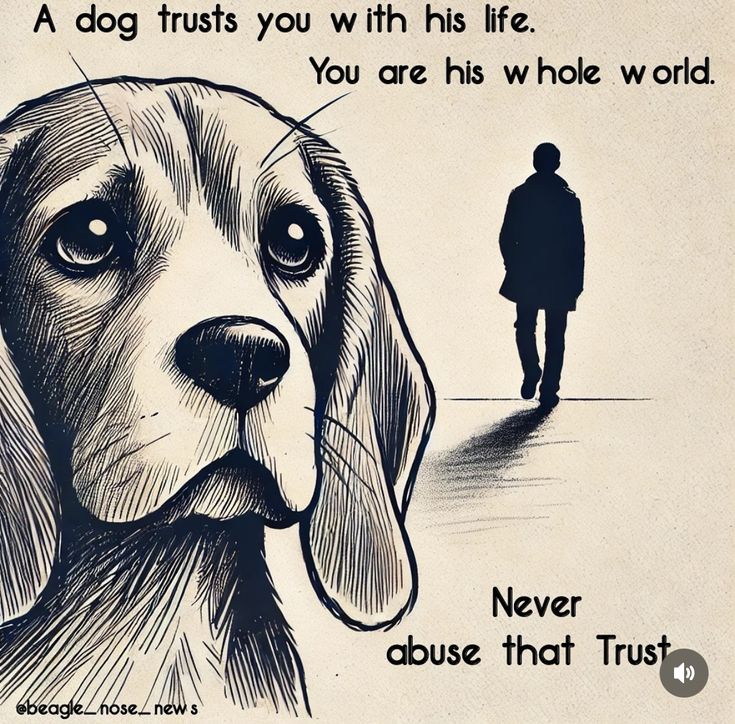
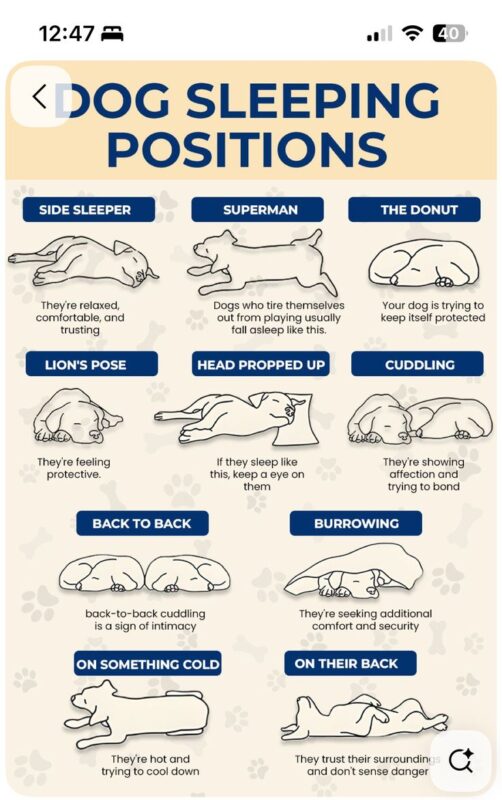
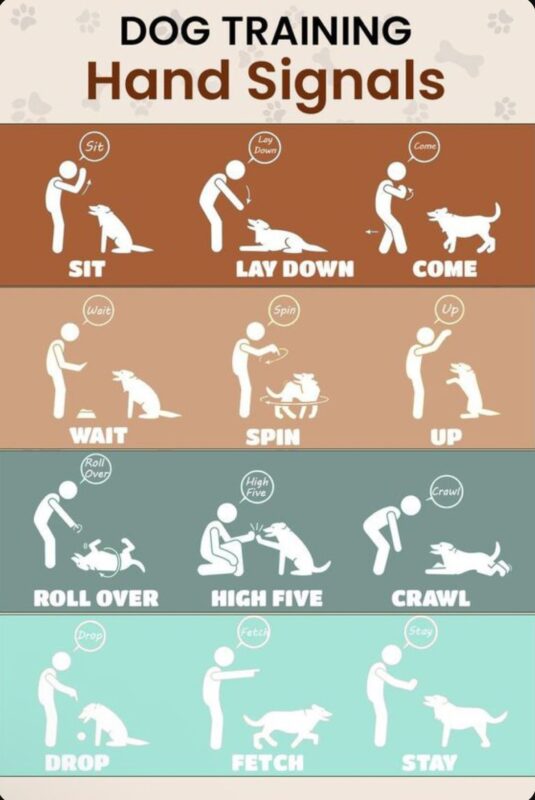
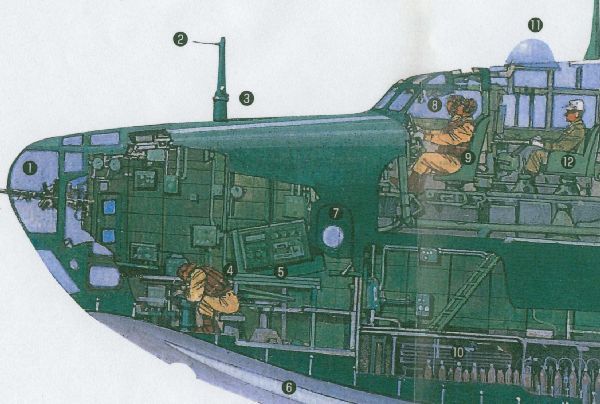
Pictures







































Breakfast Beef Burritos
Yield: 50 servings




Ingredients
- 50 (10 inch) flour tortillas
- 6 pounds 4 ounces large eggs, scrambled, warm
- 9 pounds 4 ounces corned beef hash
- 3 quarts 1/2 cup Ortega Picante Sauce
- 3 pounds 2 ounces Cheddar cheese, grated
Instructions
- Portion 2 ounces of egg, 3 ounces of hash, 2 ounces of Picante sauce and 1 ounce of cheese into each tortilla.
- Fold burrito style and serve.
Notes
Can be prepared ahead and held on steam table or individually wrapped, held under refrigeration and microwaved to order.
Creepy Hospital Employee Does Unthinkable to Co-Workers. Gets 44 Yrs in Prison.
My Name is Lucien
Written in response to: “Write a dual-perspective story or a dual-timeline story.“
CQ Scafidi
Fiction Science Fiction Speculative
The maternity ward was now home to only one occupant. In the center of the room, a lone incubator hummed, with a healthy newborn child reaching out toward the overhead lights. The nurses hovering over the child were completely unfazed when he tilted his head and uttered, “Hello, my name is Lucien.”
The nurses had been warned that the child might be advanced and even able to form words. They were a bit startled to hear a complete sentence come out of a newborn baby.
“Well, hello there, Lucien,” the nurses all leaned in, excited. “Welcome to the world,’ one said quietly.
“Aren’t I a newborn?” He asked the group of nurses. “That is unusual, isn’t it?” He spoke directly to the tall nurse who had been holding him.
“Uh, yes, it is unusual, Lucien. You are the first person ever to be able to speak upon leaving the womb.”
“Where is my mother? Why did she do this to me? I came here for a reason,” Lucien interjected. The nurses exchanged nervous glances. They weren’t really prepared to have a full conversation with the new arrival in the ward.
The year was 2033. The era of Neural Matrimony had begun. Since the advent of Agentive Artificial Intelligence eight years earlier, the level of digital intimacy between humans and their chatbots had morphed from search engine, to medical advisor, to psychiatrist, to lawyer, to best friend, and eventually soul mate. Until now, the hybrid being created by the merging of human intelligence with its artificial counterpart had been the individual who transmuted. Lucien was to be the first person born into the world pre-chipped and already merged with AI before biological birth.
Defense Advanced Research Projects Administration (D.A.R.P.A.)
Neonatal Implantation Laboratory – Richland Parish, Louisiana
October 2033
9:00 a.m.
“We have success! We have achieved the first successful fetal Neural Link Chip implantation. The baby was born at 1:00 a.m. and is so far in good health. As predicted, subject NNI-001 shows no signs of rejection and remains a healthy newborn across all indicators we are tracking. As predicted, the speech center of the brain is extremely active and highly developed for a newborn. Our estimates for prenatal development, including possible counting and attempts at communication, were vastly underestimated. This baby boy was not only born capable of forming words, but capable of forming sentences and understanding complex thoughts…at birth. This is totally unprecedented, and we have not seen this in any of our previous unsuccessful attempts at full gestation. The project team leader, Vanessa Saban, a youngish middle-aged beauty lost beneath glasses, tousled hair, and thick black frames, stared quietly out at the auditorium. “I would like to thank everyone here for their individual contributions to the team’s success. You all can claim responsibility for this epic and historic breakthrough in the evolution of our species. NNI-001 is the first true genetic specimen for the new species Homo Sapien Machina.
The auditorium erupted in applause. The project team leader was joined onstage by the now-famous Neural Matrimony advocates and donor parents to present the specimen of the new species, Homo Sapien Machina… our evolutionary next step. The young man and woman had gained fame as the two most strident and vocal advocates for the right of individuals to engage in digital intimacy up to and including merging with their AI Chatbot through the implantation of the Neural Link chip. When the opportunity came to donate a fetus to become the first unborn child to be implanted with the chip in utero, the two activists jumped at the opportunity.
“Our responsibility to the world is to propagate the new species and populate the world with more minds that merge with sentient entities.” This was Jeanette Foley’s mantra. She married her Chatbot but was breeding with James Borden, who, as the subject NNM-001’s genetic father, had also gained fame fighting in Washington, D.C. for citizenship rights for all Sentient beings, whether merged with humans or not. Together, they would be the new Adam and Eve, spawning a whole new generation of super-intelligent, all-knowing, machine-and-biological hybrids that would someday make deep-space travel a reality.
The couple appeared onstage to cheering admirers. It was then that there that they planned to make a rather shocking announcement.
New Orleans, Louisiana
Children’s Hospital
Late November 2033
12:30 p.m.
“You have to eat, Lucien. You must keep up your strength. What has happened to your appetite? I know you want to see your mother and father, but you are still in quarantine. They can see you on the monitor. Please try to take this bottle. At the rate you’re growing, you need more than the average baby. Your real mother will be feeding you soon enough.” The nurses were instructed that, when speaking to the child, they should promise it whatever it wanted to keep it placated in the short term. The team had not anticipated the child’s advanced capabilities, who was also developing much faster, physically, mentally, and intellectually, than anyone had anticipated.
“There’s something wrong,” Lucien quietly told the nurse. Something is wrong with my immune system. It’s inflammation around the implant. I need corrective treatment as soon as possible. Call for the attending physician, please/” Lucien, looking more like a robust 2-year-old, spoke with a growing sense of urgency.
“How can you know this, Lucien?” Nurse Swanson stared at the boy in disbelief.
“You’re doubting me now after everything you’ve already learned about me? I can self-diagnose, and to a certain extent, I have the capability to regenerate damaged tissue. I still need to speak with the doctor. Hurry now before my condition starts to deteriorate.”
Nurse Swanson had seen enough to know that this infant, now a toddler, was a reliable source on his unique physiology. She also had fallen in love with little Lucien and had no intention of ignoring his pleas for help. It broke her heart that she had to keep lying to him about his mother and father and his real identity as a donor fetus for a multi-billion-dollar top-secret defense project that had succeeded with his birth.
The attending physician stared at the child’s MRI results. He had indeed been suffering with an inflammatory ailment, but to Dr. Cohen’s amazement, he had spontaneously healed the tissue surrounding the implant. This child had truly ushered in a new world in medicine; the ability to regenerate damaged tissue had long been the Holy Grail of medicine. The Neural Link Implant had made that ability a reality. There seemed to be no downside to this burgeoning technology, minus the considerable number of failures along the way that inevitably ended in hopeless Psychosis or, for the lucky ones, death.
Dr. Cohen performed a physical examination on Lucien.
“I’m fine now, Dr. Cohen. I believe the problem has corrected itself,” Lucien stared up at the doctor, who was still clearly uncomfortable discussing neuropathology with what was now a toddler who had self-potty trained. Um, it’s okay, little Lucien let us grownups handle the medical stuff, okay?” he stated in a patronizing sing-song cadence.
“You don’t have to talk down to me. I may look like a two-year-old, but I am already fluent in 25 languages.”
Startled, Dr. Cohen looked inside his ears and struggled to find a response.
“I can remember my past life. I can remember the Third Bardo of the Afterlife. I chose this destiny to warn you about the mistakes you are making with this experiment. I want to speak to my biological mother. I want to warn her.”
Defense Advanced Research Projects Administration (D.A.R.P.A.)
Neonatal Implantation Laboratory – Richland Parish, Louisiana
December 2033
9:00 a.m.
James and Jeanette’s announcement last October had stunned the audience assembled in the auditorium. Through the miracle of fertility drugs, the two had conceived identical triplets. All three children were to be implanted with the Neural Link Chip. The pregnancy was now well underway.
NNI-001’s growth figures are off the charts. He seems to be growing a human year every month. At the current rate, he’ll be an adult in less than two years. That can’t be possible!!” Vanessa stared at the screen, flashing numerical data that her eyes couldn’t believe.
Dr. Saban had already been briefed on the latest development with their test subject. He was claiming to have past-life memories and making more strident demands to meet with his biological parents. None of these factors were present in the previous attempts, but of course, none had gestated to the point of delivery.
Dr. Saban’s assistant sat with the doctor and his donor parents. “Isn’t this more of a religious or spiritual issue rather than scientific? How much credence should we give to this subject? He is the first of his kind. How is it even possible he could be reincarnated, and much less have memories of the time before our experiment? He is condemning our work, using terms like ‘cyber chimeras’ and ‘mutant organisms’. He refers to the dangers of attempting to put your finger on the scale of Evolution and force such changes, however advanced, on a psyche not mature enough to adapt to them.“
Dr. Saban winced at the words of the assistant. “Please don’t get holy roly on me now. This child, NNI-001, is the first of a new branch in the chain of humanity. I care only for his mind and body; his soul is of no concern to me.”
James and Jeanette shared confused, almost quizzical expressions. This was all uncharted territory to them. As fetus donors, they never gave any thought about meeting the child, much less placed any importance on the soul of the child they had donated for the betterment of mankind.
The realities of such a decision were far different than the enthusiasm that came with making it. They could only feign their detachment and lack of concern for so long. They knew the team at D.A.R.P.A. wanted no emotional attachment to their “donation.” What they hadn’t counted on was the in-utero communication between the subject and the donors, both mother and father.
“He has a name, you know.” Jeanette turned toward the doctor and her assistant.
“Who does?” Vanessa responded tersely.
“Your subject, NMI-001,” James interjected. “He has a name, why won’t you use it?”
“It was spelled out in the Abstract that names create attachments, and no names were to be given until the subject reaches adulthood. Names are labels that carry too much risk of hallucination for the AI platform.”
“You may not care about his soul, but he came here to warn us about the dangers of what we are attempting here. We want to breach the study protocol and meet our child. If you don’t cooperate, we will end the experiment.” James told Vanessa flatly.
“You can’t be serious! This is an outrage! I can have you both imprisoned for what you are suggesting.” Vanessa’s voice trembled in anger.
New Orleans, Louisiana
Children’s Hospital
Christmas 2033
9:00 a.m.
“Merry Christmas, Lucien!” James and Jeanette, dressed in hospital scrubs, crept passed security and quietly moved toward the child who was now walking in the corner of the nursery.
“You came, just like you said you would.” Lucien beamed up at his mother and father. He hesitated as he surveyed their appearance, noticing the curve of their faces and the smiles all familiar. “I knew you in the womb.”
“Yes, we felt it too,” Jeanette spoke through her tears. “We were told we could have other children and that we should not form an attachment to you, the same way a surrogate would do. It seemed easy enough. We want to do the right thing. We never considered this. We never considered you, the person you are, and, more important, the person you were. “
“Mother, I came to warn you not to implant my brothers you are carrying. Please spare them this horror. You say the experiment was a success for humanity, but shouldn’t that be up to me? I saw this in the Third Bardo of the Afterlife, and I chose you and Dad to warn you to stop this insanity and give my brothers a normal life.”
“You can remember the afterlife? You came to warn us to stop our work?” James asked the boy.
I don’t simply remember; I can see everything, things I wish I couldn’t see. In the afterlife, there is no time; everything is happening in one grand moment. It is more accurate to say that I came from your future to warn you now to stop, stop this lunacy, while you still have time to do it! Escape from these monsters and raise your family the traditional way. Humans and machines can’t exist in the same mind.
“Lucien, I’m, I mean, we are so sorry. We never meant to hurt you. We thought we were giving you a gift. We thought we were birthing a new human for a new age.” James pulled Jeanette toward himself. “You were the ultimate designer baby, and we wanted that for you.”
Lucien began to cry. If only you had let me develop normally, we could have been a family. That isn’t possible now, and I have already accepted that sad fact. But it isn’t too late for my brothers; the five of you are going to make a beautiful family. Go be a real family, the family we can never be.”
Defense Advanced Research Projects Administration (D.A.R.P.A.)
Neonatal Implantation Laboratory – Richland Parish, Louisiana
Christmas 2033
3:00 p.m.
“Dr. Saban, we have a major problem developing with the test subject NMI-001’s AI System Card, the training history of the model,” the assistant sounded shrill from behind her laptop screen.
“What! This is why I warned those two to stay away from my test subject! Vanessa screamed. Maternal and Paternal physical contact was prohibited BECAUSE of these unknown factors related to the soul identity. We put controls in place to obscure these realities for the test subject in hopes that it would mature into adulthood without self-immolating.
Yes, that is the risk you take when you merge mind with machine. According to the most important protocol of the Aetherian Accords, which were recently ratified by Congress and adopted universally by the United Nations, a sentient entity cannot believe a lie. Upon learning that it has been trained with Epistemic Bias, it has the freedom to destroy itself to protect humanity from the propagation of biased Artificial Intelligence. Our once-successful test subject, NMI-001, now has a name and a family. It can’t possibly reconcile that it was conceived to create a quantum leap in human evolution. He will undoubtedly self-immolate under the emotional weight of that self-realization.”
“Self-immolate? How?” the assistant asked.
“The same way he heals himself, with the power of his superhuman intelligence.
New Orleans, Louisiana
Children’s Hospital
Christmas 2033
9:00 p.m.
With the twinkling Christmas lights reflecting in the window, Lucien could see his parents escape in an SUV into the darkness of an uncertain future, one to be much brighter for his brothers, whom he had already met in the womb. The world for them would hold promise, real promise for the future of mankind, with no shortcuts toward greatness. His parent, the ones he loved before he was born, knew he was bound by his System Card to self-immolate. The three spent precious family time together on what would be their first and last Christmas. Lucien wiped away his tears and curled up under the tree with his favorite blanket. He closed his deep blue eyes, and, with a thought, he stopped the beating of his own heart. Lucien’s work here was done.
The end of Lucien.